Winter Stabilization:
A Guide to Managing Erosion Control During Western New York’s Winter Months
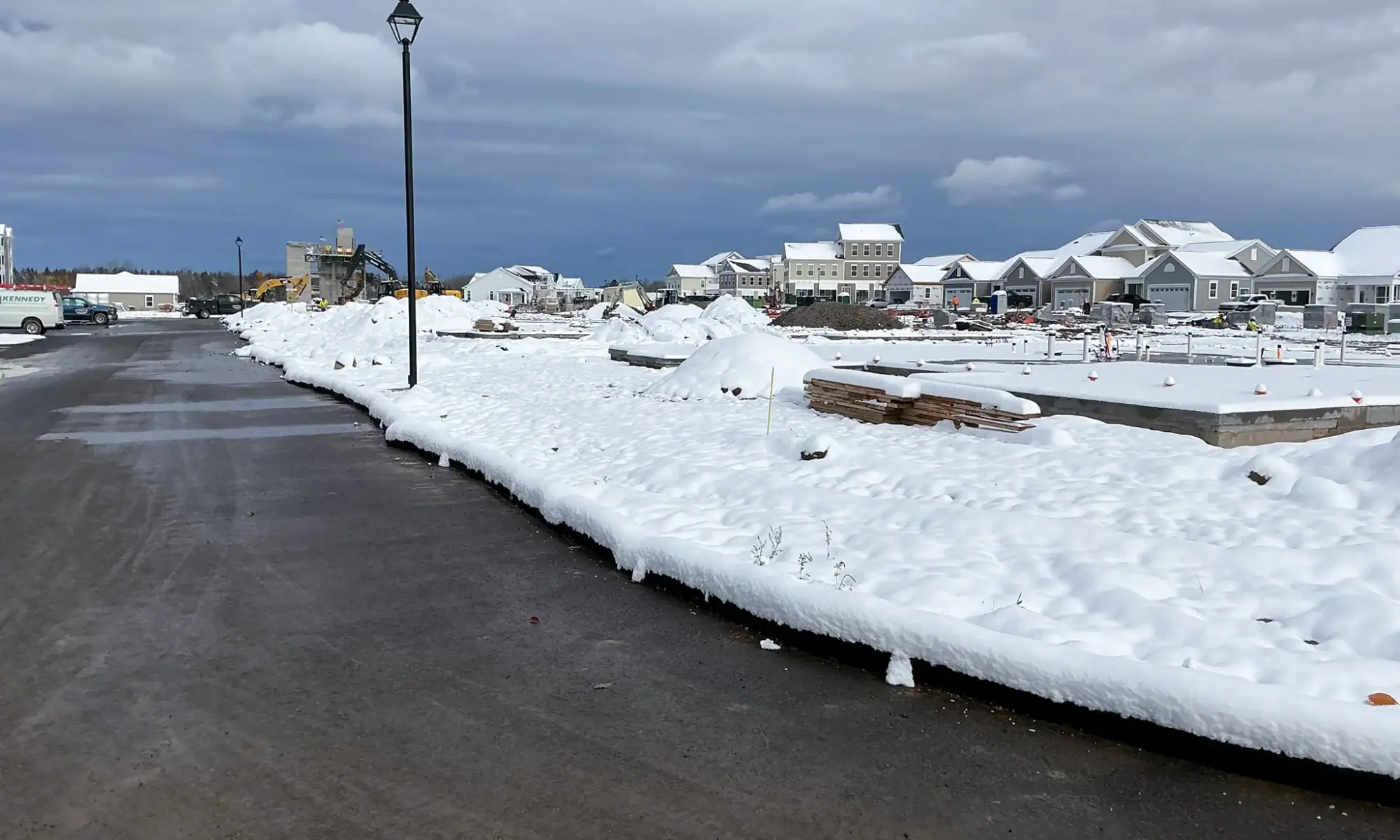
Construction activity in Western New York doesn’t stop when temperatures drop, but the approach to erosion and sediment control has to change. Between November 15 and April 1, all active construction sites in the Rochester region and surrounding counties must comply with New York State’s Winter Stabilization standard, a set of enhanced requirements designed to manage the unique challenges of freeze-thaw cycles, snowmelt events, and winter precipitation. This isn’t optional. It’s a regulatory requirement under the SPDES Construction General Permit, and it’s enforced through municipal inspections and SWPPP compliance checks.
Winter stabilization is about preventing sediment from migrating off-site during the months when conditions make erosion control more difficult. Snow accumulation, ice dams, frozen ground, and rapid melt events all increase the risk of sediment reaching adjacent properties, stormwater systems, and nearby waterways. For project owners, contractors, and site managers, understanding how to plan for and implement these measures is essential to maintaining compliance and avoiding violations.
This guide walks through the key requirements of the Winter Stabilization standard and provides a framework for how to prepare a site for the winter season.
Step 1: Prepare a Snow Management Plan
Snow has to go somewhere, and where it goes matters. A snow management plan identifies adequate storage areas for cleared snow and ensures that meltwater is controlled in a way that doesn’t interfere with ongoing construction or degrade installed erosion controls.
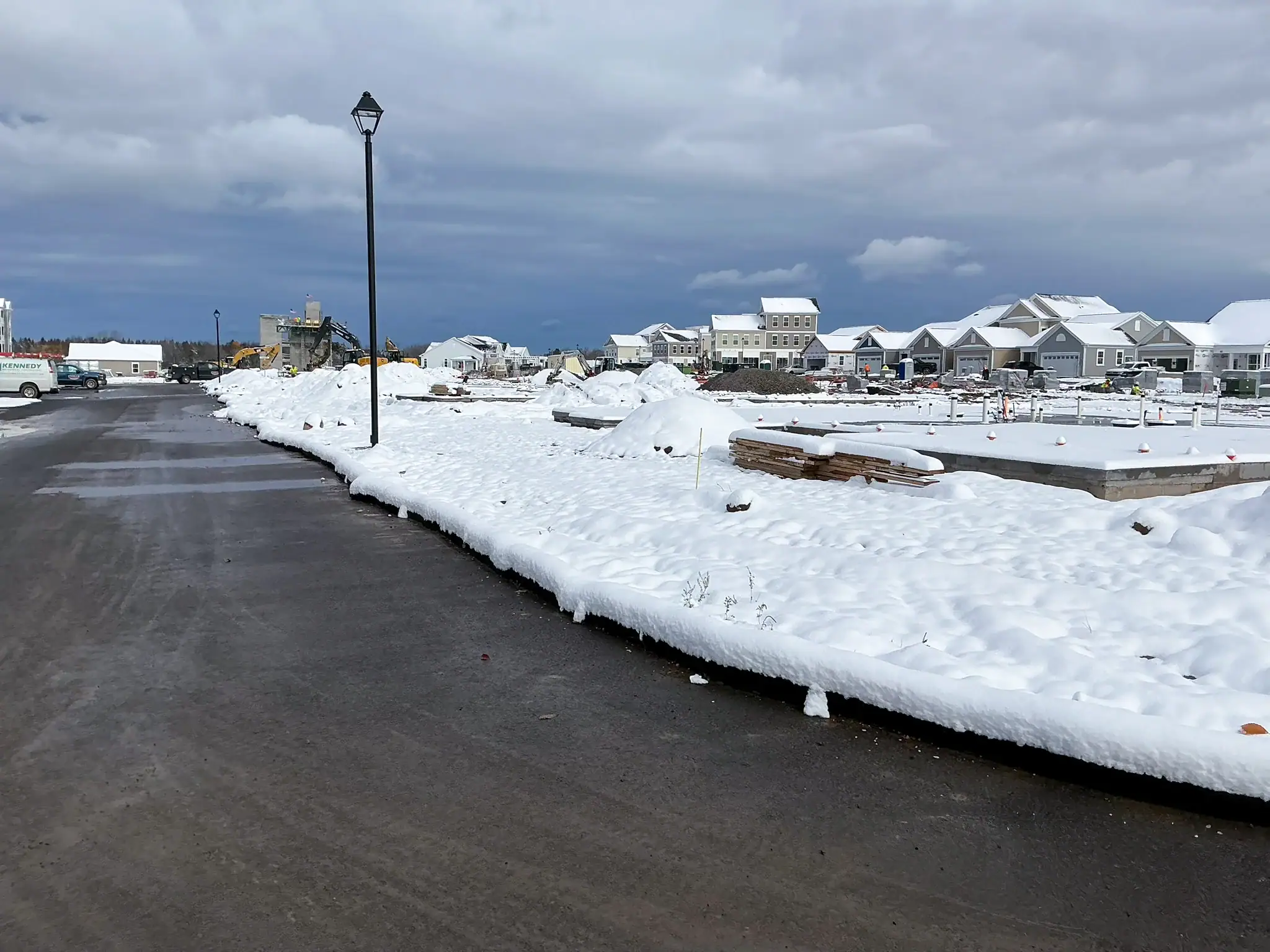
Cleared snow must be stored in a manner that doesn’t affect construction activities or damage perimeter controls like silt fence. Access points should be enlarged and stabilized to accommodate plowing and stockpiling operations. The plan should account for where snow will be pushed, how drainage will be maintained during melt events, and how to prevent snow piles from blocking critical stormwater infrastructure.
Step 2: Protect Perimeter Controls and Mark Them for Visibility
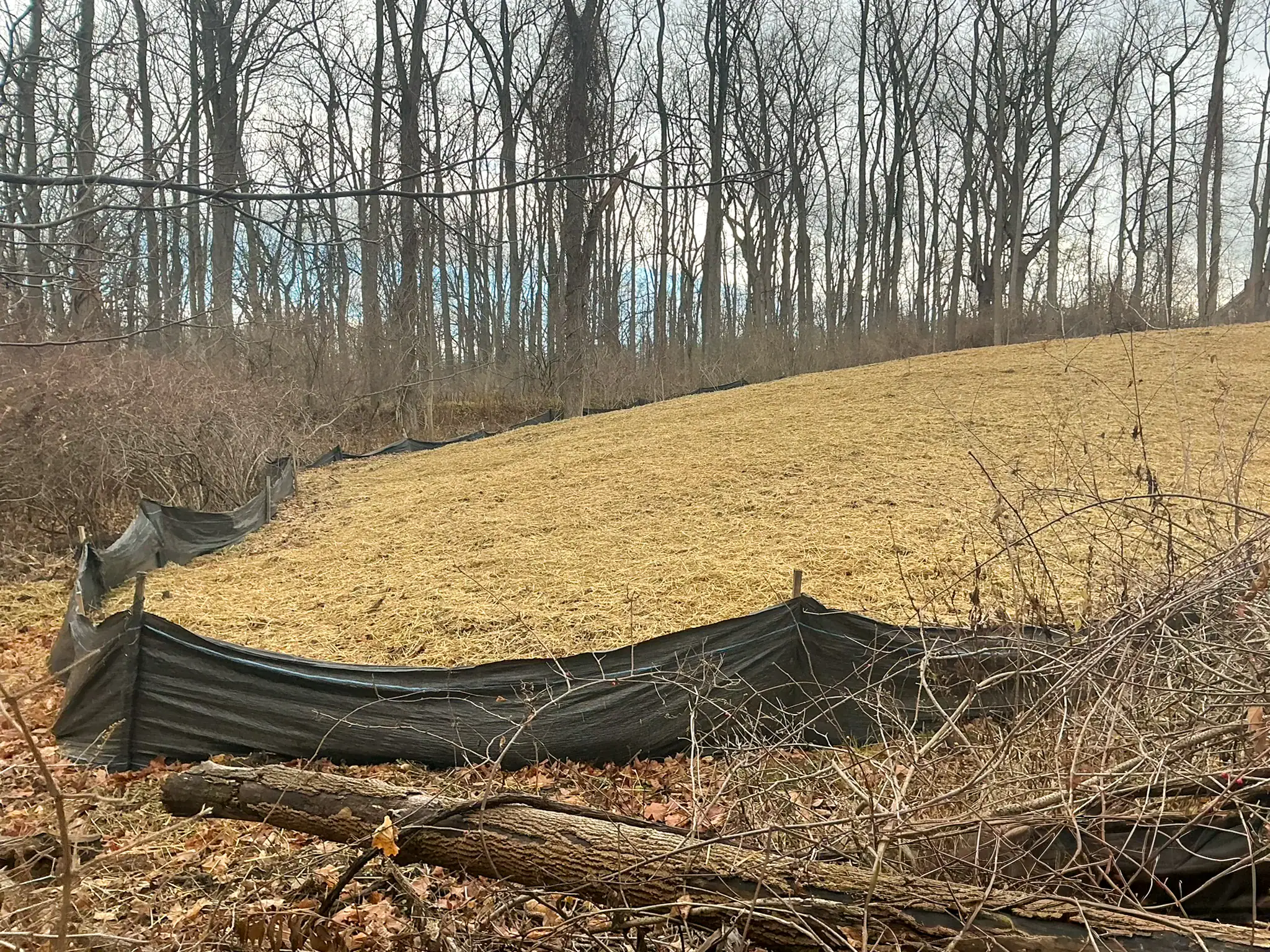
Perimeter controls such as silt fence are required to remain functional throughout the winter, which means they need to stay visible and accessible even under heavy snow cover. Silt fence should be marked with tall stakes that extend above the anticipated snow pack so contractors and inspectors can locate and maintain them during winter months.
A minimum 25-foot buffer must be maintained from all perimeter controls to prevent damage from snow management activities. On sites that drain to a waterbody within 100 feet, two rows of silt fence spaced five feet apart must be installed on the contour to provide additional sediment capture.
Snow removal and stockpiling operations should be planned to avoid driving equipment near or over silt fence and other sediment barriers. Damage to these controls during snow events creates pathways for sediment to leave the site during thaw.
Step 3: Keep Drainage Structures Open and Functional
Drainage infrastructure is under additional stress during winter. Catch basins, culverts, swales, and other conveyance features can become blocked by snow, ice dams, and debris from plowing operations. When drainage is obstructed, runoff is redirected in unintended directions, increasing the risk of sediment leaving the site.
All drainage structures must be kept open and free of snow and ice throughout the season. Ice dams and debris that restrict the flow of runoff and meltwater must be removed promptly. Regular inspections should verify that water is flowing as intended and that no new drainage issues have developed due to winter conditions.
Step 4: Install Sediment Barriers Before the Ground Freezes
Sediment barriers such as silt fence and other perimeter controls that require earth disturbance must be installed before the ground freezes. Once frozen conditions set in, it becomes difficult or impossible to properly anchor these practices, which compromises their effectiveness.
This means planning ahead in late fall to ensure all required barriers are in place before temperatures drop consistently below freezing. Soil stockpiles should also be protected before winter using established vegetation, anchored straw mulch, rolled stabilization matting, or other durable coverings. A barrier must be installed at least 15 feet from the toe of each stockpile to capture any loose material that might migrate during thaw events.
Step 5: Stabilize Disturbed Soils on an Aggressive Timeline
One of the most stringent components of the Winter Stabilization standard is the timeline for soil stabilization. In areas where soil disturbance activity has temporarily or permanently ceased, stabilization measures must be initiated by the end of the next business day and completed within three days.
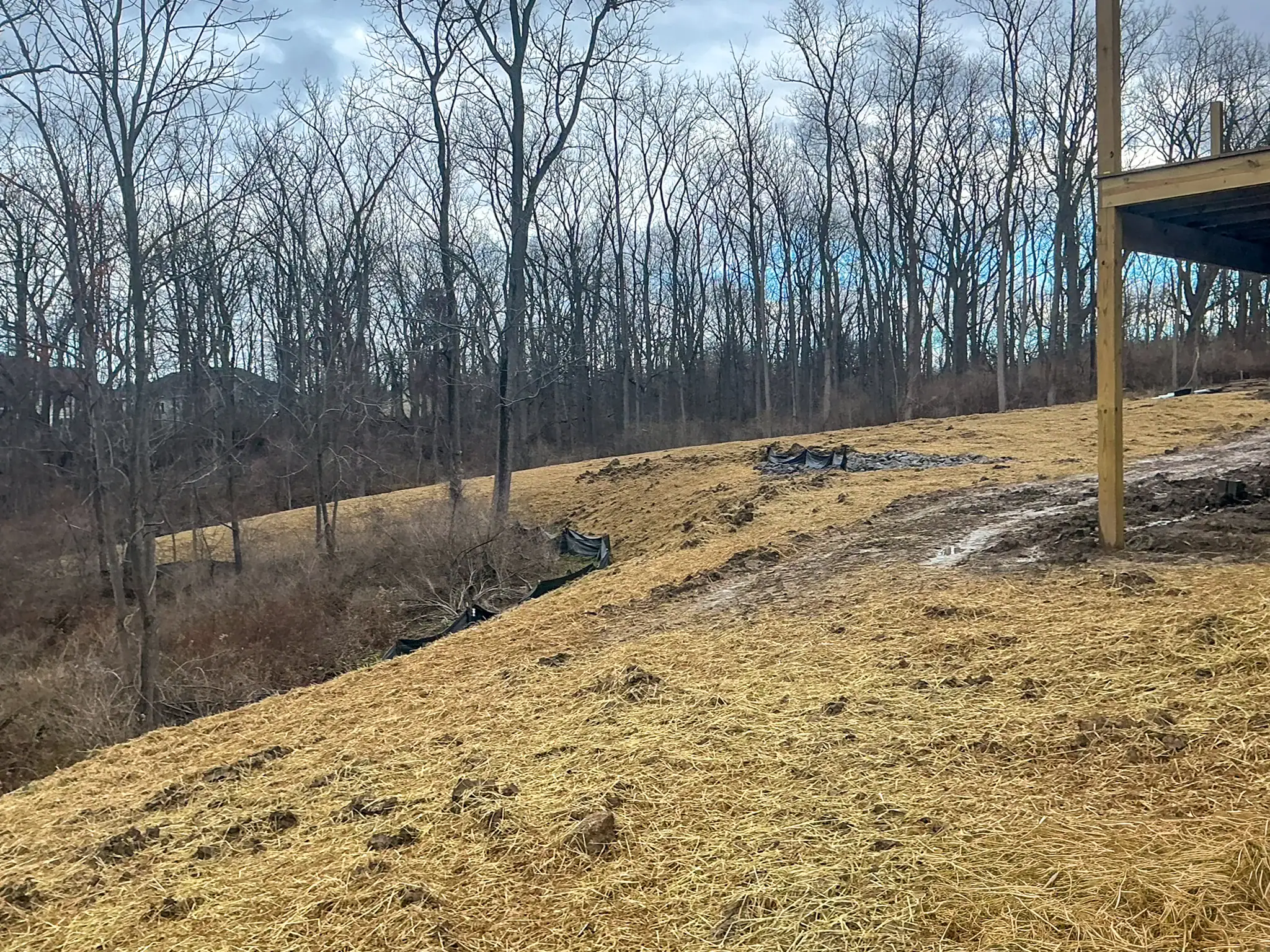
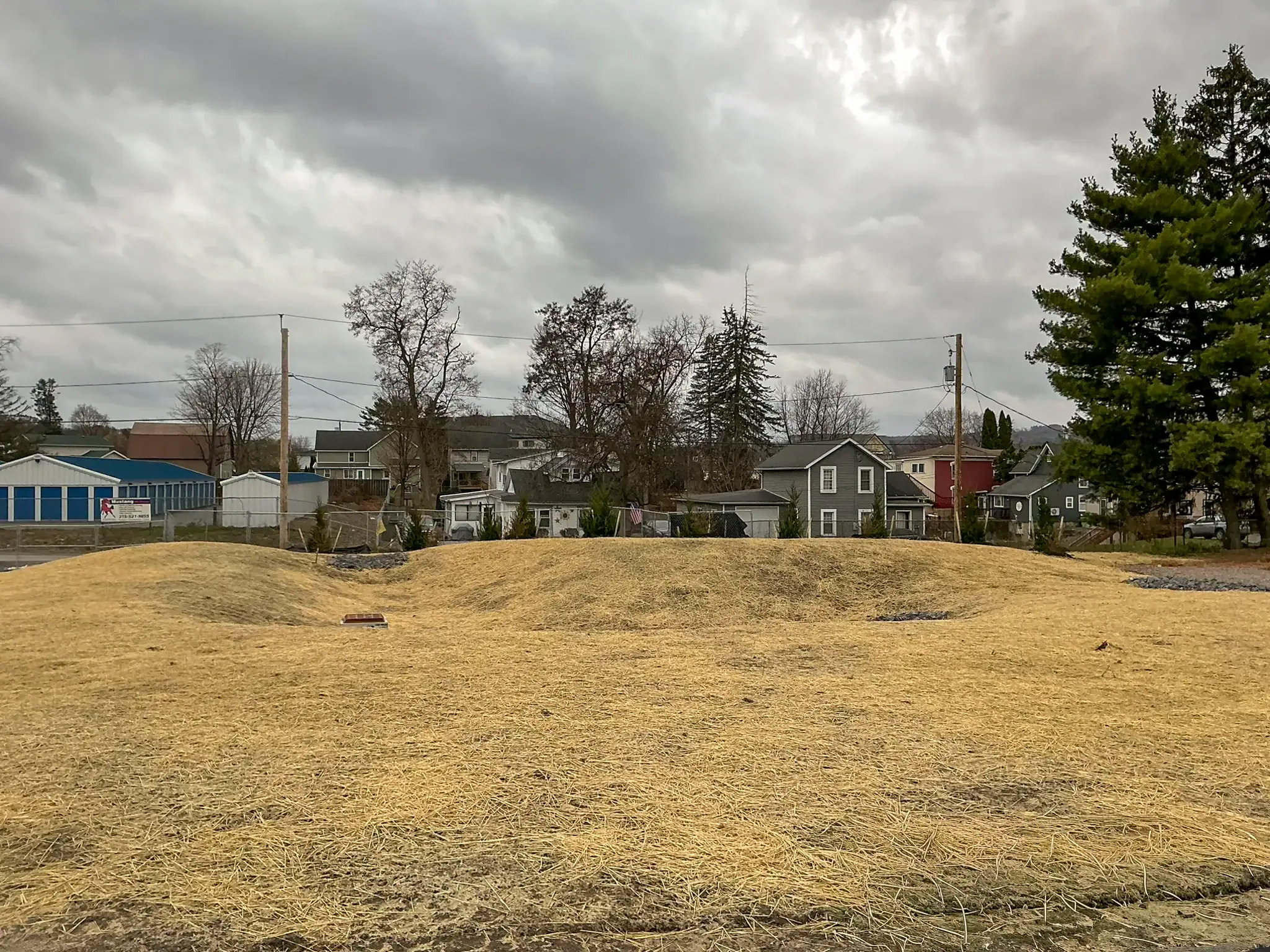
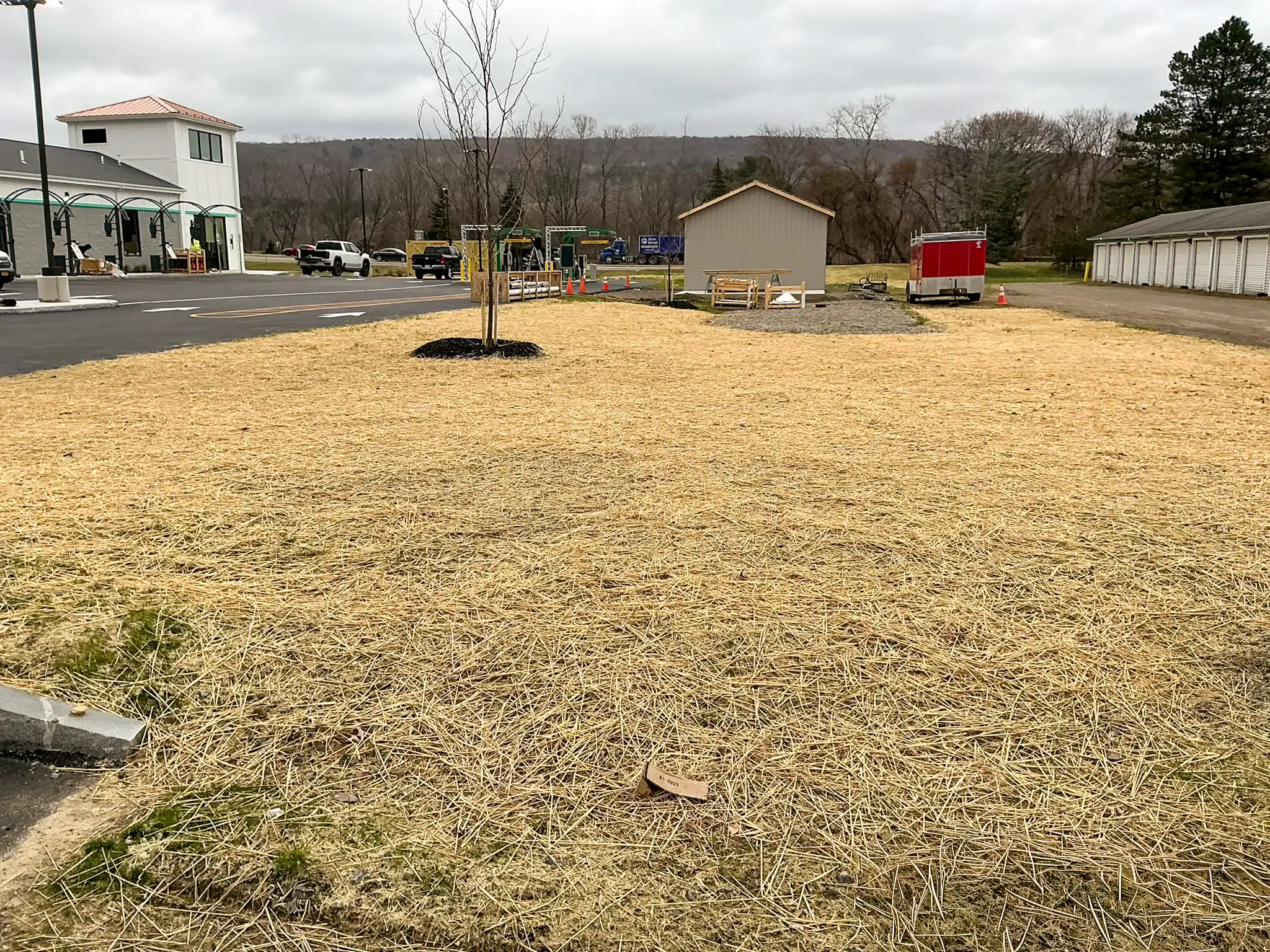
Rolled erosion control blankets are required on all slopes of three horizontal to one vertical or steeper. On flatter areas, straw mulch can be used, but the application rate must be doubled to four tons per acre during winter months to account for reduced effectiveness under snow and ice. Other manufactured mulches follow the same principle and should be applied at double the manufacturer’s recommended rate.
To stay ahead of melt events, disturbed soil should be stabilized at the end of each workday unless construction will resume in the same area within 24 hours and no precipitation is forecast, or unless the work is in areas designed to collect and retain runoff such as open utility trenches, foundation excavations, or water management features.
Seeding with mulch cover is preferred, but seeding alone does not meet the stabilization requirement during winter months. Areas must be protected with physical coverage that will remain effective under snow and ice conditions.
Step 6: Use Stone Paths to Stabilize Access and Traffic Areas
Winter construction means managing vehicle access in conditions that would otherwise degrade unprotected soil. Stone paths should be installed to stabilize access perimeters around buildings under construction and in areas where equipment traffic is anticipated.
These paths must be a minimum of 10 feet wide but should be widened as necessary to accommodate larger machinery and maintain safe movement across the site. Stone paths prevent rutting, reduce tracking of mud and sediment onto public roads, and provide stable access even during freeze-thaw cycles that would render unpaved areas impassable.
Step 7: Conduct Frequent Inspections and Maintain Compliance
Frequent site inspections are required to verify that erosion and sediment control measures are performing as intended. For sites under winter shutdown, all bare exposed soil must be stabilized by established vegetation, straw or other acceptable mulch, matting, rock, or approved rolled erosion control products.
Compliance inspections and reports must be filed in accordance with the site’s Stormwater Pollution Prevention Plan regardless of whether active construction is occurring. Inspections should document site conditions, identify any deficiencies in erosion control measures, and coordinate corrective actions before small issues become larger problems.
This level of attention is what separates projects that maintain compliance from those that face violations, delays, or environmental impacts when municipal inspectors or DEC staff conduct site visits.
What to Do When Controls Fail During a Winter Storm or Melt Event
Even with proper planning and installation, erosion and sediment controls can be overwhelmed or damaged during severe weather events. Rapid snowmelt combined with rain, ice dams that redirect flow, and equipment damage during snow removal can all compromise the effectiveness of controls. When this happens, quick action is required to minimize environmental impact and restore compliance.
Inspect immediately after the event. As soon as it’s safe to access the site, conduct a thorough inspection of all erosion and sediment control measures. Look for damaged silt fence, overtopped sediment barriers, clogged drainage structures, and any evidence of sediment leaving the site. Document conditions with photos and notes.
Address off-site sediment migration. If sediment has left the site and reached adjacent properties, roadways, or stormwater systems, it needs to be cleaned up as quickly as possible. Sediment on roadways should be swept or removed to prevent it from entering catch basins. Sediment that has reached wetlands, streams, or other sensitive areas may require coordination with DEC or the municipality to determine appropriate cleanup methods.
Repair or replace damaged controls. Silt fence that has been knocked down, buried, or torn needs to be repaired or replaced immediately. Sediment barriers that have been overtopped and are no longer functional should be cleaned out and restored to full capacity. If existing controls were insufficient to handle the event, additional measures may need to be installed to prevent future failures.
Clear drainage structures and remove ice dams. Check all catch basins, culverts, and swales to ensure they are open and flowing properly. Remove any ice dams or debris that is restricting flow. If drainage was redirected during the event, verify that it has returned to the intended flow path and that no new erosion issues have developed.
Stabilize any newly exposed soil. If the storm or melt event caused erosion that exposed additional soil, those areas need to be stabilized immediately. This may require additional mulch, erosion control blankets, or other temporary measures to prevent further sediment loss.
Document and report. All corrective actions should be documented in the site inspection records and included in the next compliance report. If the event resulted in a discharge that violated water quality standards or caused environmental harm, it may need to be reported to DEC or the municipality in accordance with the permit requirements.
Revise the SWPPP if necessary. If the failure revealed weaknesses in the erosion and sediment control plan, the SWPPP should be revised to address those deficiencies. This might include adding additional controls, increasing the capacity of existing measures, or changing snow management procedures to prevent similar problems in the future.
Winter weather is unpredictable, and even well-designed controls can fail under extreme conditions. The key is to respond quickly, document what happened, and make the changes necessary to prevent recurrence. Sites that demonstrate a commitment to rapid response and corrective action are far less likely to face enforcement actions even when problems occur.
Why Winter Stabilization Matters
Winter stabilization requirements exist to protect the streams, lakes, and water resources that define the character of Western New York. Sediment pollution from construction sites can degrade water quality, harm aquatic habitats, and create long-term environmental problems that are difficult and expensive to remediate.
For project owners and contractors, compliance with winter stabilization standards means avoiding enforcement actions, preventing delays, and maintaining the ability to keep projects moving through the winter months. It also demonstrates a commitment to responsible site management and environmental stewardship.
Planning for winter stabilization should begin in the fall, well before the November 15 start date. Sites that wait until the last minute to install controls or develop snow management plans are more likely to face compliance issues when weather conditions deteriorate rapidly.
Winter in Western New York is long, and construction activity continues through it. Proper planning, timely installation of controls, and consistent site inspections are what keep projects on track and in compliance from November through April.
Gallery
Additional Resources
New York State Standards and Specifications for Erosion and Sediment Control (Blue Book)
The complete technical standard referenced throughout the Winter Stabilization requirements, including detailed specifications for all erosion and sediment control practices.
NYS DEC Blue Book (November 2016)
SPDES General Permit for Stormwater Discharges from Construction Activity (GP-0-25-001)
The current Construction General Permit that governs all construction activities disturbing one or more acres in New York State, effective January 29, 2025.
Construction General Permit
New York State Stormwater Management Design Manual
Technical guidance for the design of stormwater management practices on projects requiring post-construction stormwater controls, updated July 2024.
Stormwater Design Manual (2024)
Construction Stormwater Toolbox
NYS DEC’s central resource page for technical information, training requirements, inspection forms, and compliance tools for construction site stormwater management.
DEC Construction Stormwater Toolbox
Erosion and Sediment Control Training
Information on the required four-hour DEC-endorsed training for contractors, subcontractors, and qualified inspectors working on SPDES-permitted construction sites.
NYS Conservation District Training Calendar