Fr. Richard Noonan S.J. Field – Synthetic Turf Renewal | McQuaid Jesuit
1800 S Clinton Ave, Brighton, NY 14618
Client:McQuaid Jesuit Construction Completion:Fall 2025
Project Services: Land Survey, Landscape Architecture, Civil Engineering, Schematic Design, Design Development, Construction Documentation & Construction Observation
Project Overview
Costich partnered with McQuaid Jesuit to renew Fr. Richard Noonan S.J. Field with a modern synthetic turf system designed for long-term durability and year-round performance. The project continues our ongoing collaboration with the campus, supporting its Athletic Master Plan that began in 2019.
Our team provided full-service design and documentation — from initial boundary and topographic surveys through final construction observation. The new turf surface enhances playability, improves drainage, and allows McQuaid athletes to stay on the field through Rochester’s variable weather conditions.
Goals and Challenges
• Extend the playable season and reduce downtime after rain and snow • Improve drainage and grading for safer, more consistent play • Create a low-maintenance, high-performance field that can support daily use • Integrate seamlessly with the surrounding campus and circulation routes
Scope of Services
Costich delivered complete in-house services across multiple disciplines. • Land Surveying to capture existing grades, boundaries, and utilities • Civil Engineering for grading, sub-base, and stormwater improvements • Landscape Architecture for circulation, edges, and spectator areas • Schematic Design through Construction Documents with technical coordination • Construction Observation and field verification during installation
Design and Execution Highlights
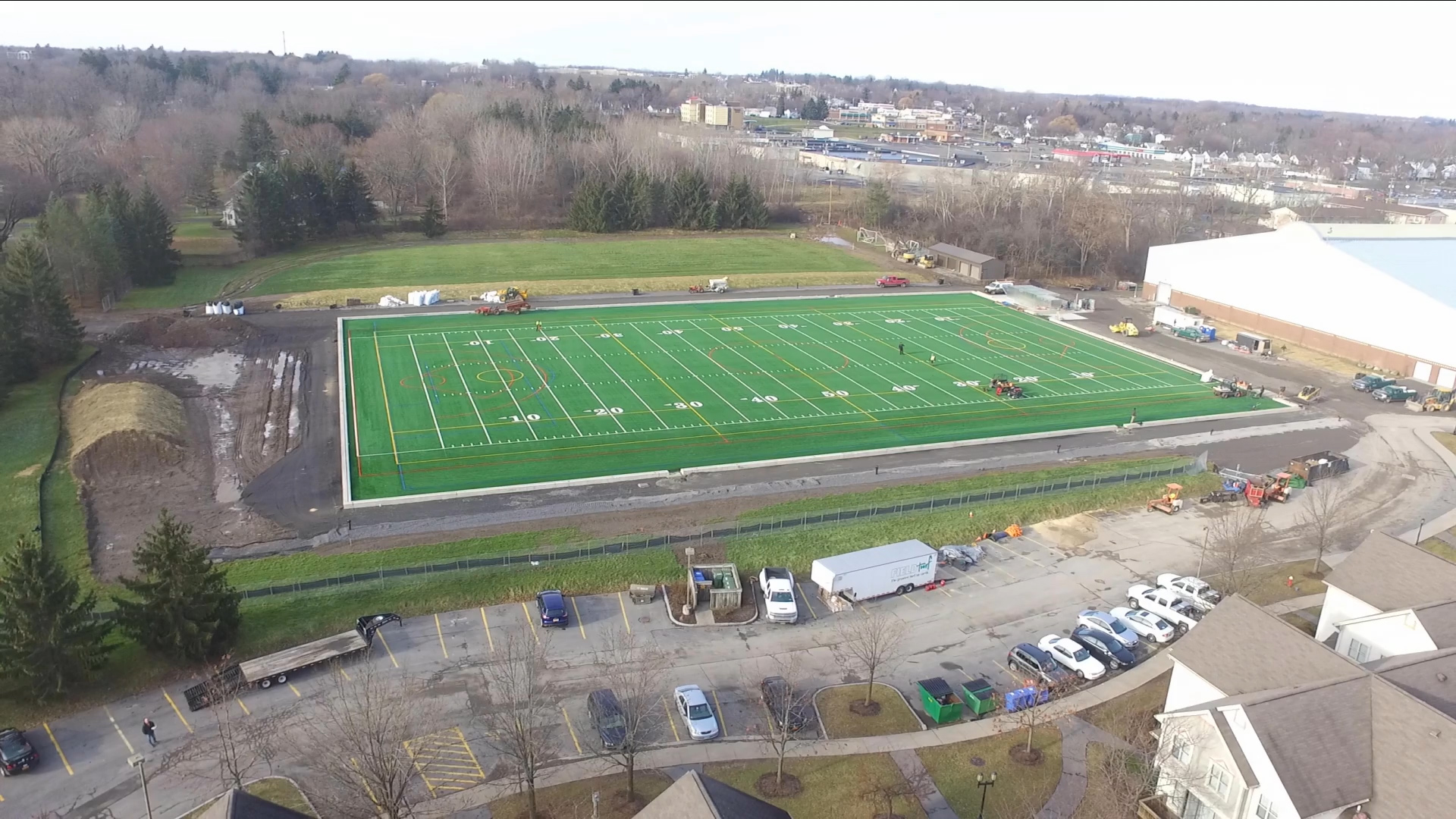
The field renewal introduced a next-generation synthetic turf system designed to withstand heavy use and Rochester’s four-season climate. Costich’s design addressed sub-base stability, drainage performance, and ADA access while maintaining the campus’s visual identity.
The project team worked closely with McQuaid’s athletic staff and turf installer to phase construction around active sports schedules, ensuring minimal disruption to on-campus activities. The result is a surface that looks and performs like natural grass but delivers consistent playability throughout the year.
Outcomes
• Reliable, all-weather play surface that extends the competitive season • Safer footing and reduced surface maintenance compared to natural grass • Efficient stormwater management and improved field drainage • Enhanced aesthetics and functionality for spectators and players alike
Fr. Richard Noonan S.J. Field now serves as a cornerstone of McQuaid Jesuit’s athletics complex, supporting multiple programs and student activities across the school year.
Gallery
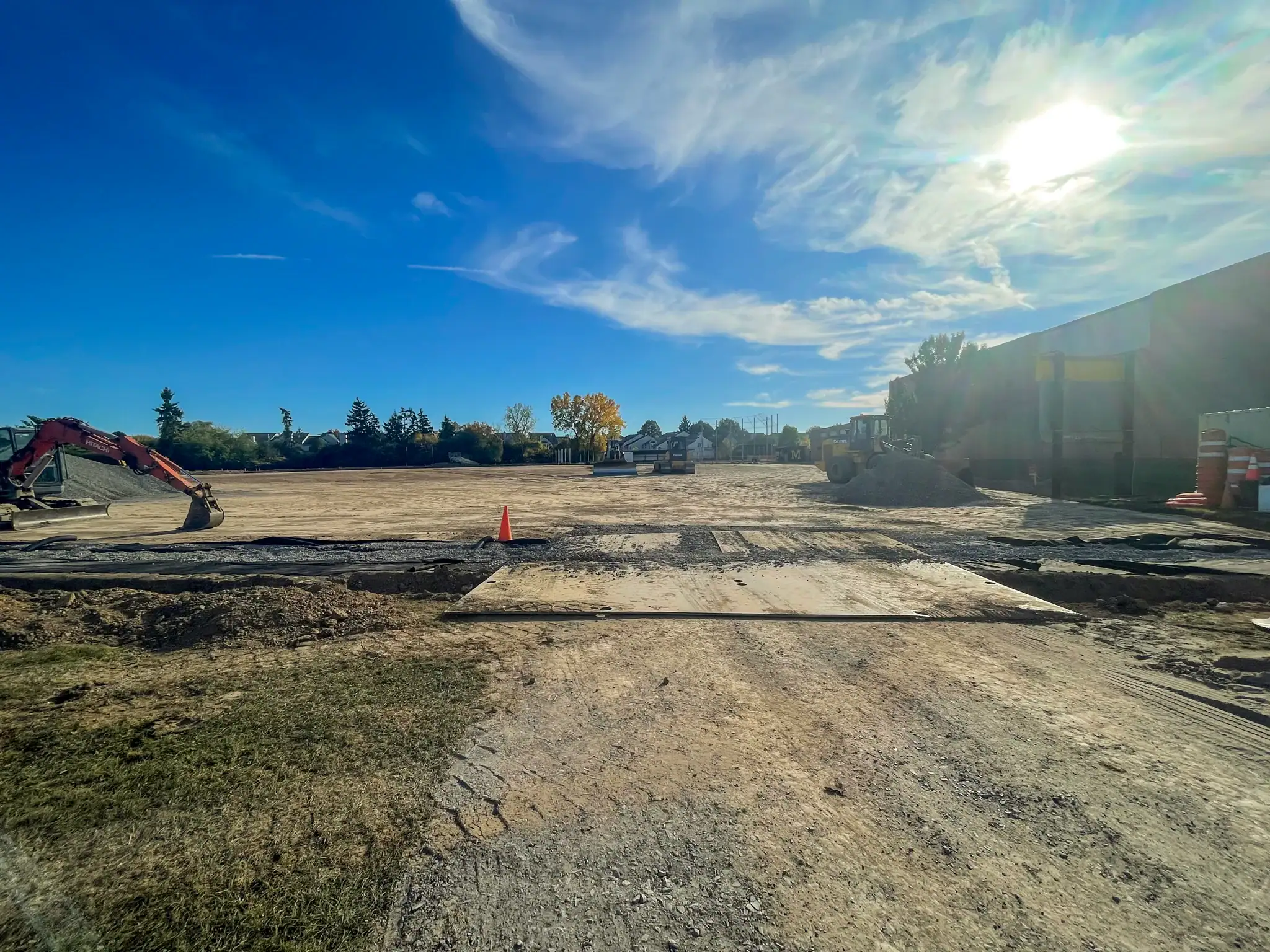
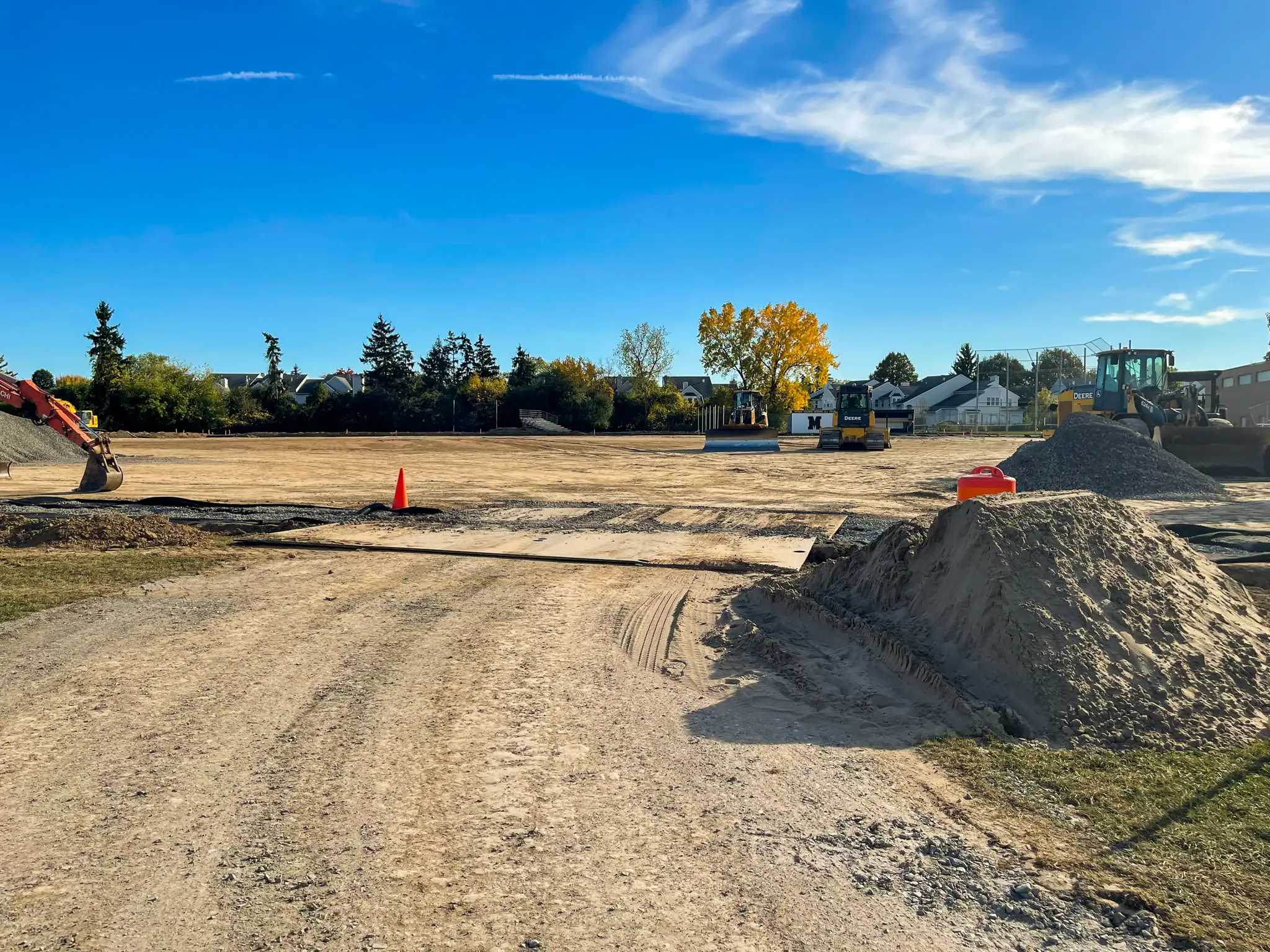
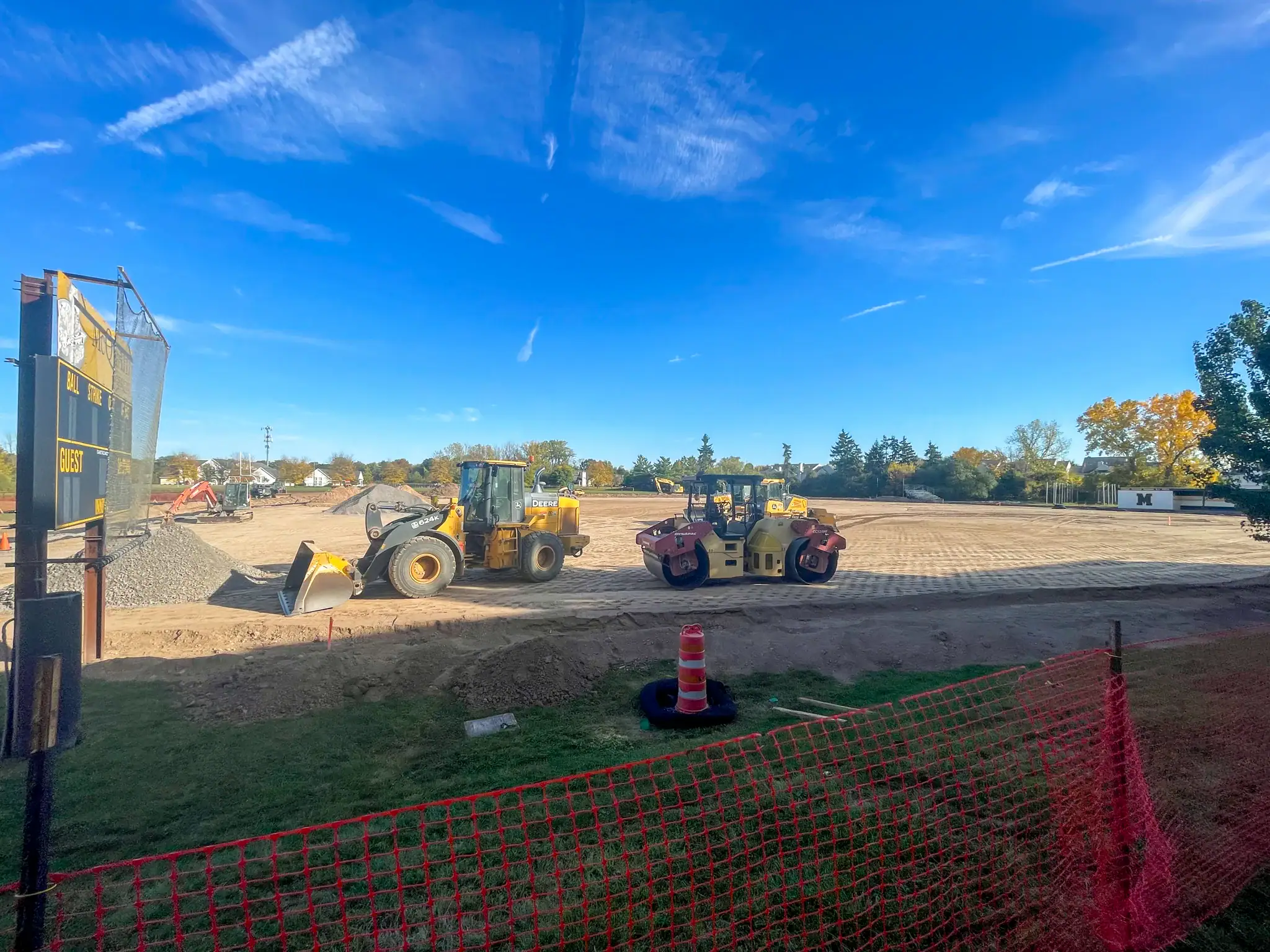
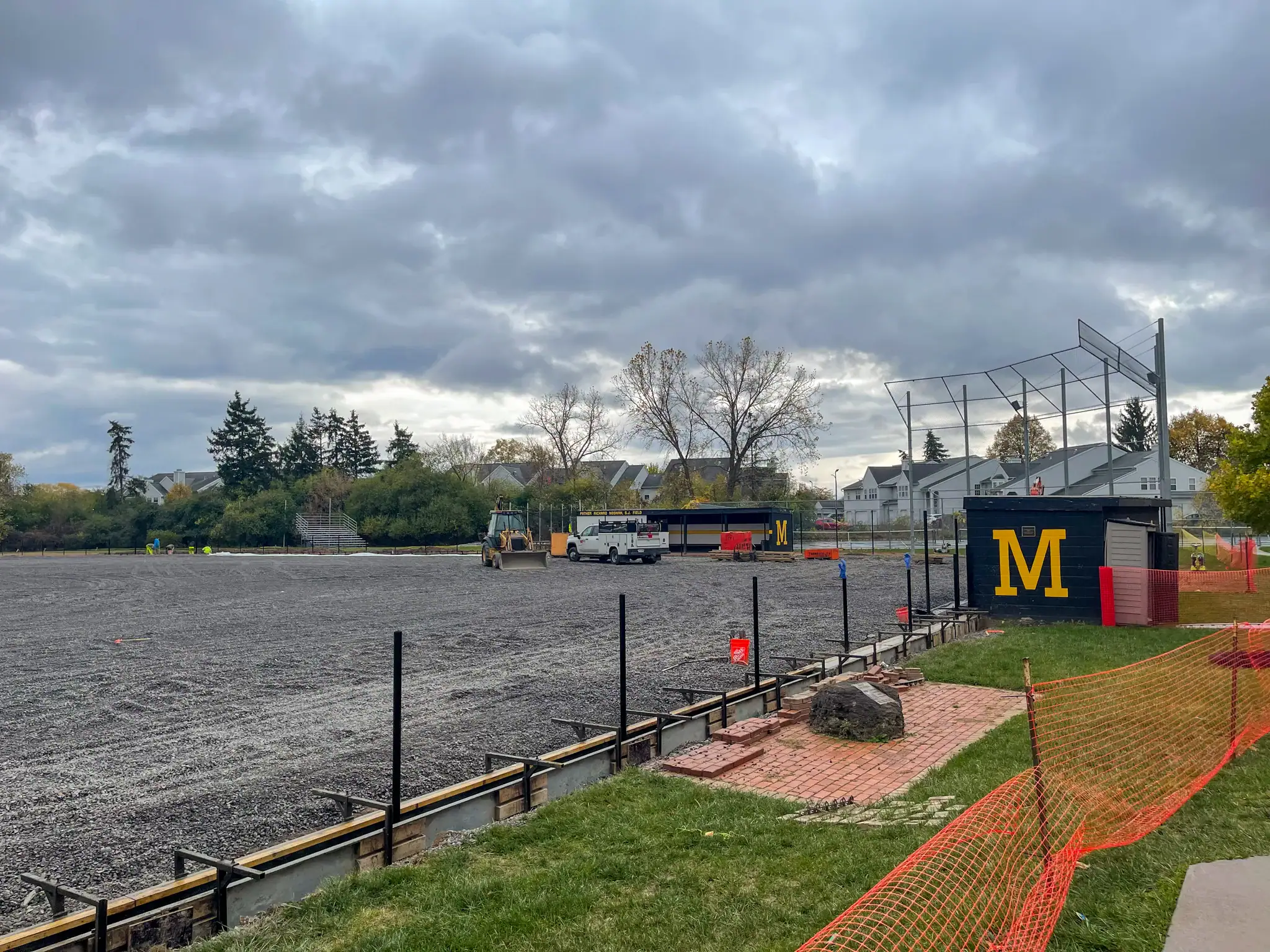
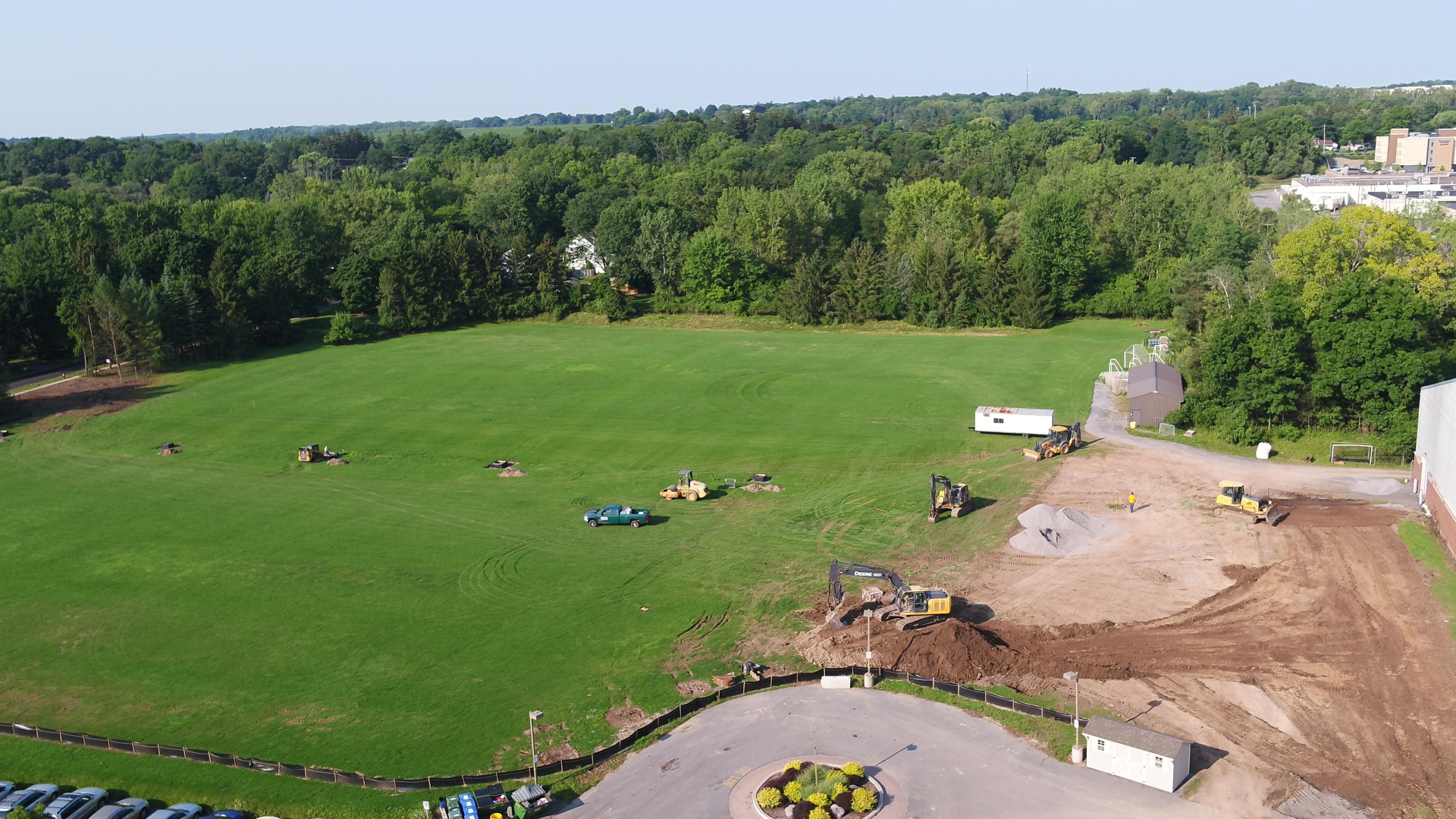
Construction crews prepare the sub-base for the new synthetic turf system at Fr. Richard Noonan S.J. Field in Brighton, New York.
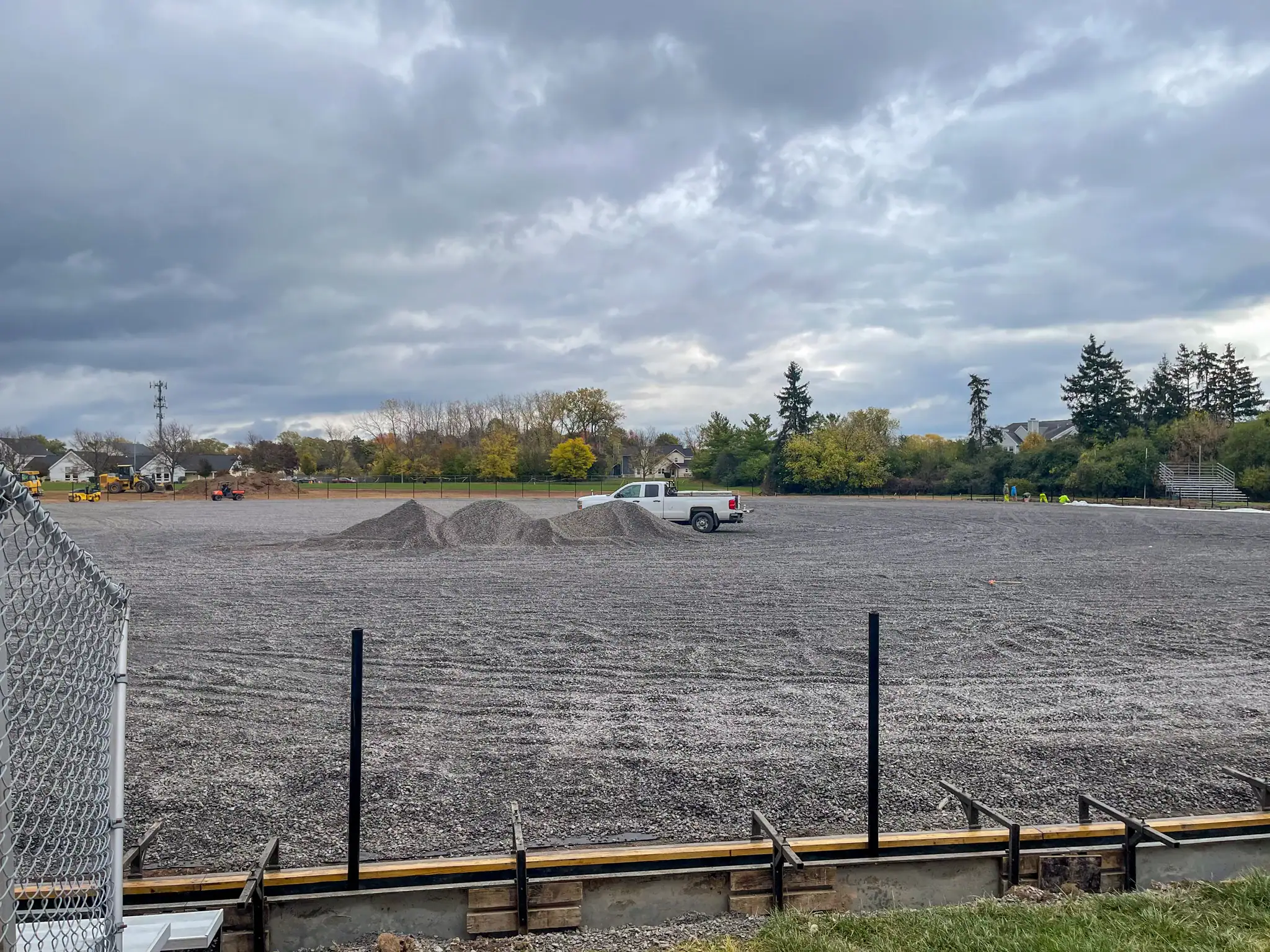
Heavy equipment levels the subgrade and prepares the field base at Fr. Richard Noonan S.J. Field, part of McQuaid Jesuit’s athletic turf renewal project in Brighton, New York.
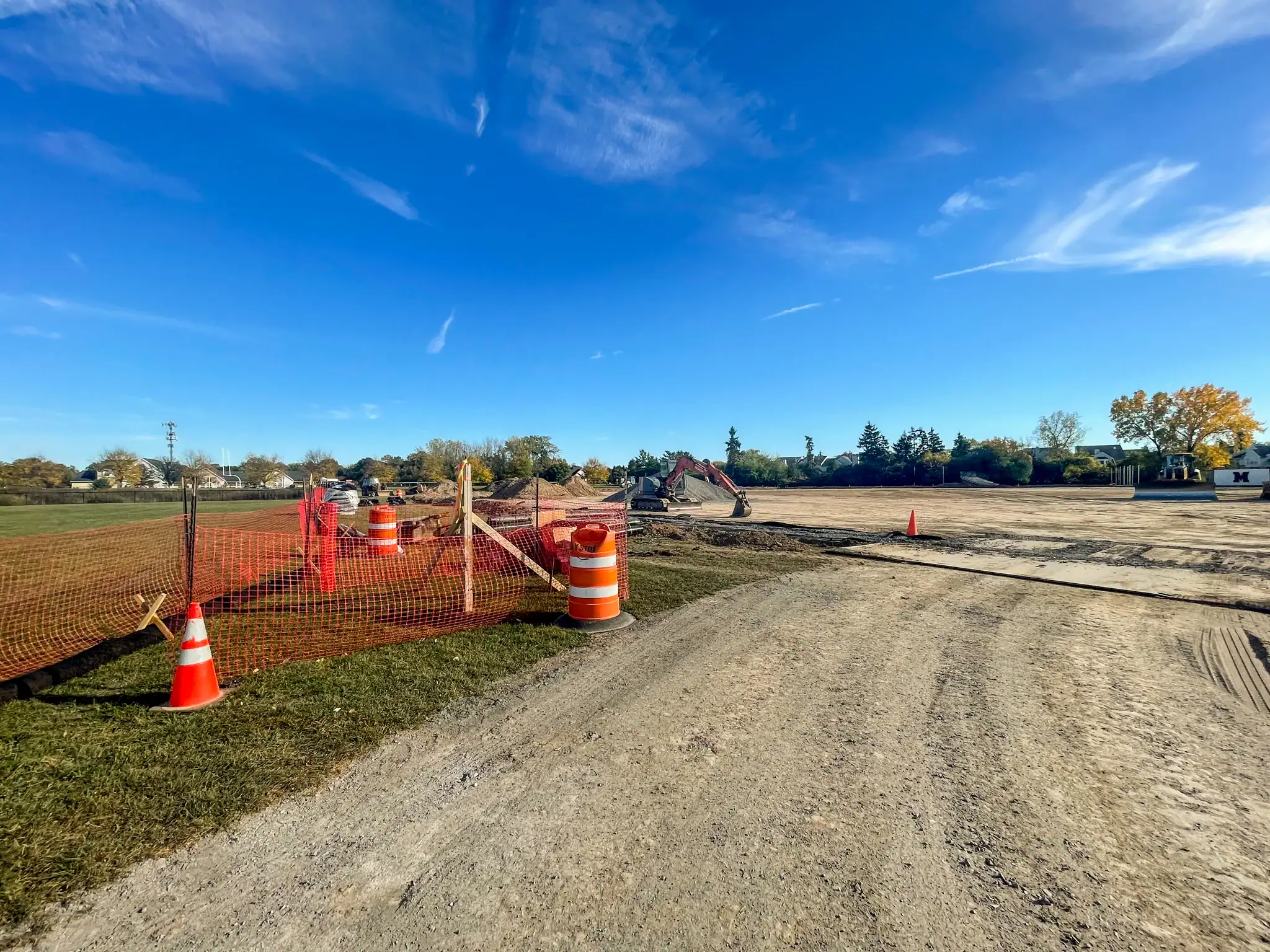
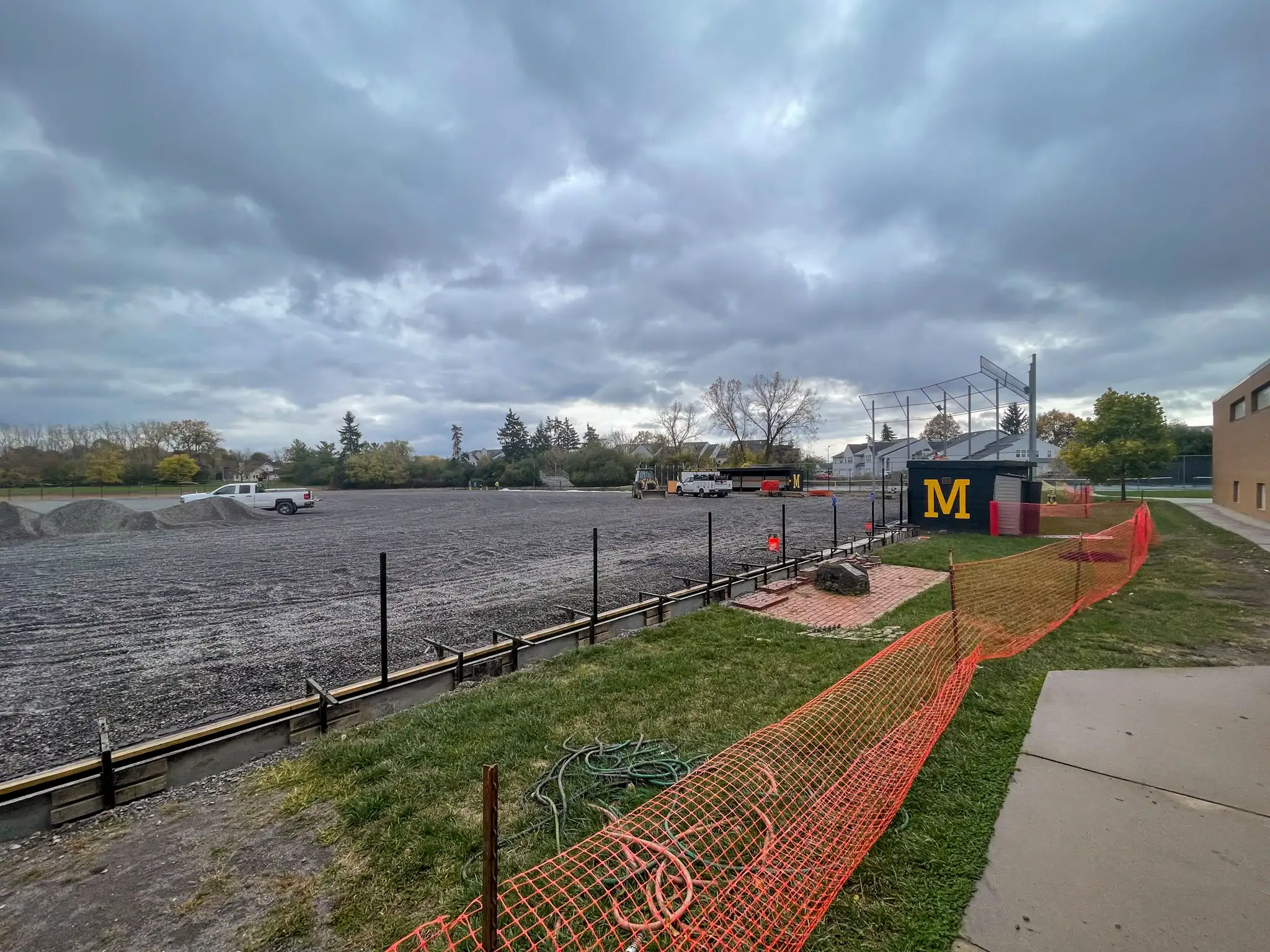
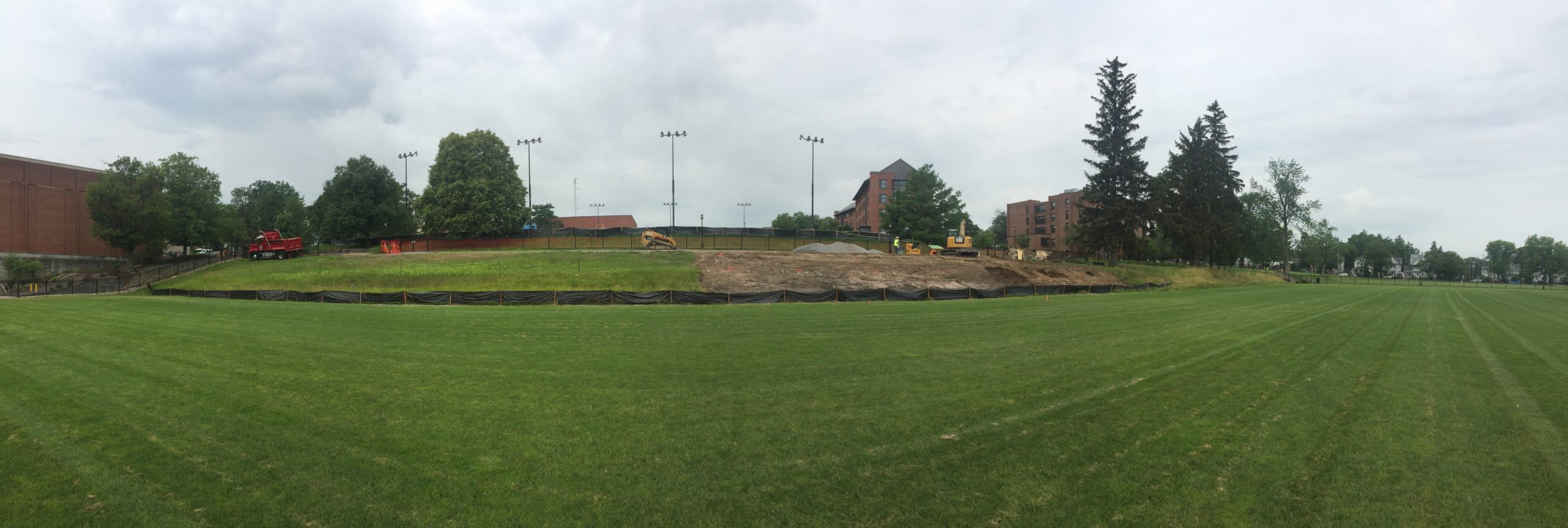
Safety fencing and equipment mark the active grading area at Fr. Richard Noonan S.J. Field, part of the synthetic turf field renovation at McQuaid Jesuit in Brighton, New York.
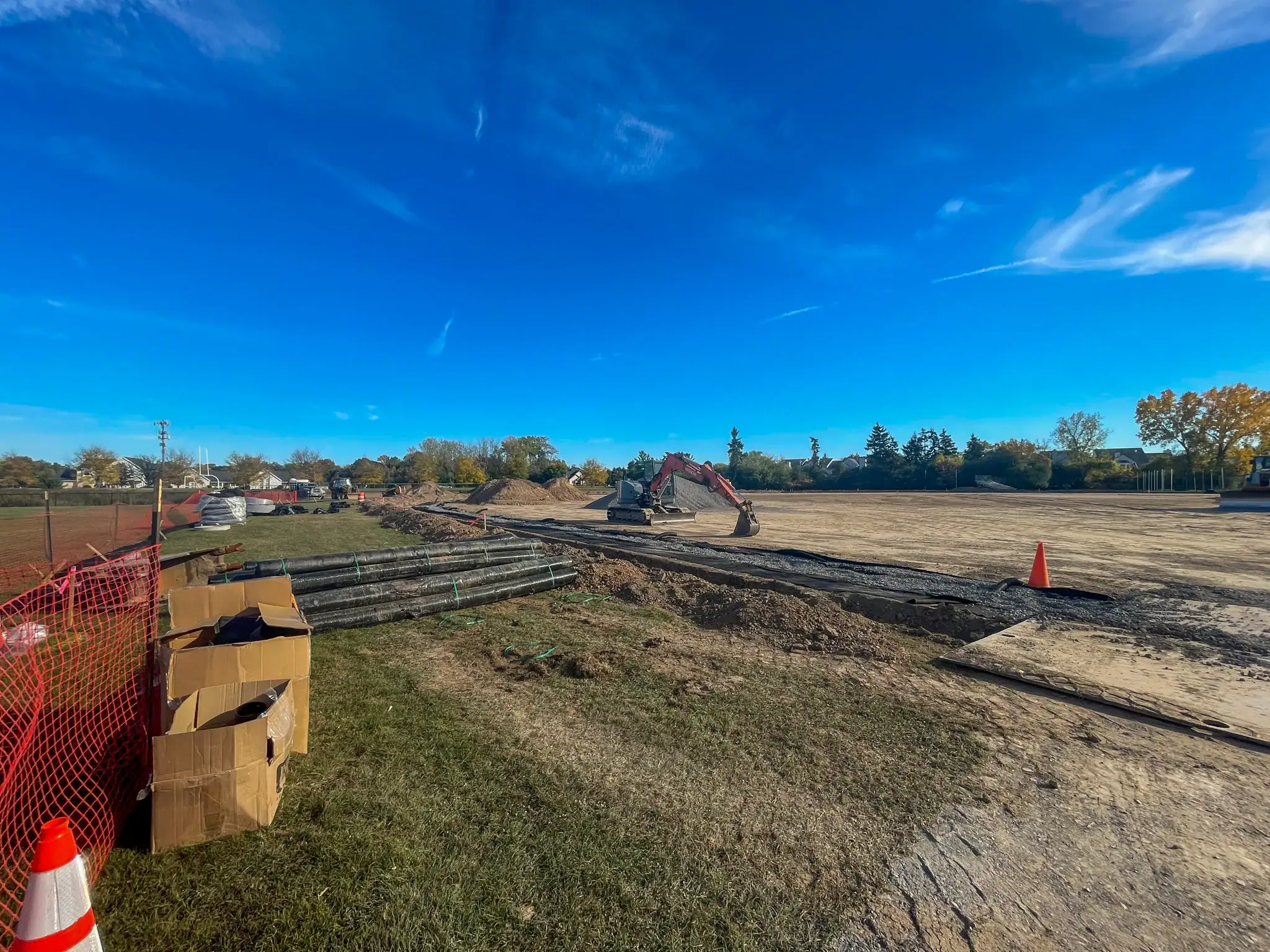
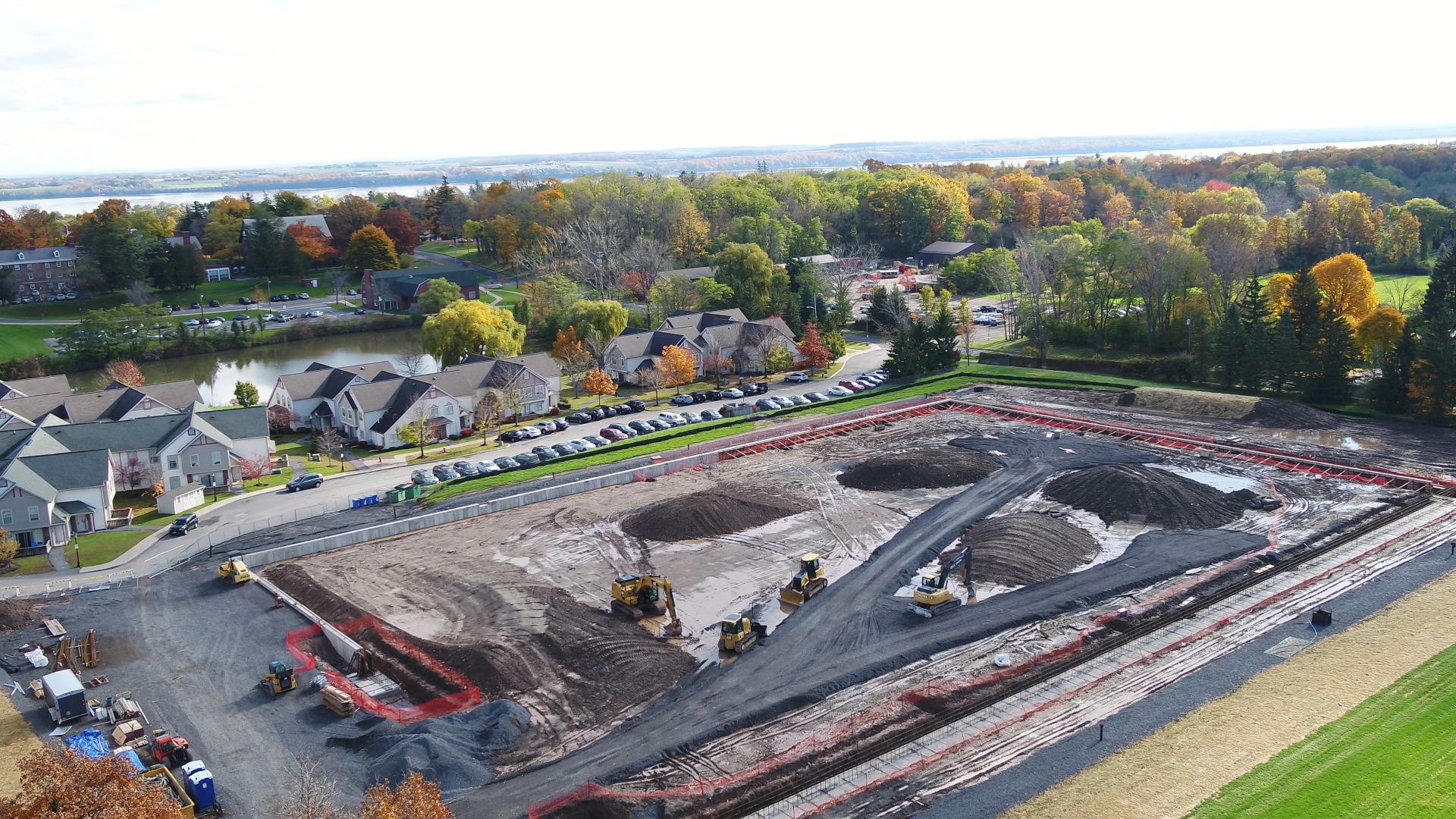
An excavator and construction crew work on subsurface drainage installation at Fr. Richard Noonan S.J. Field, part of the McQuaid Jesuit turf field renovation in Brighton, New York.
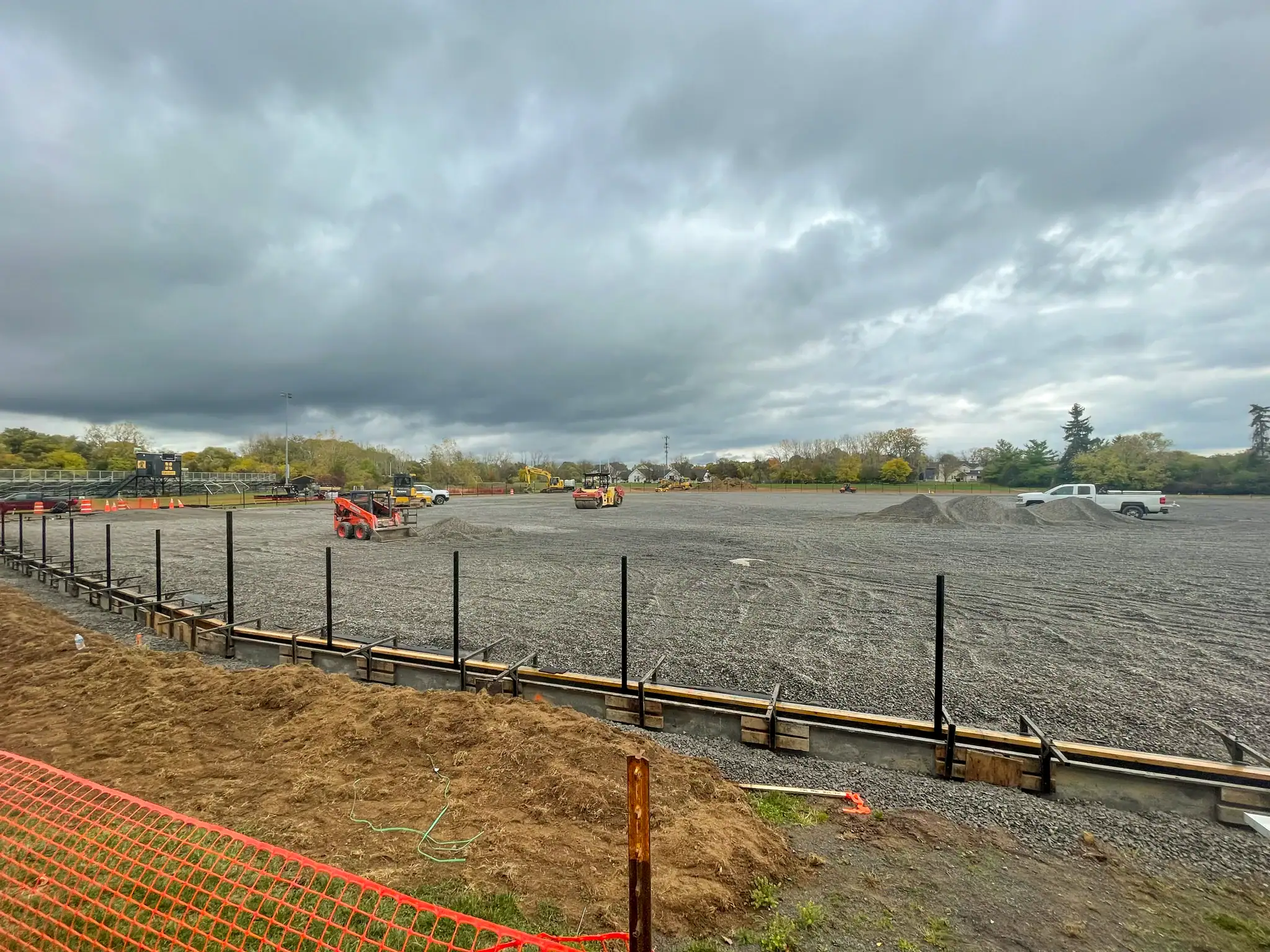
Compaction and grading equipment shape the sub-base at Fr. Richard Noonan S.J. Field as part of McQuaid Jesuit’s ongoing synthetic turf field renovation in Brighton, New York.
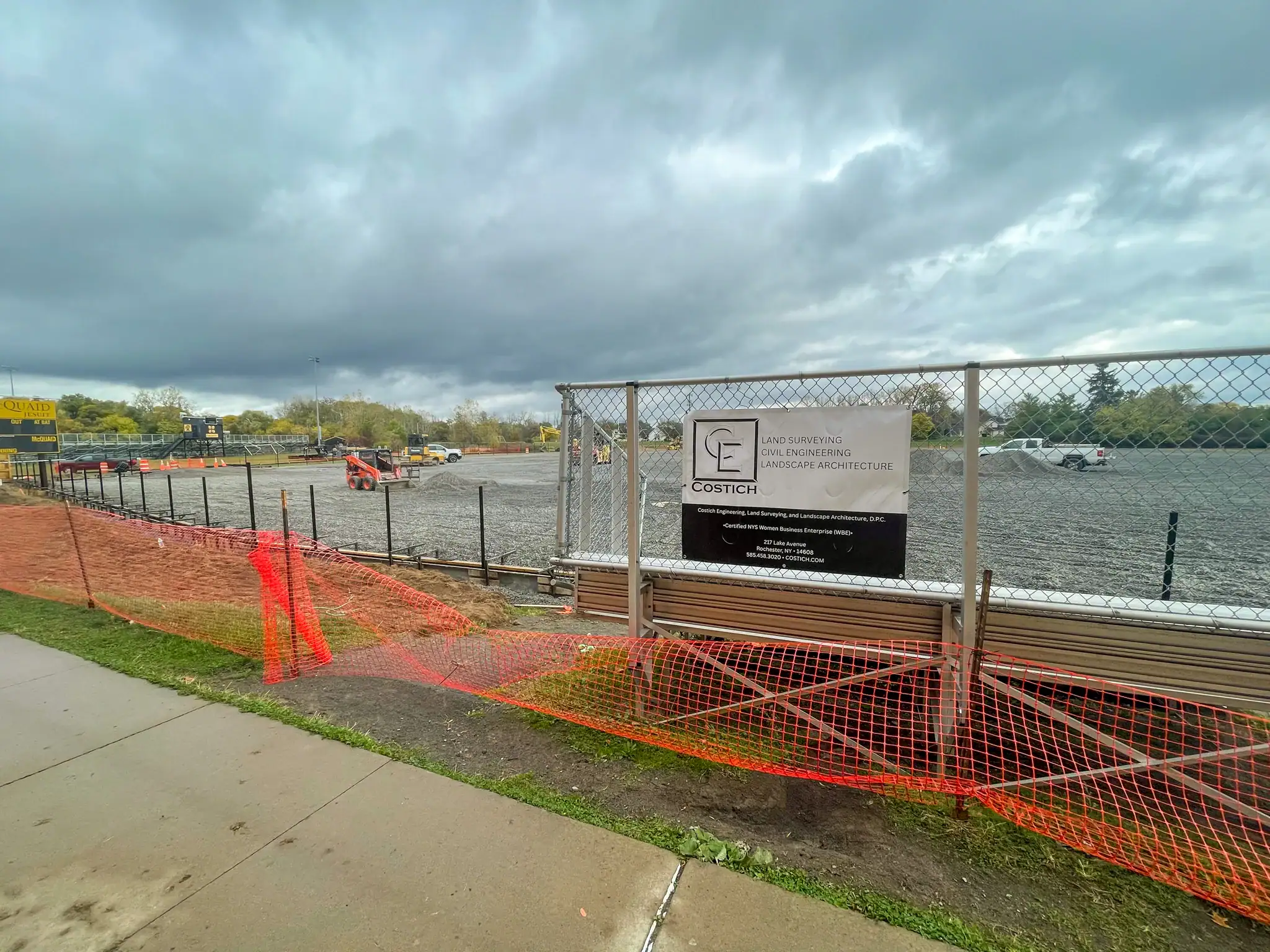
Costich Engineering’s project signage displayed at the Fr. Richard Noonan S.J. Field turf renovation site on the McQuaid Jesuit campus in Brighton, New York.
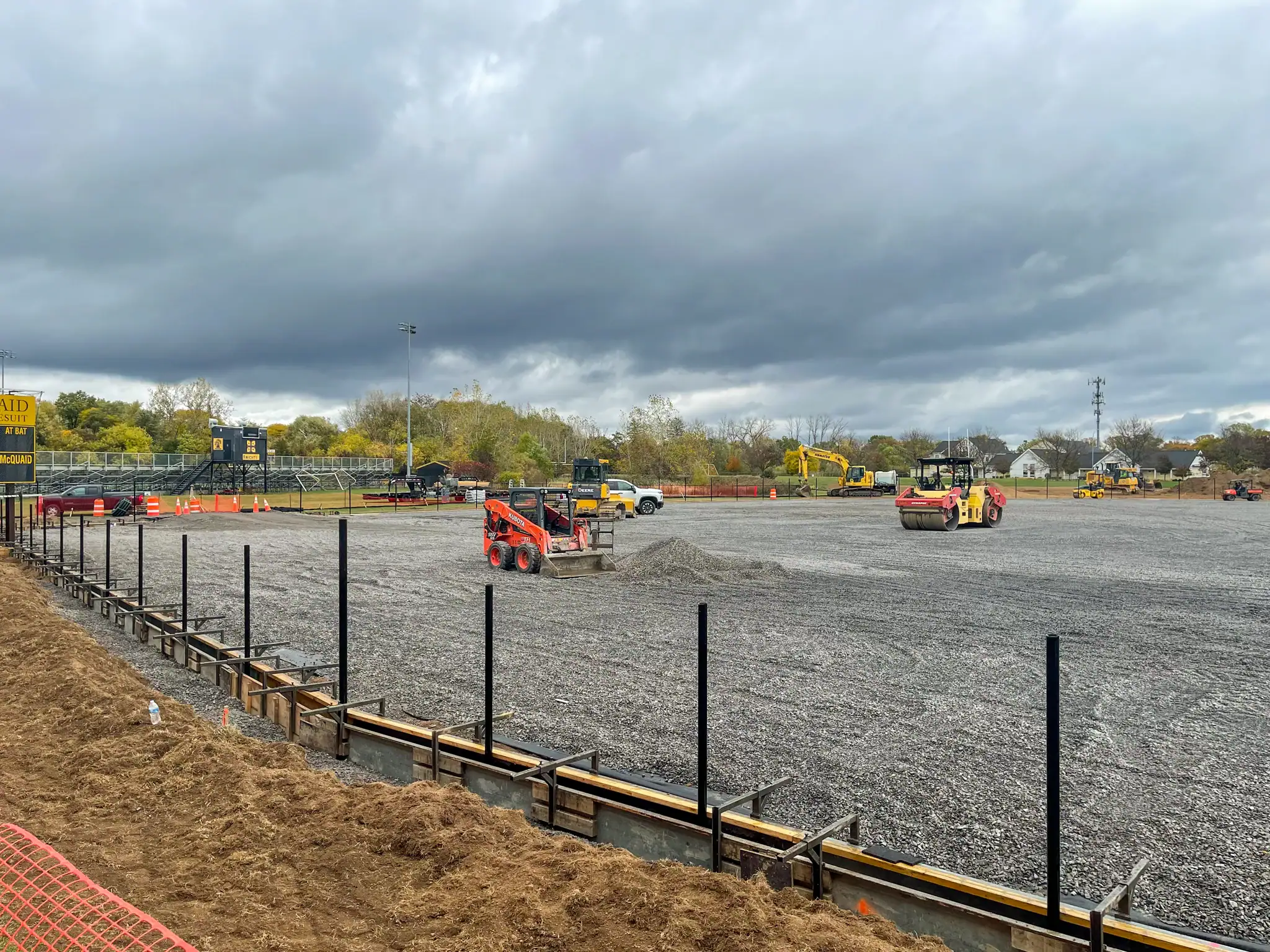
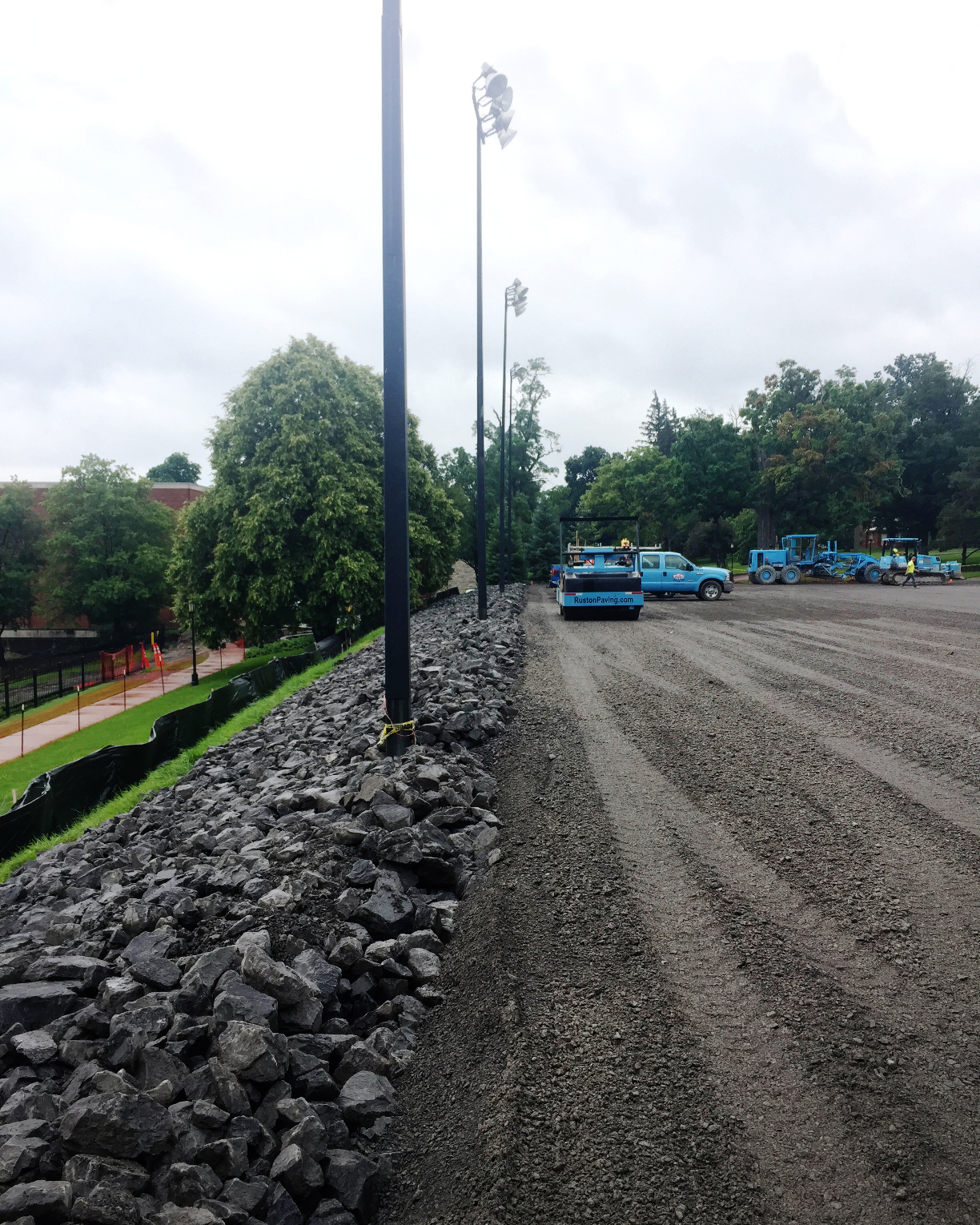
Crews compact the gravel sub-base and prepare edge forms at Fr. Richard Noonan S.J. Field, part of McQuaid Jesuit’s ongoing synthetic turf field project in Brighton, New York.
Edge forms and gravel placement progress along the perimeter of Fr. Richard Noonan S.J. Field, part of McQuaid Jesuit’s turf field redevelopment in Brighton, New York.
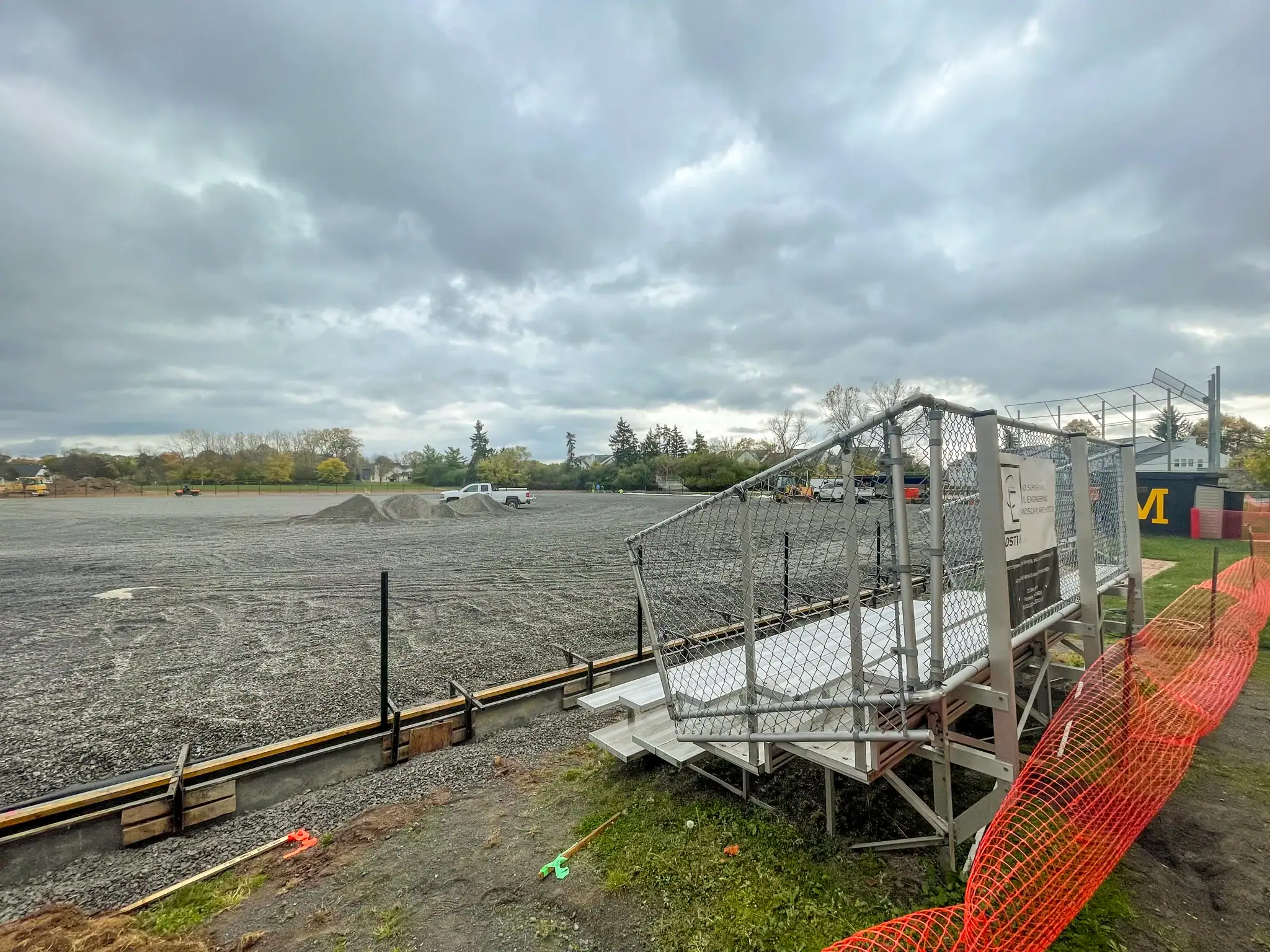
A view of the gravel base and dugout structures during construction of the Fr. Richard Noonan S.J. Field turf renovation at McQuaid Jesuit in Brighton, New York.
Gravel base grading and material placement continue at Fr. Richard Noonan S.J. Field, part of McQuaid Jesuit’s athletic field renovation in Brighton, New York.
A wide view of active construction at Fr. Richard Noonan S.J. Field on the McQuaid Jesuit campus in Brighton, New York, showing gravel base installation and dugout structures.
Crews compact the gravel base at Fr. Richard Noonan S.J. Field, part of McQuaid Jesuit’s synthetic turf field project in Brighton, New York.
Joseph M. Lobozzo Alumni House - Rochester Institute of Technology
Rochester Institute of Technology, Andrew Memorial Drive & East River Road, Town of Henrietta, NY
Client:Milestone Construction Partners Construction Completion:2018
Project Services: Land Surveying, Civil Site Engineering, Landscape Architecture, Schematic Design, Design Development, Construction Documentation, Construction Observation, Municipal Approvals, Stormwater Management Planning
Project Background
Joseph M. Lobozzo Alumni House: A Campus Gateway for RIT The Joseph M. Lobozzo ’95 Alumni House at Rochester Institute of Technology was designed as a dedicated facility to bring alumni, students, and the campus community together. Completed in 2018 through a design-build partnership, the 5,867-square-foot facility reflects both functional campus needs and donor-driven vision.
Survey, Civil Engineering, and Landscape Architecture Costich Engineering supported the project with a full range of services, beginning with detailed surveying to establish site conditions. Civil site engineering addressed grading, drainage, and utility design, while our landscape architecture team created pedestrian-friendly outdoor spaces, green infrastructure stormwater practices, and sustainable plantings. Together, these services ensured a cohesive site design that integrated seamlessly with the existing campus fabric.
Enhancing Campus Experience In addition to the alumni-focused building, associated site improvements included an outdoor patio and event space, enhanced pedestrian connections, and sustainable stormwater solutions. These upgrades provide both functional infrastructure and welcoming spaces that enrich the RIT campus environment.
Key Features
5,867-square-foot alumni house funded by donor contributions
Comprehensive land surveying, civil engineering, and landscape architecture services
Green infrastructure stormwater management systems
Outdoor patio and flexible event spaces
Improved pedestrian circulation and campus connectivity
Sustainable landscape design integrated with campus character
Design-build delivery method
Gallery
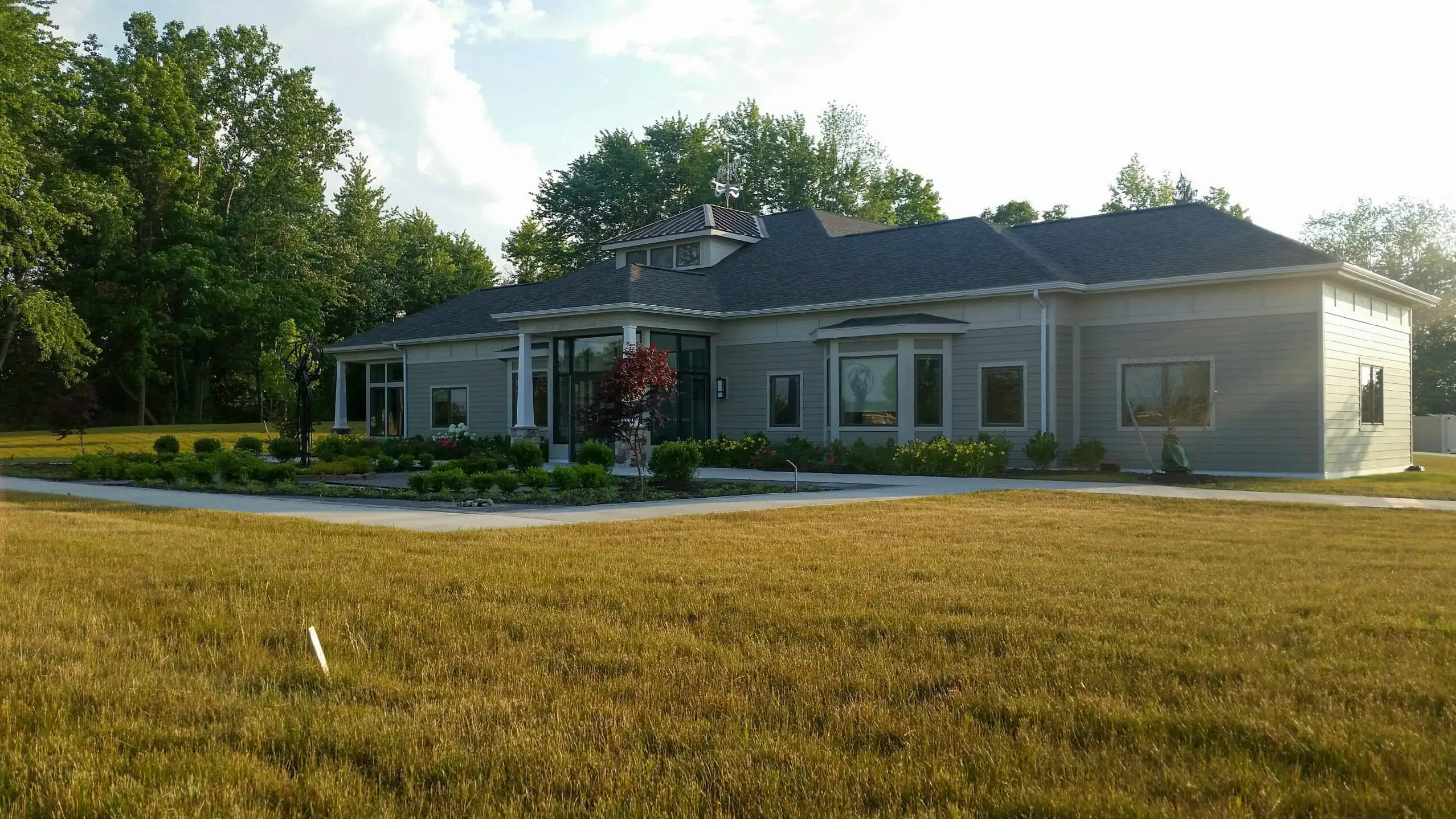
Main entrance of RIT Alumni House featuring Costich Engineering’s landscape architecture design with ornamental trees, foundation plantings, and entrance drive civil engineering in Henrietta, NY.
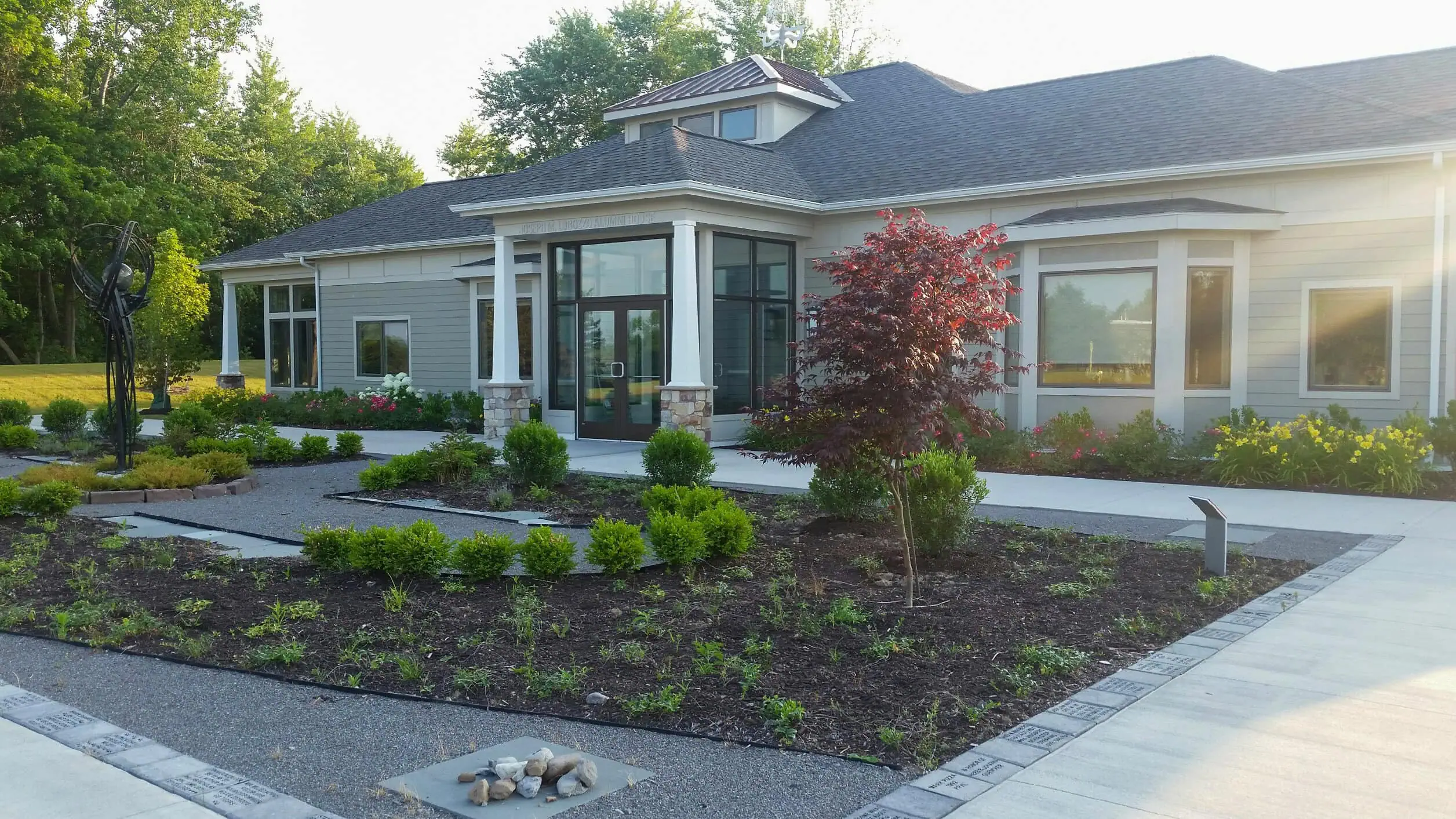
Detailed entrance landscaping at Joseph M. Lobozzo Alumni House, Rochester Institute of Technology, featuring Costich Engineering’s landscape architecture design with sustainable plantings, decorative stonework, hardscape walkways, and green infrastructure elements. Professional site design for educational facility in Henrietta, NY.
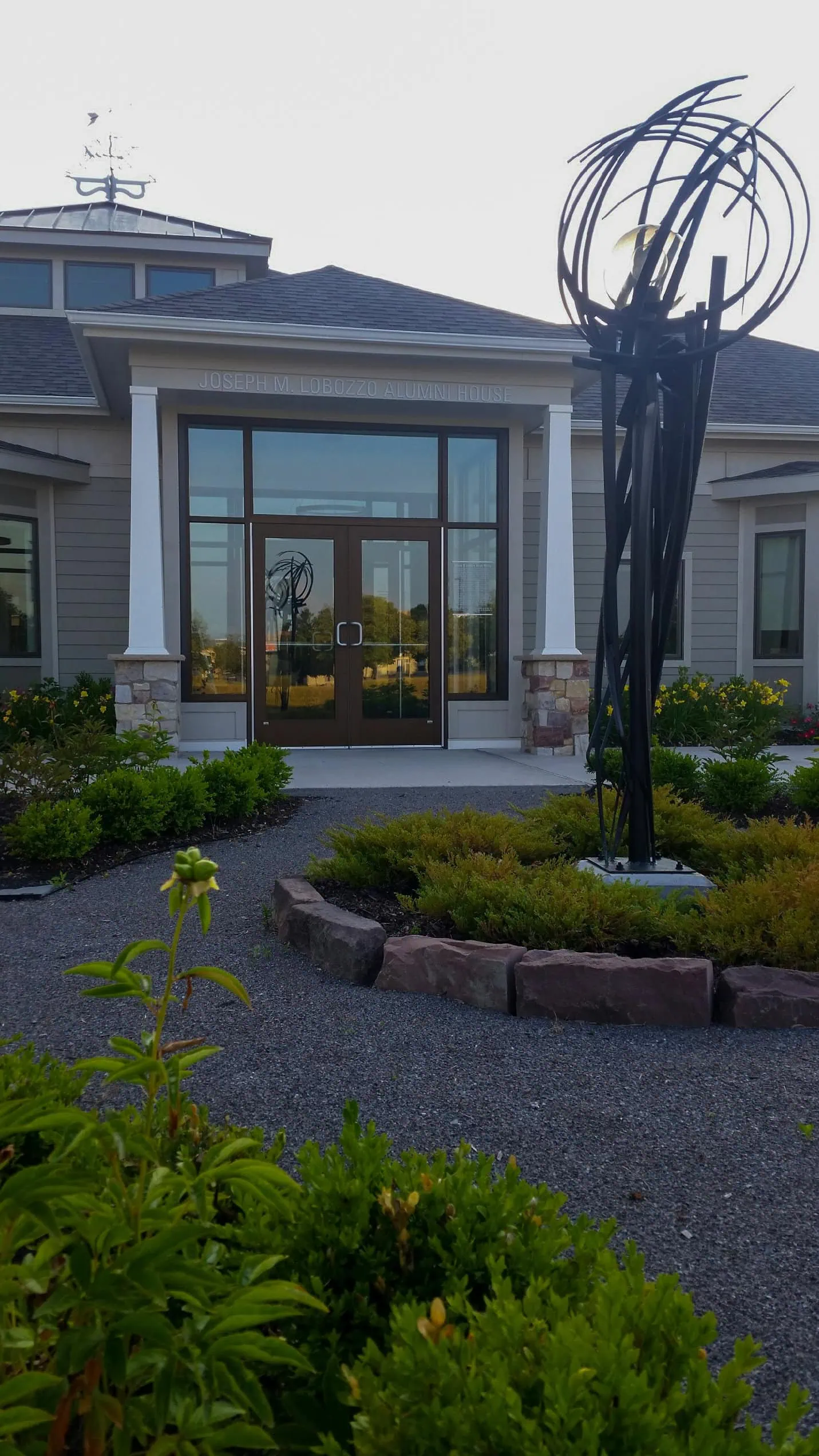
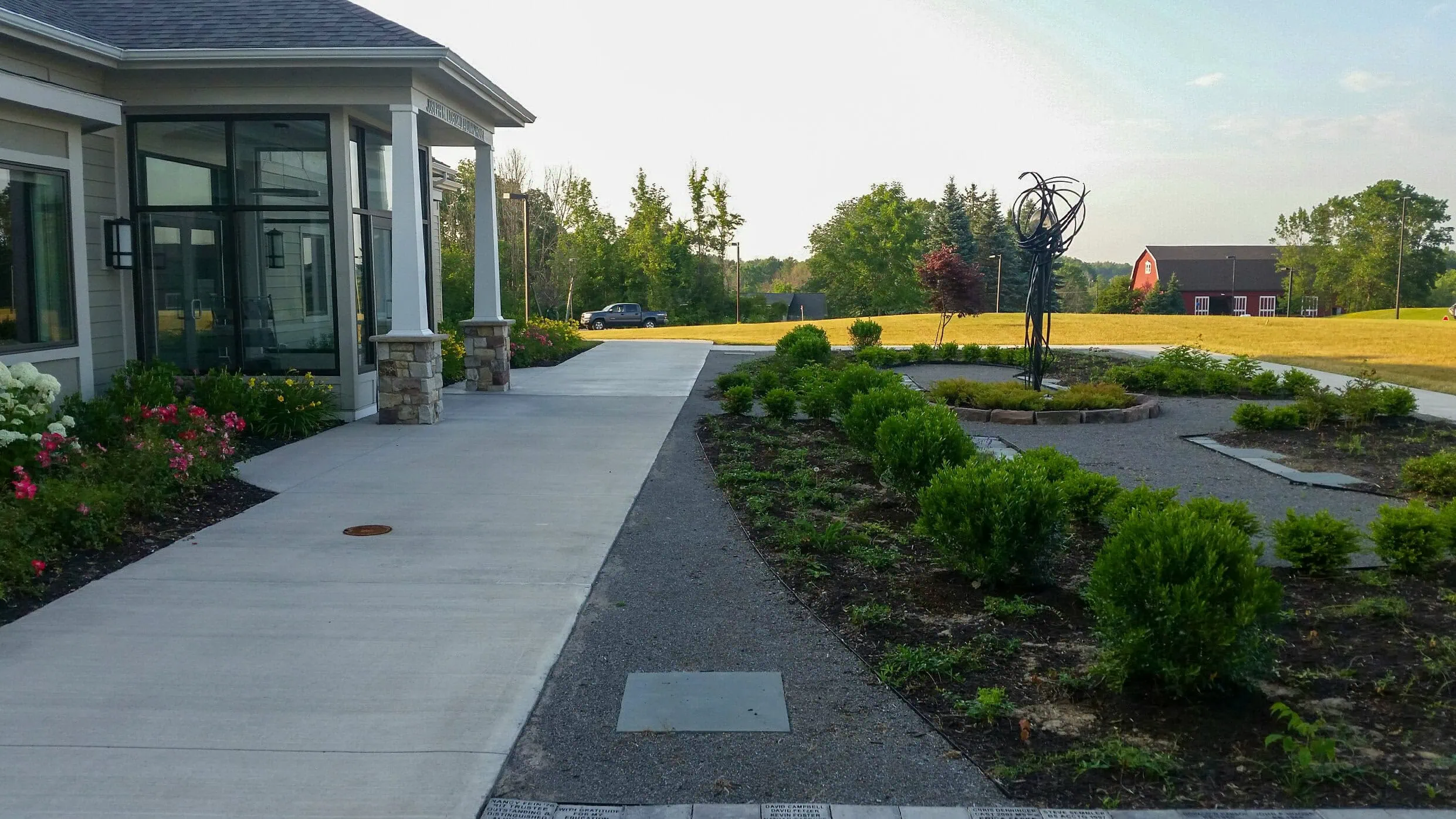
Main entrance of Joseph M. Lobozzo Alumni House at Rochester Institute of Technology showcasing Costich Engineering’s landscape architecture design featuring contemporary sculpture, stone borders, sustainable plantings, and permeable hardscaping. Educational facility entrance design in Henrietta, NY integrating art with functional site planning.
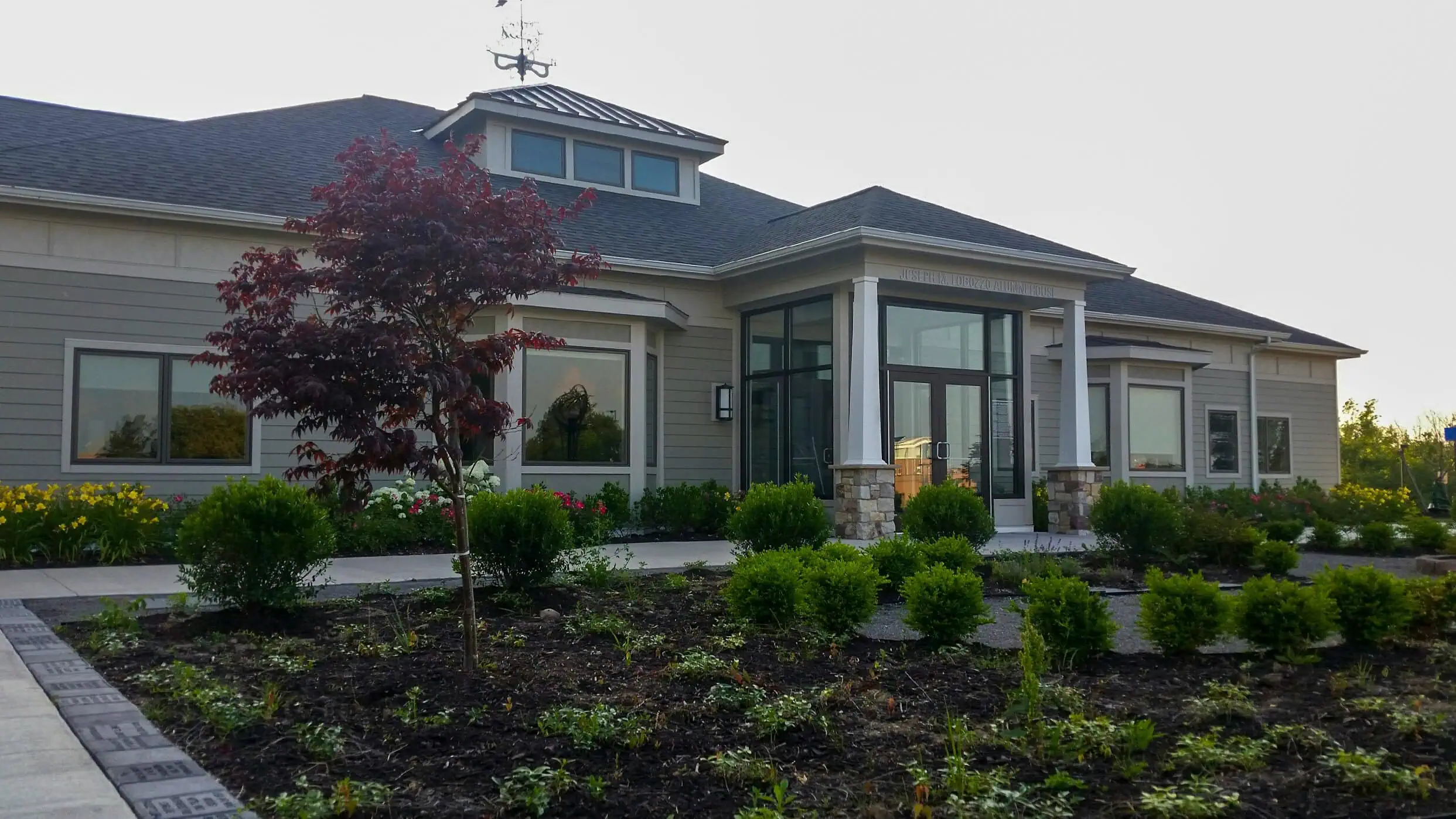
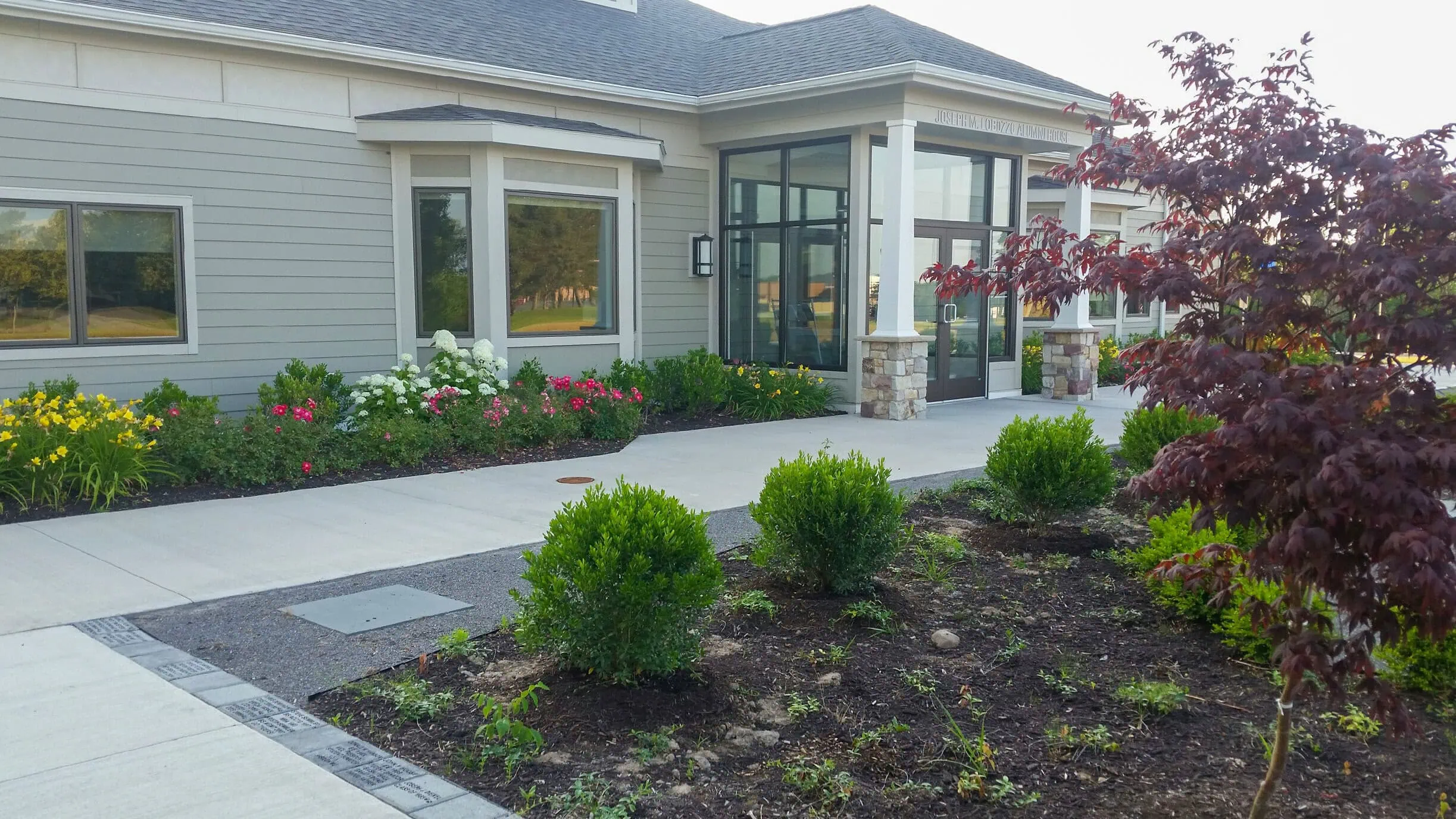
Foundation landscaping at Joseph M. Lobozzo Alumni House, Rochester Institute of Technology, showcasing Costich Engineering’s landscape architecture featuring ornamental trees, evergreen foundation plantings, perennial gardens, and integrated walkway systems. Professional site development for educational facility in Henrietta, NY.
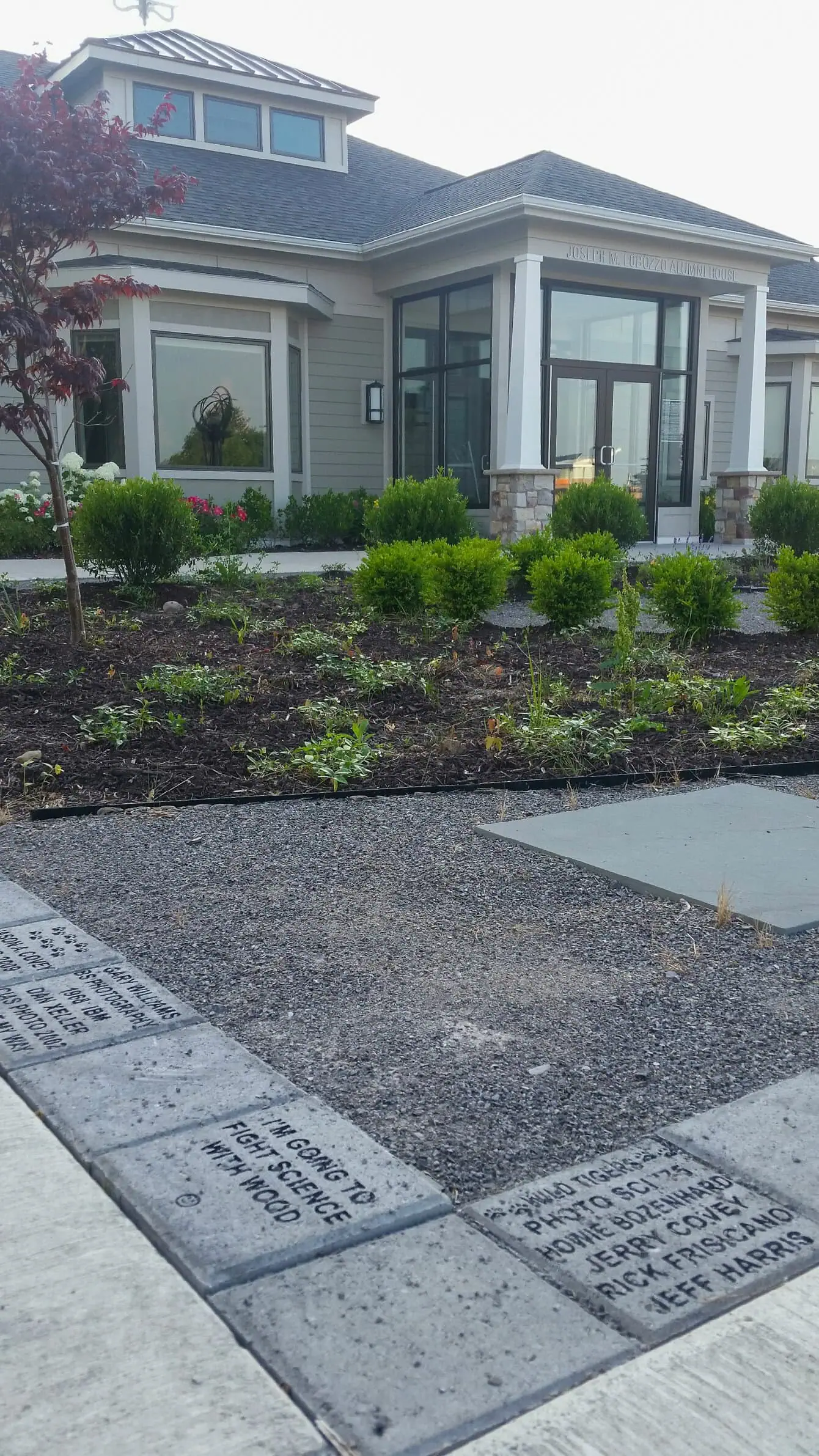
Memorial walkway at Joseph M. Lobozzo Alumni House, Rochester Institute of Technology, featuring Costich Engineering’s commemorative hardscape design with engraved pavers honoring RIT alumni, integrated with landscape architecture and sustainable site planning in Henrietta, NY.
Entrance garden at Joseph M. Lobozzo Alumni House, Rochester Institute of Technology, featuring Costich Engineering’s four-season landscape design with Japanese maple trees, evergreen foundation plantings, seasonal flower beds, and integrated walkway systems in Henrietta, NY.
Campus plaza at Joseph M. Lobozzo Alumni House, Rochester Institute of Technology, showcasing Costich Engineering’s comprehensive site design featuring sculptural elements, circular planting beds, hardscape circulation systems, and integrated landscape architecture connecting to the broader RIT campus in Henrietta, NY.
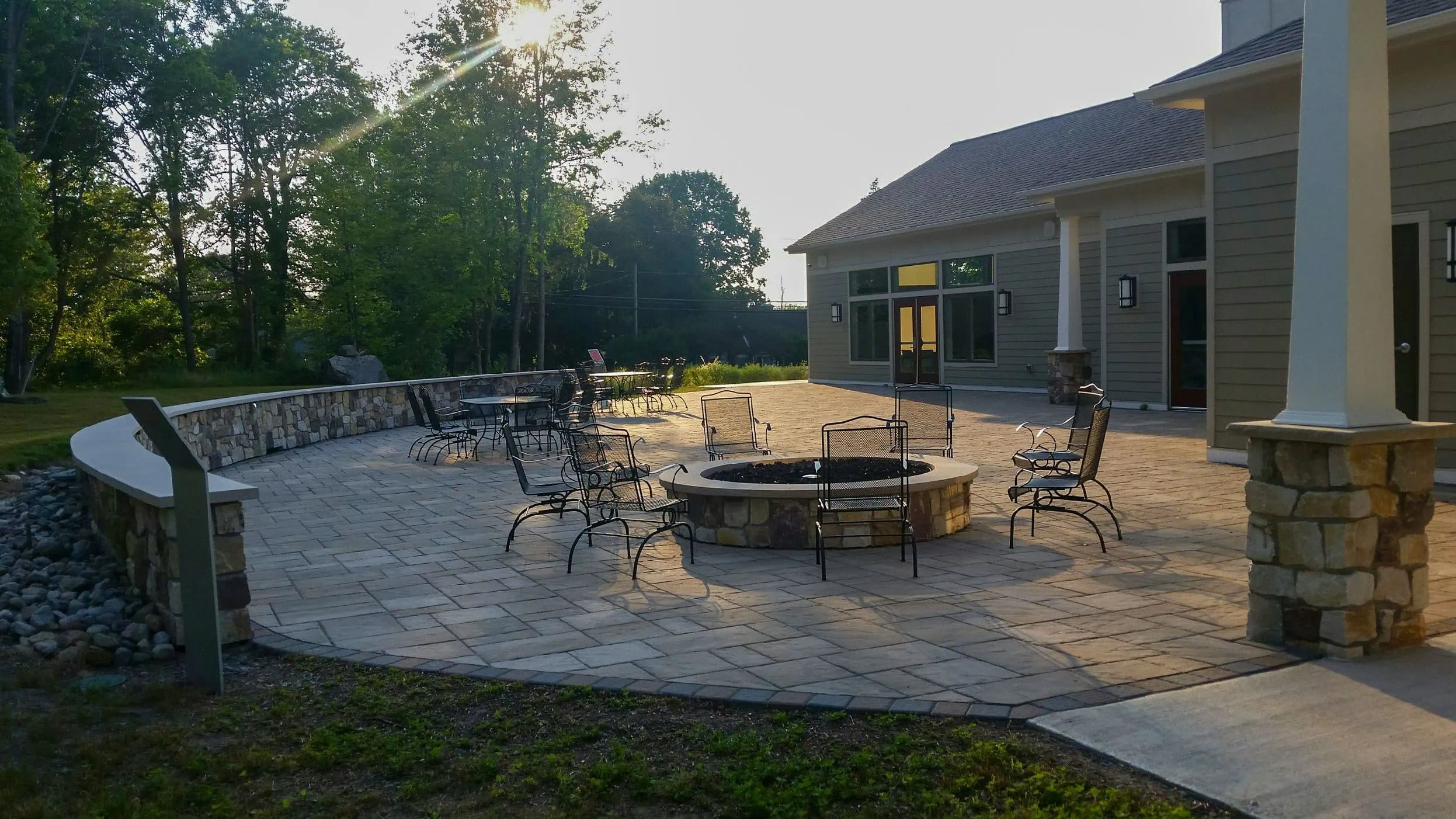
Evening view of the outdoor patio and fire pit area at RIT’s Joseph M. Lobozzo ’95 Alumni House. The professionally designed hardscape features natural stone materials, metal outdoor furniture, and landscape integration that supports alumni events and campus community gatherings. Completed in 2018, this design-build project demonstrates sustainable stormwater management and landscape architecture excellence.
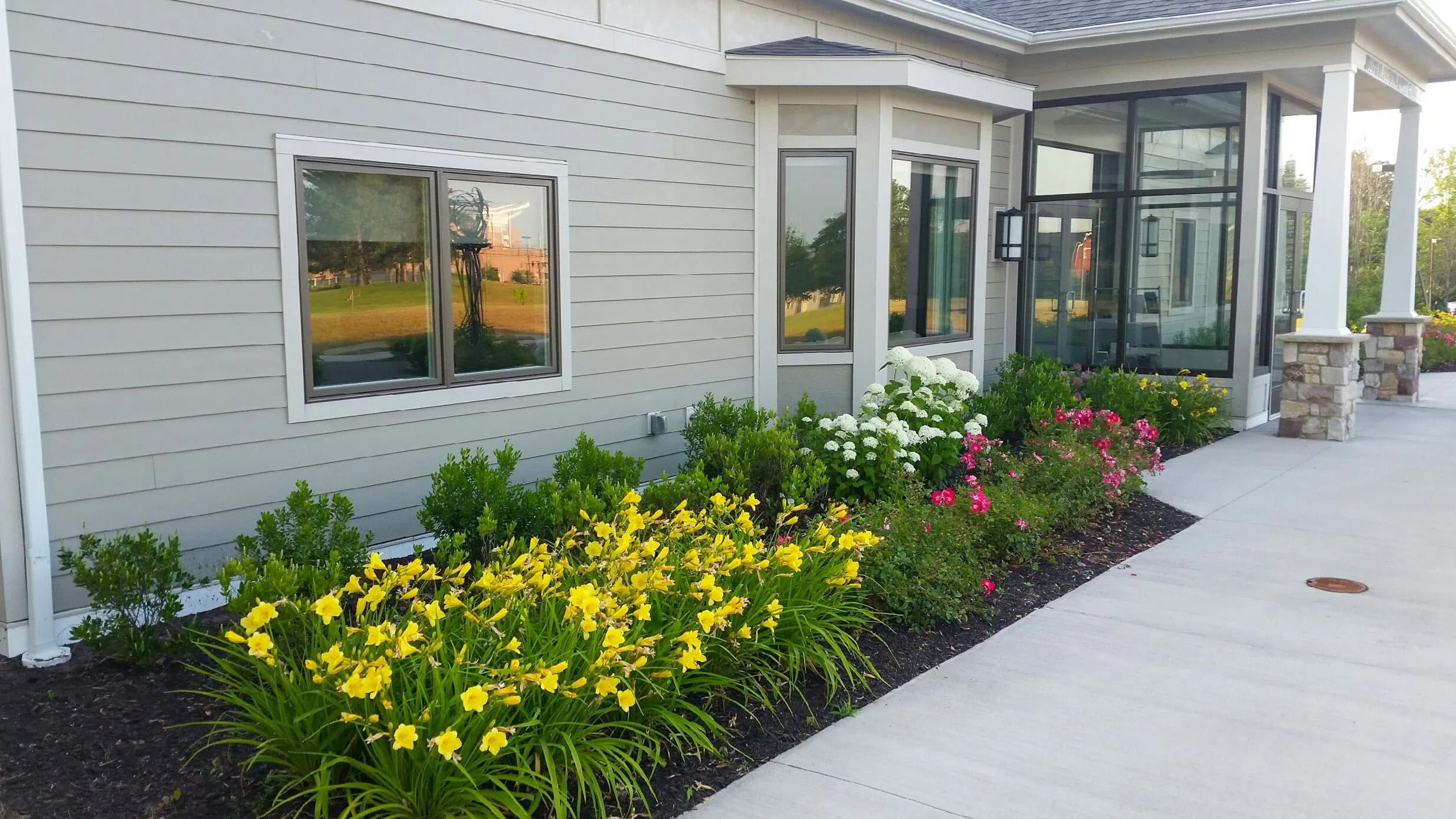
Perennial garden at Joseph M. Lobozzo Alumni House, Rochester Institute of Technology, featuring Costich Engineering’s seasonal color landscape design with daylilies, flowering perennials, evergreen foundation plantings, and sustainable mulched bed systems in Henrietta, NY.
Client:Hobart & William Smith Colleges Construction Completion:Various projects since 1980 (on-going)
Project Services: Land Survey, Landscape Architecture, Civil Engineering, Schematic Design, Design Development, Construction Documentation & Construction Observation
Background
A Legacy Partnership in Higher Education
For over four decades, Hobart and William Smith Colleges has trusted Costich as their go-to engineering partner, creating one of our most valued long-term client relationships. What began with major residence hall projects—Stern Hall and deCordova and Caird Hall—has evolved into comprehensive campus master planning that shapes the future of this prestigious institution.
From Campus Core to Seneca Lake Shoreline
Our collaborative approach integrates seamlessly with architects, landscape architects, and college stakeholders to transform HWS’s educational vision into built reality. From central campus improvements to waterfront facilities, Costich’s expertise spans every corner of this historic Geneva campus.
Ready to transform your educational facility vision into reality? Discover how four decades of higher education expertise can benefit your next campus project.
Hellstrom Boat House & Launch Transformation
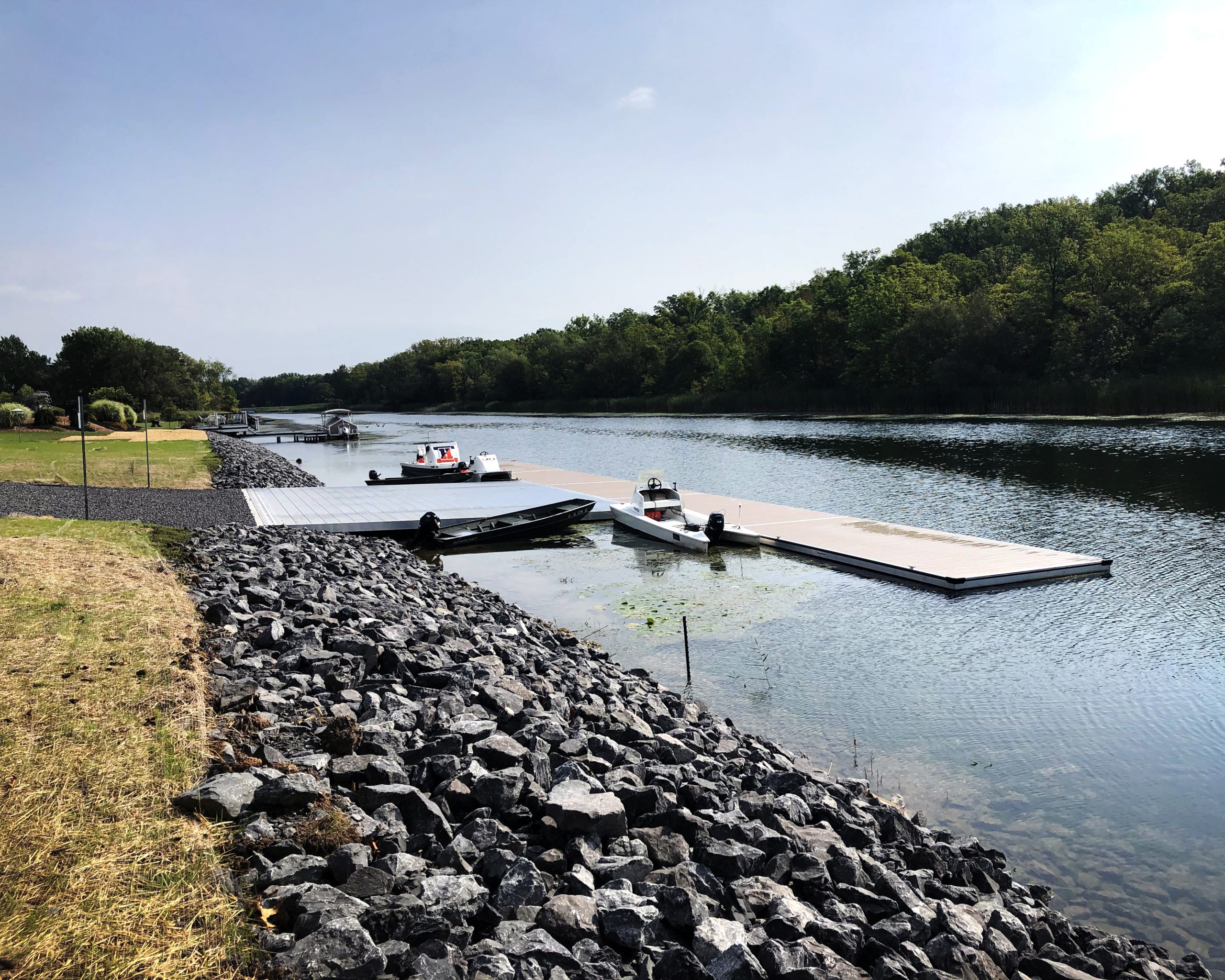
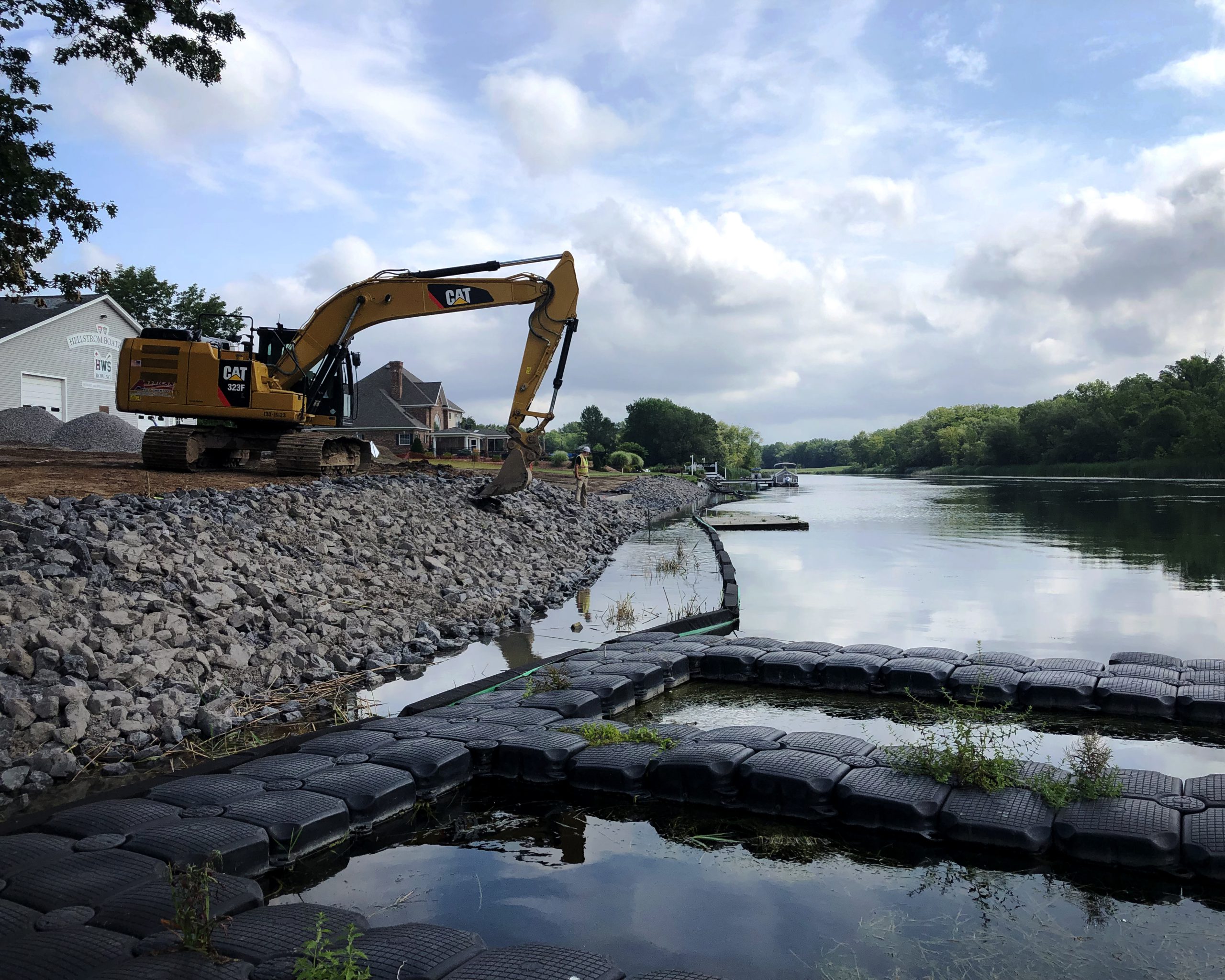
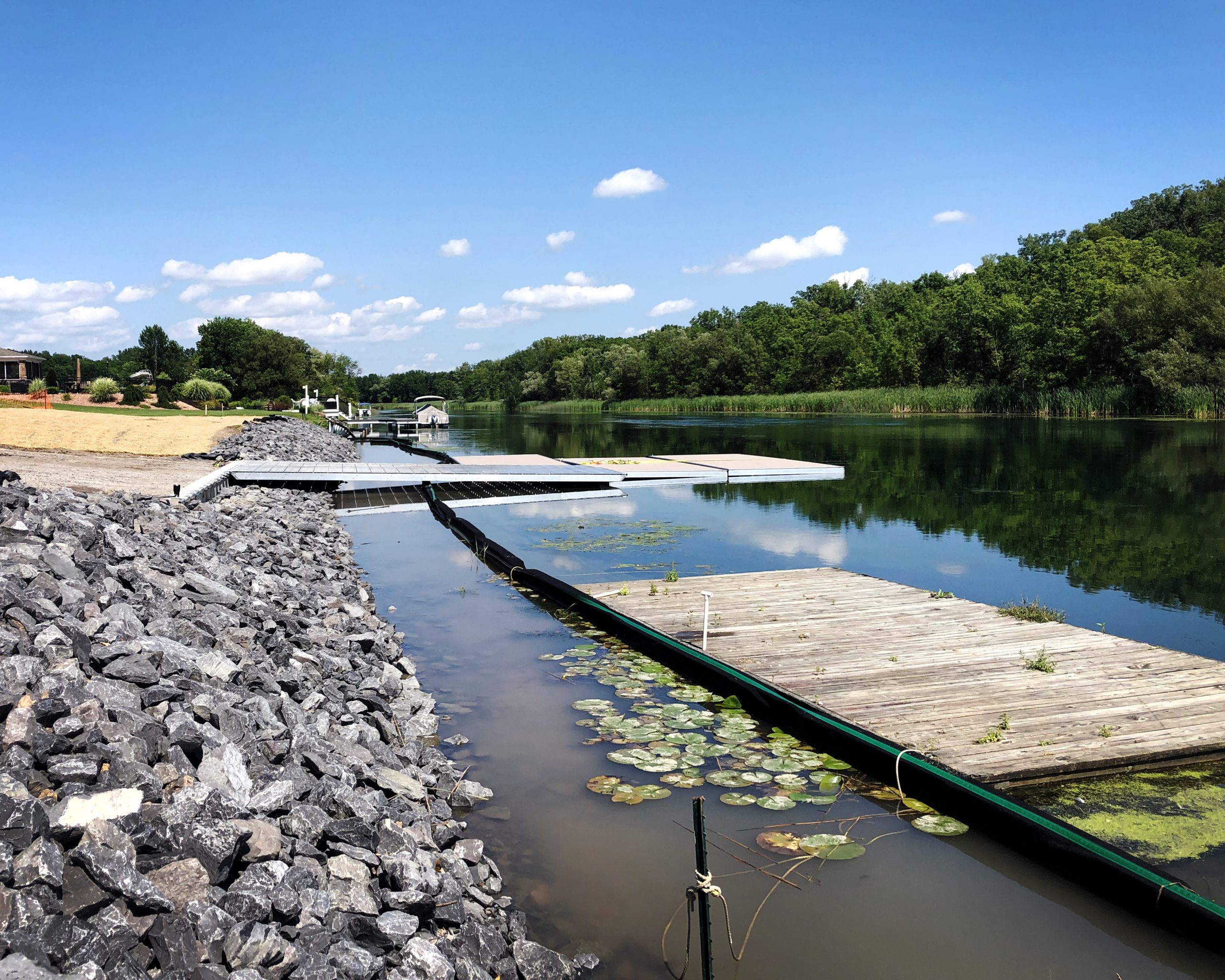
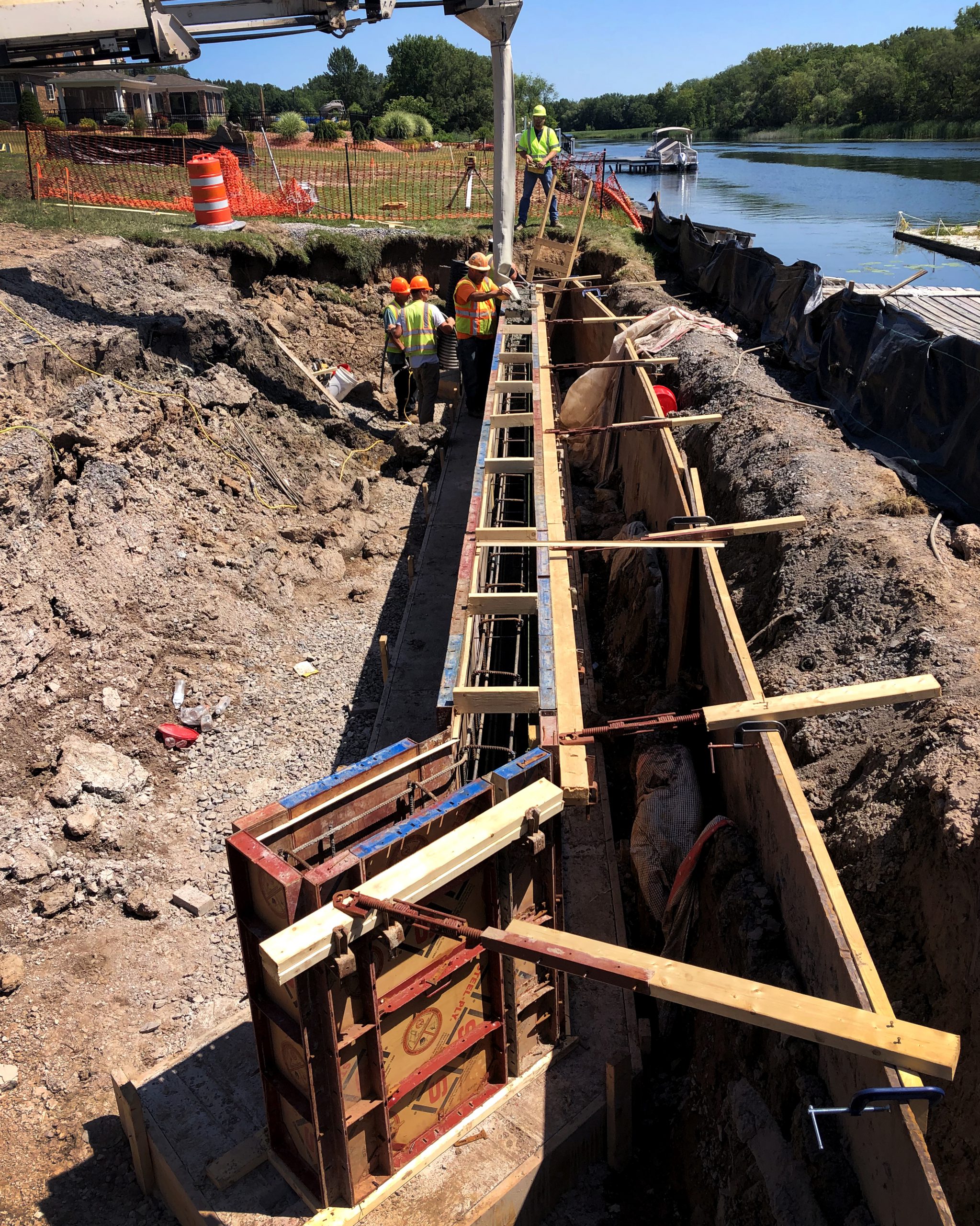
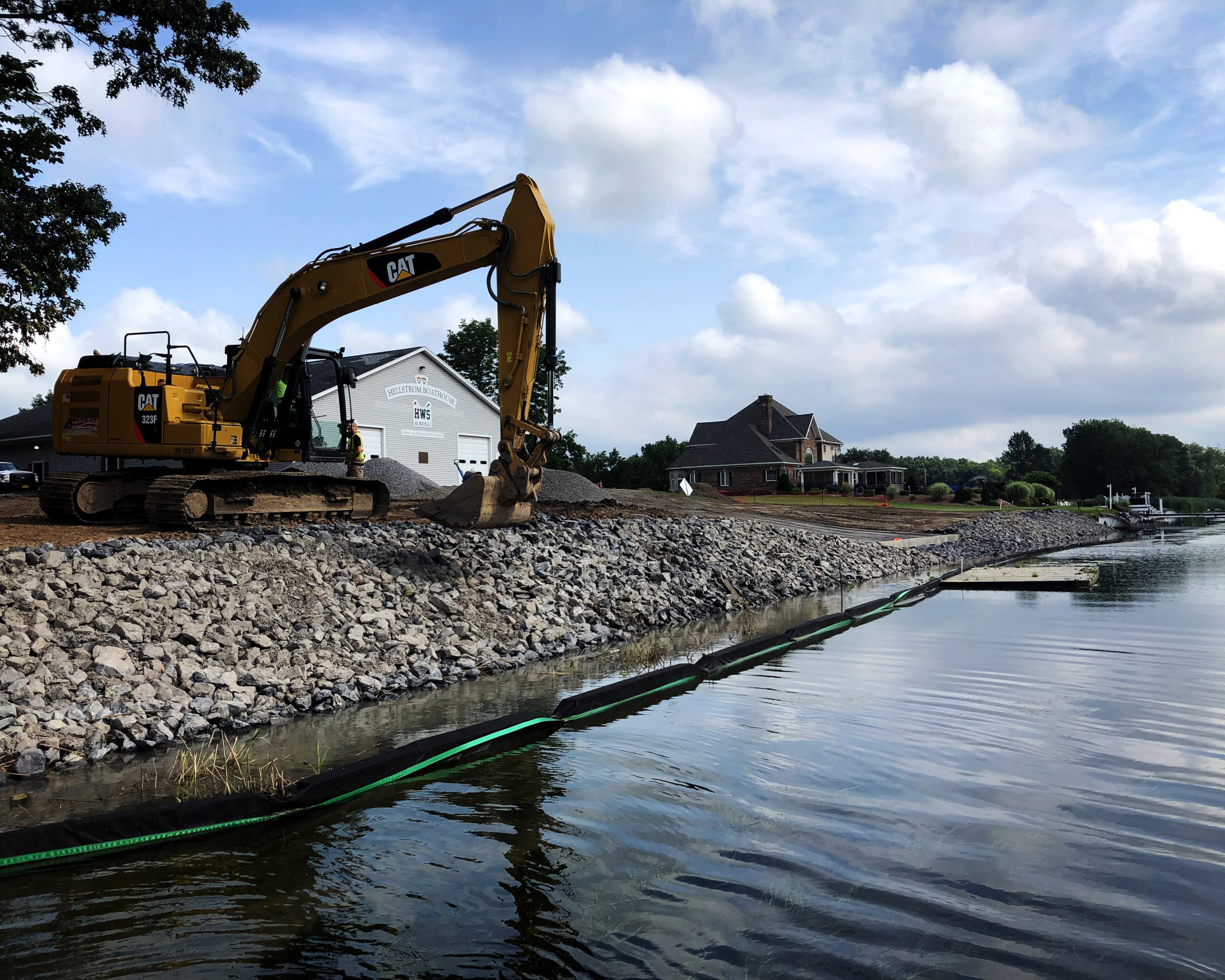
The Challenge: Modernize aging waterfront infrastructure along 288 linear feet of Seneca Canal shoreline while navigating complex regulatory requirements.
Our Solution:
Regulatory Excellence: Successfully secured all required permits including US Army Corps of Engineers, NYS-DEC Freshwater Wetland, and NYS-Canal Corporation approvals
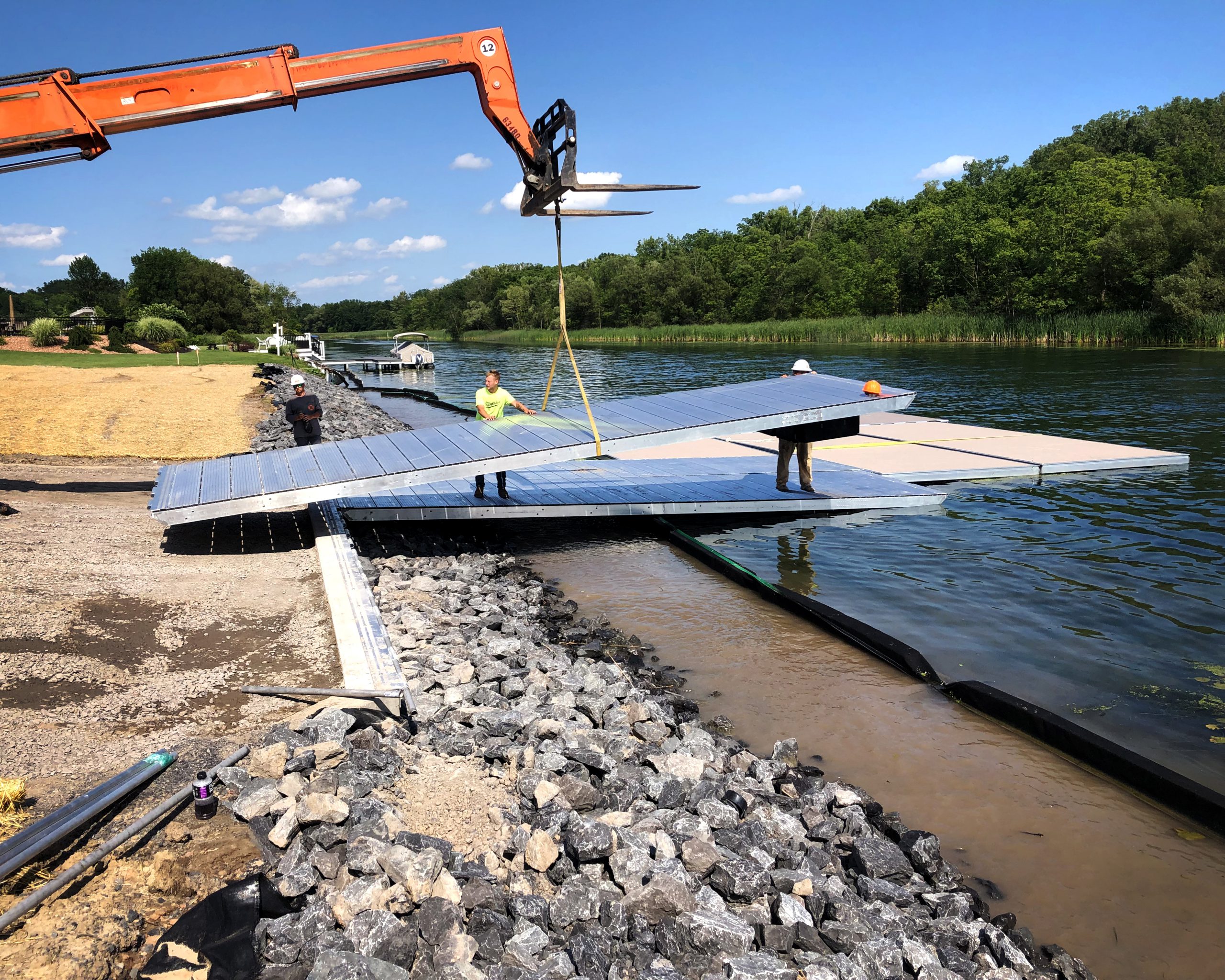
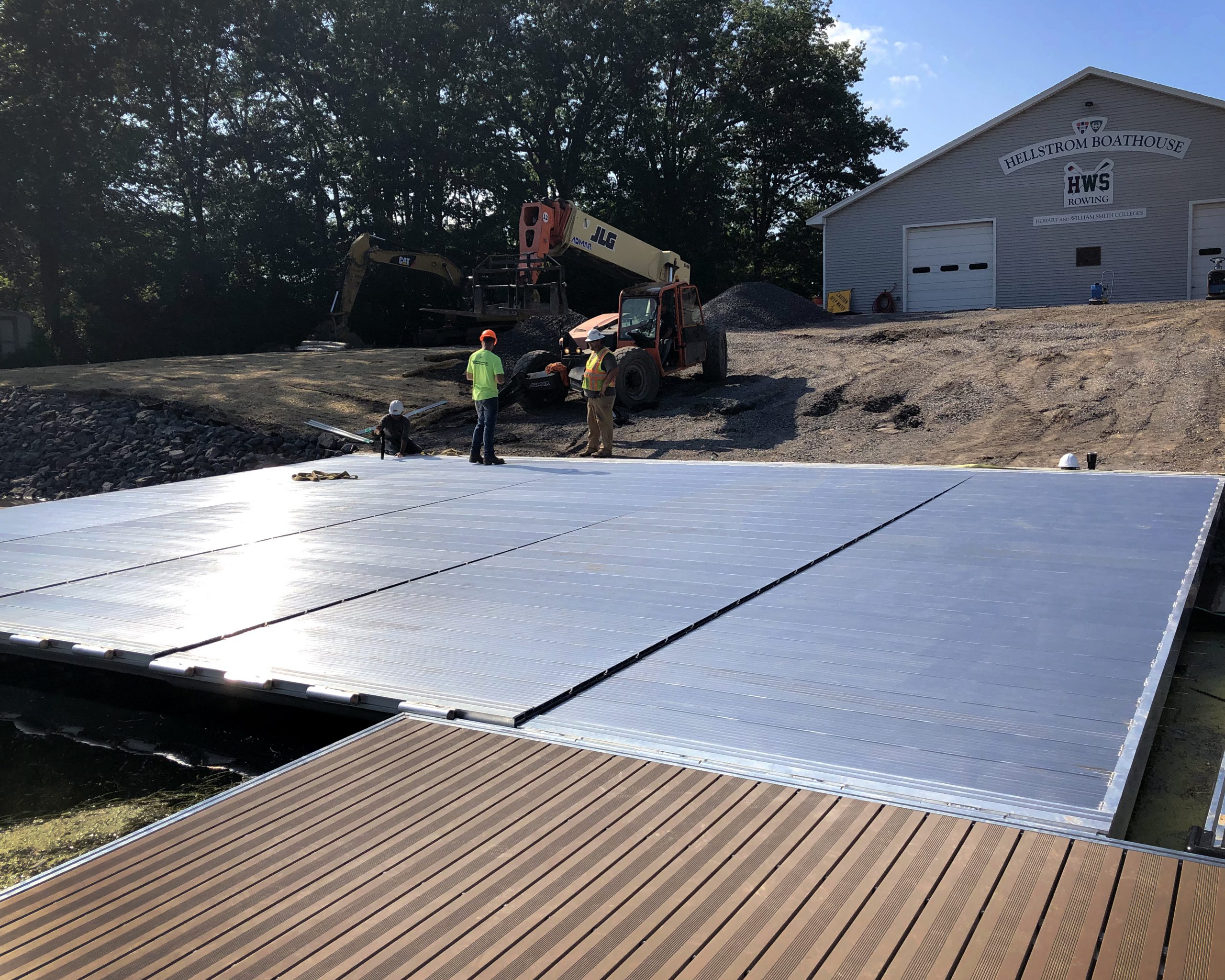
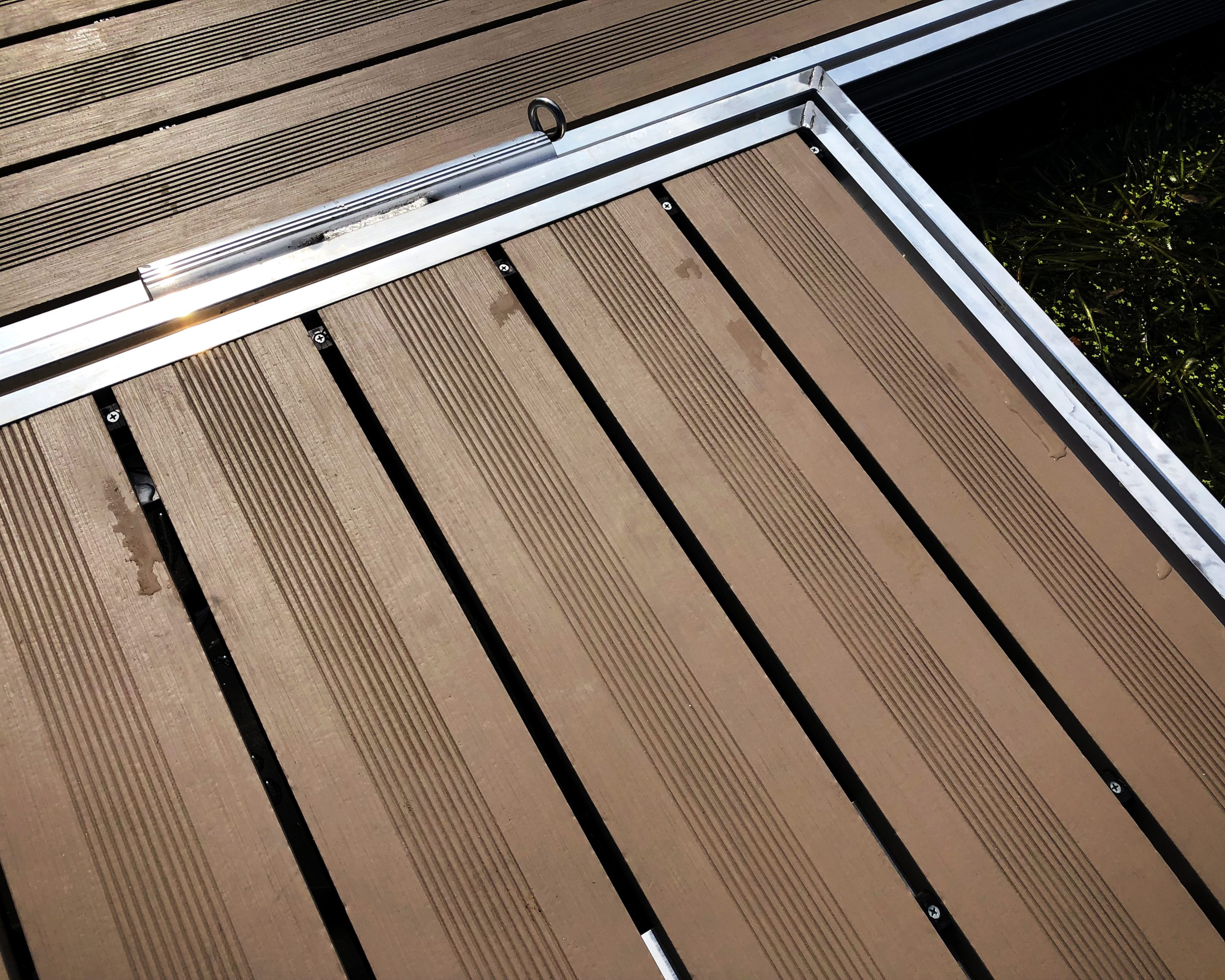
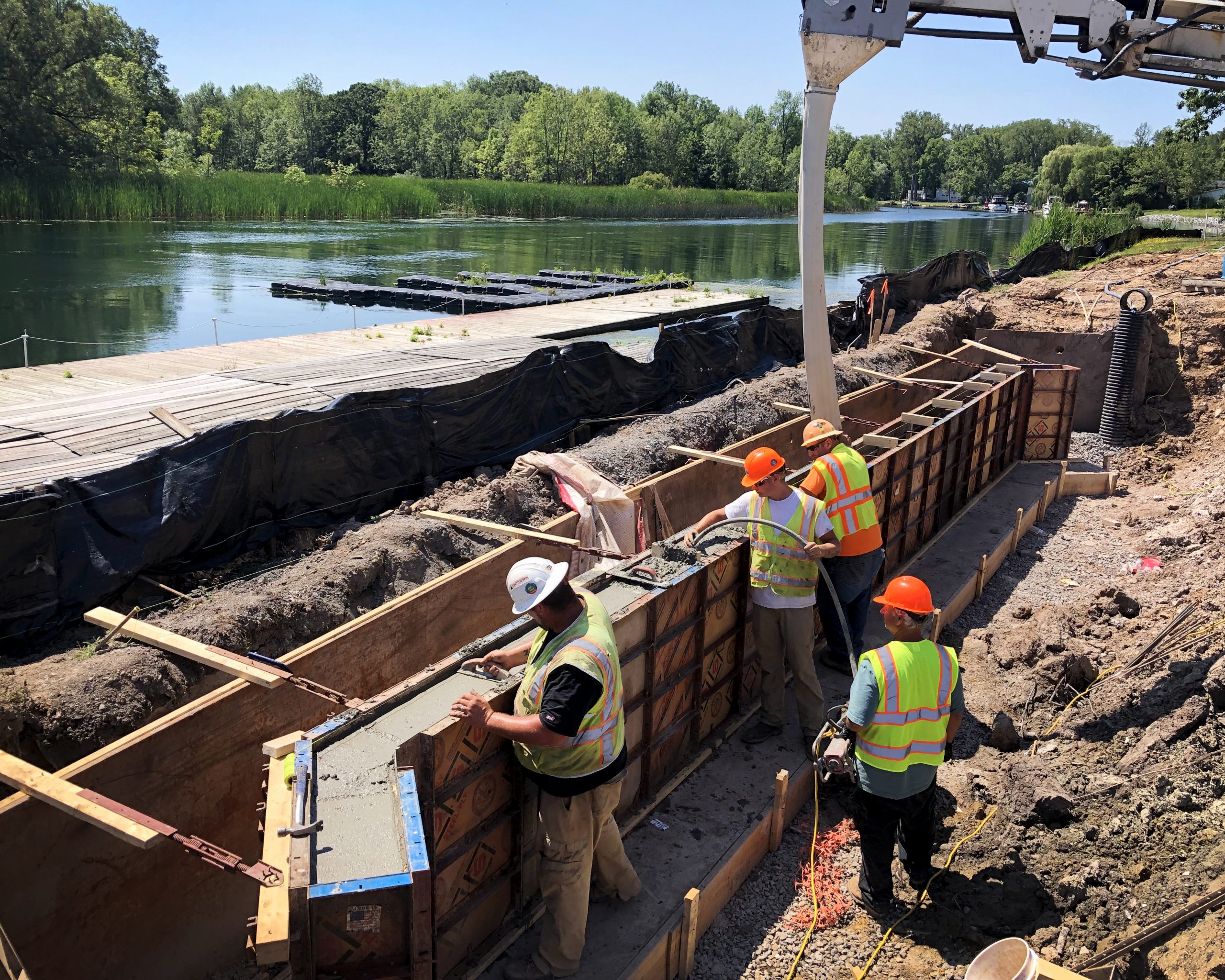
Infrastructure Upgrade: Replaced deteriorating timber gangway and failing sheet piling with durable aluminum systems
Performance-Driven Design: Engineered 10′ x 120′ floating dock system optimized for collegiate rowing team operations
Sustainable Materials: Aluminum gangway and floating dock system built for longevity and minimal maintenance
The Result:A state-of-the-art crew facility that enhances student-athlete experience while protecting Seneca Lake’s pristine environment.
Cozzens Memorial Field Bleachers Complex
The Challenge:Create enhanced spectator facilities that improve game-day experience while addressing site connectivity and safety concerns.
Our Integrated Approach:
Complete Site Analysis: Comprehensive land surveying to optimize bleacher placement and circulation patterns
Smart Design Development: Schematic and detailed design of bleacher systems with integrated press box facilities
Enhanced Connectivity: Redesigned pedestrian circulation patterns for improved crowd flow and accessibility
Infrastructure Integration: Comprehensive grading, drainage, and utility planning to support new facilities
Streamlined Delivery: Managed complete construction bidding process for seamless project execution
The Result: Modern spectator facilities that enhance athletic events while improving overall campus connectivity and safety.
Bozzuto Boathouse Dock Enhacementement
The Challenge: Modernize a historic 2,000 SF lakefront facility serving HWS’s nationally-ranked sailing program while navigating complex infrastructure constraints including active railway systems.
Our Comprehensive Solution:
Detailed Site Documentation: Complete topographic and boundary survey of the 2.9-acre Seneca Lake parcel, creating precise basemaps capturing existing contours, dock systems, drainage infrastructure, and railway features
Historic Facility Modernization: Upgraded electrical and communications infrastructure for the pre-railroad era boathouse, bringing modern amenities to this treasured campus facility
Complex Infrastructure Coordination: Engineered solutions for running utility conduit beneath active railway lines, requiring specialized design and multi-agency approvals
Multi-Program Support: Enhanced facilities serving both the nationally-ranked sailing team and the popular Outdoor Recreation Adventure Program
The Result: A modernized lakefront facility that honors its historic character while providing cutting-edge amenities for championship-level sailing programs and outdoor recreation activities, seamlessly integrating with existing transportation infrastructure.
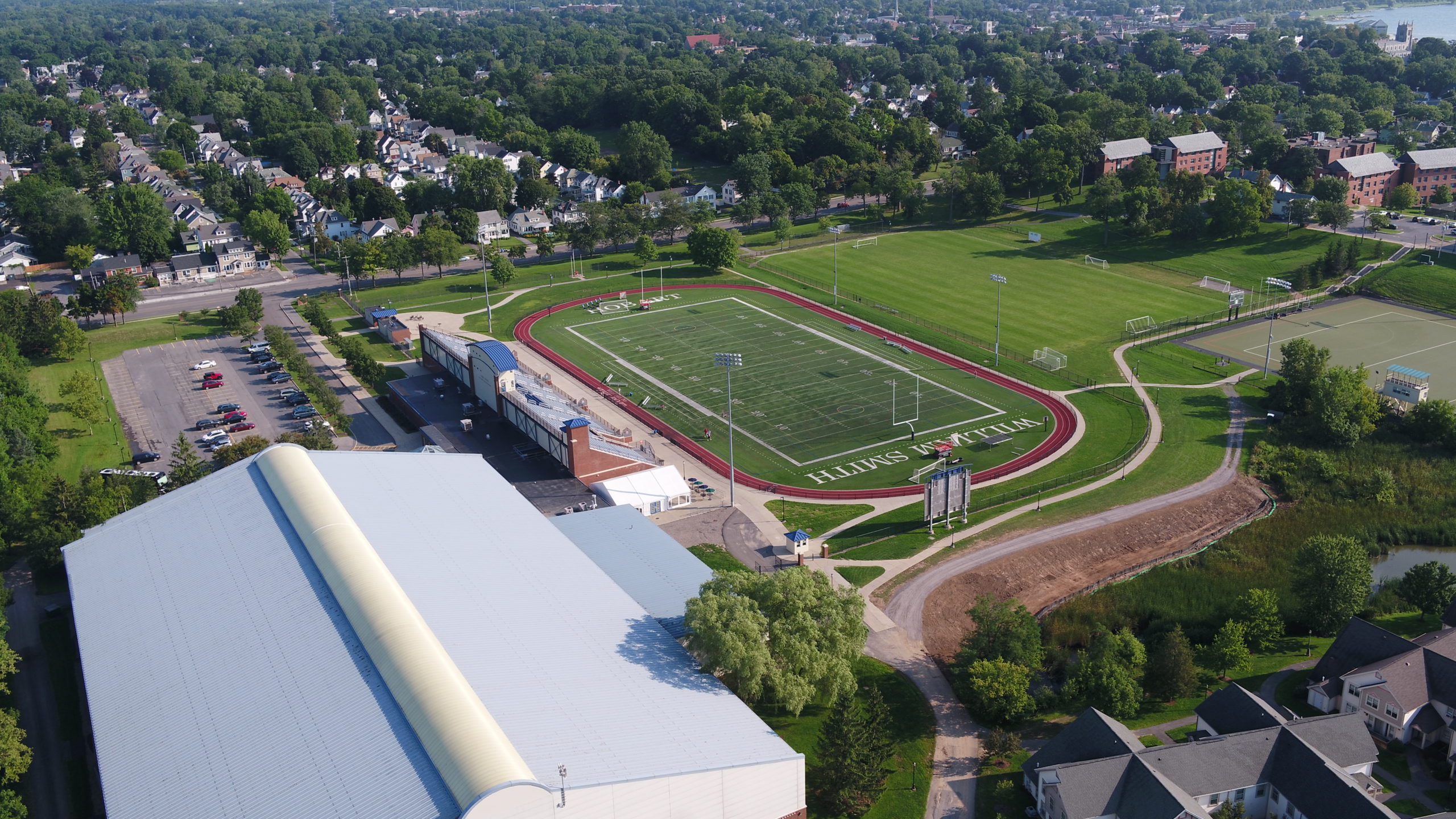
The Challenge: Transform a 1974-era sports facility into a state-of-the-art multi-purpose athletic complex that meets modern collegiate standards while managing comprehensive site infrastructure across 7 acres.
Our Comprehensive Solution:
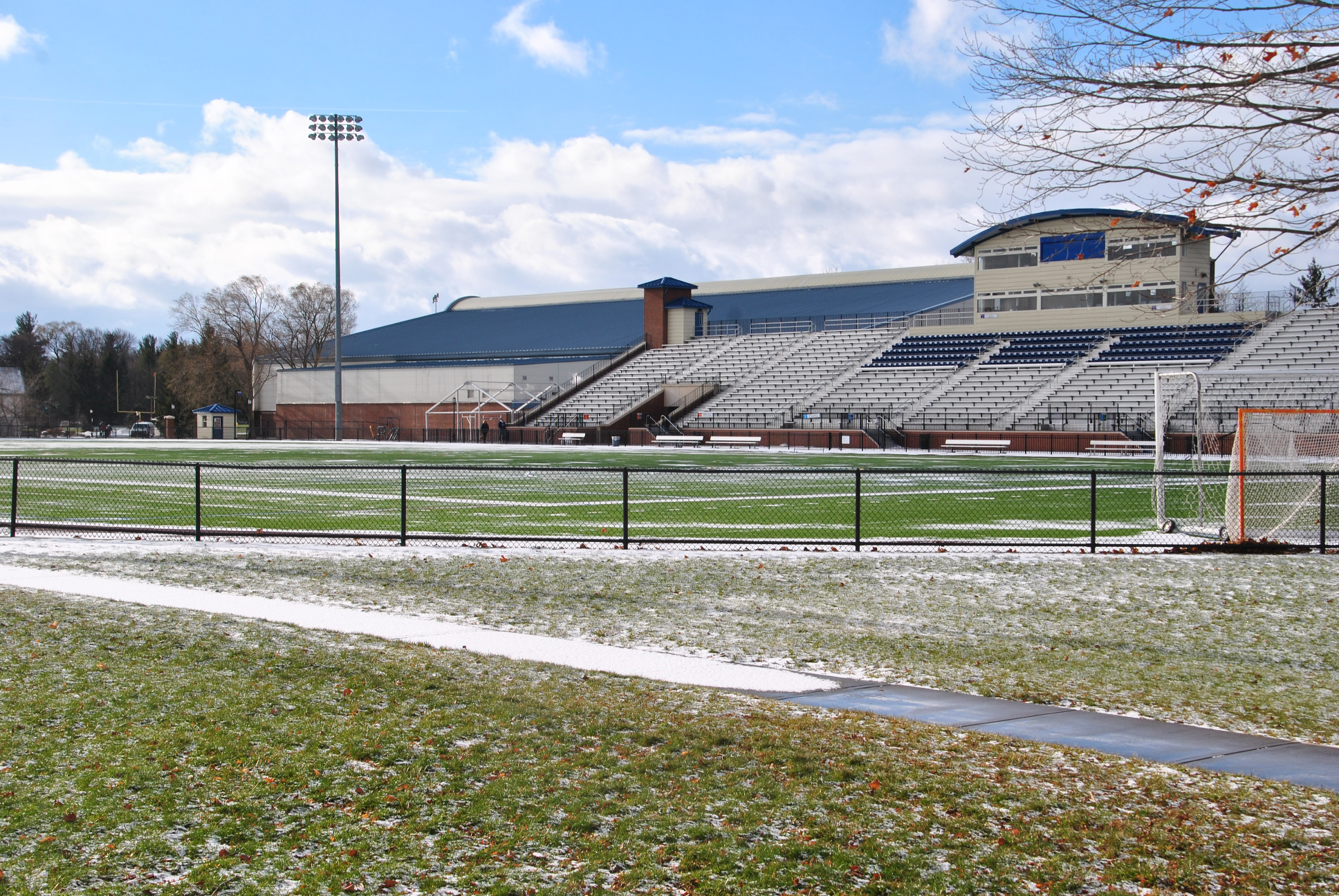
Complete Field Transformation: Upgraded existing natural turf to high-performance artificial turf system designed for multiple sports applications
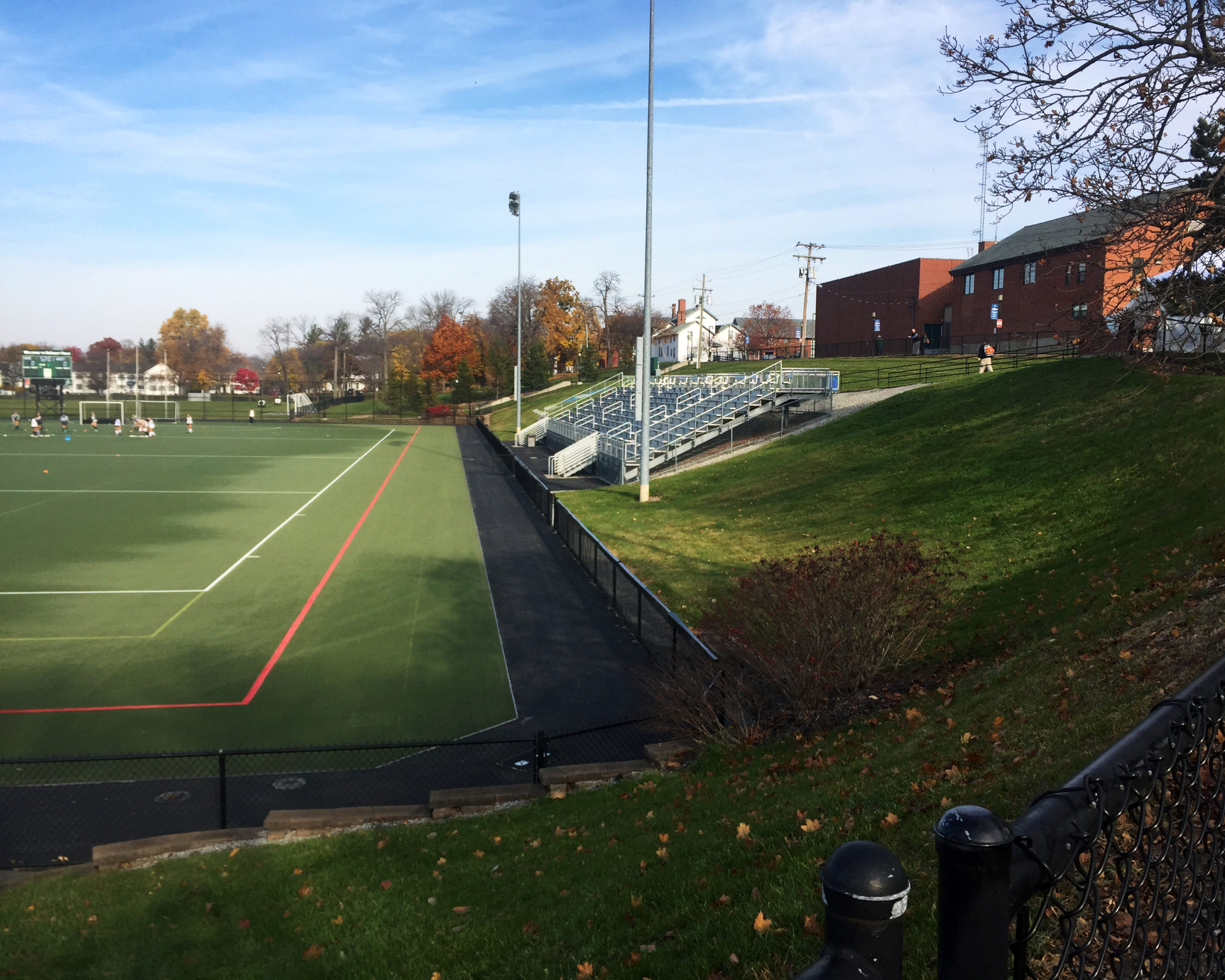
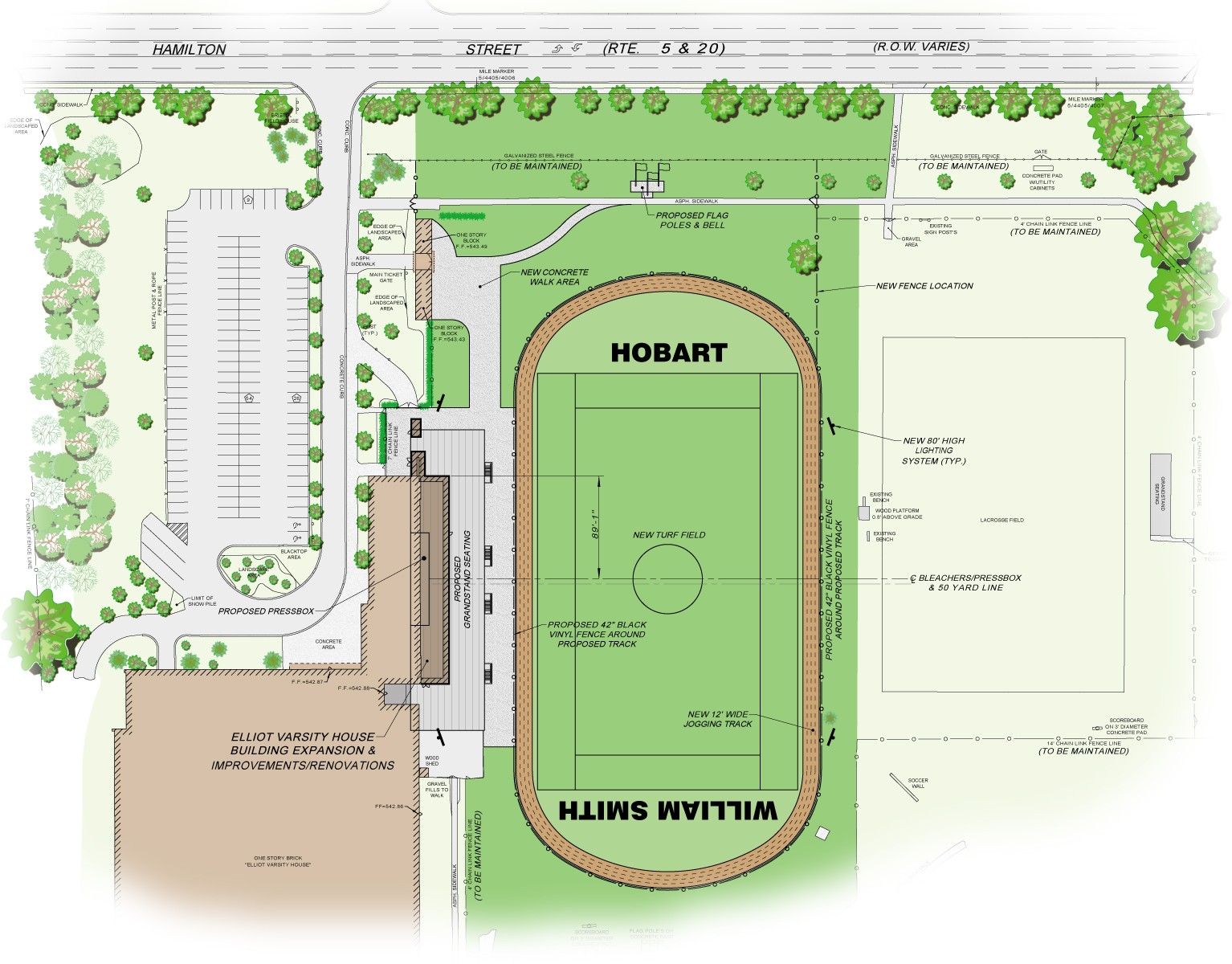
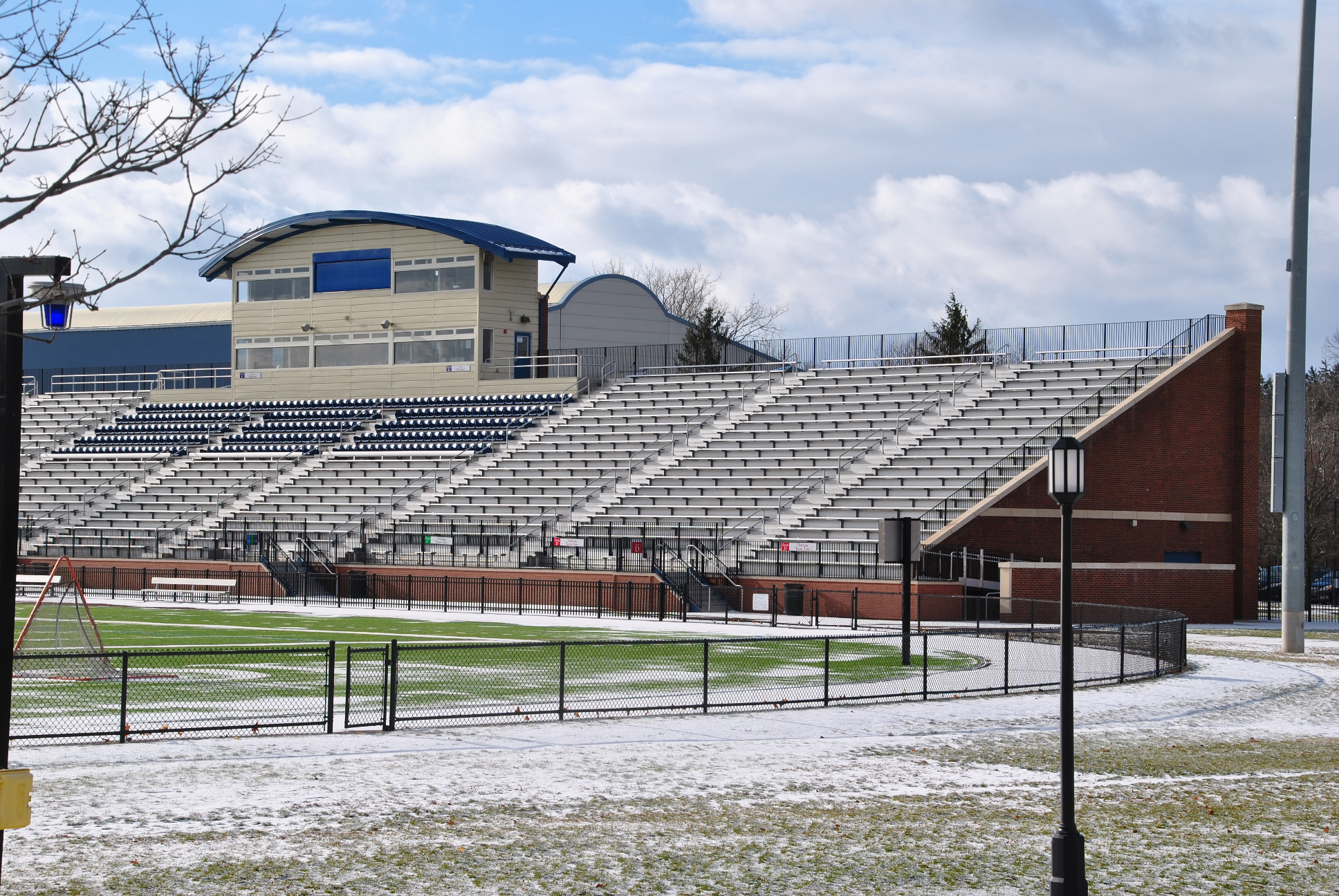
Enhanced Spectator Experience: Designed new grandstand seating with integrated player locker rooms and concession facilities for improved game-day operations
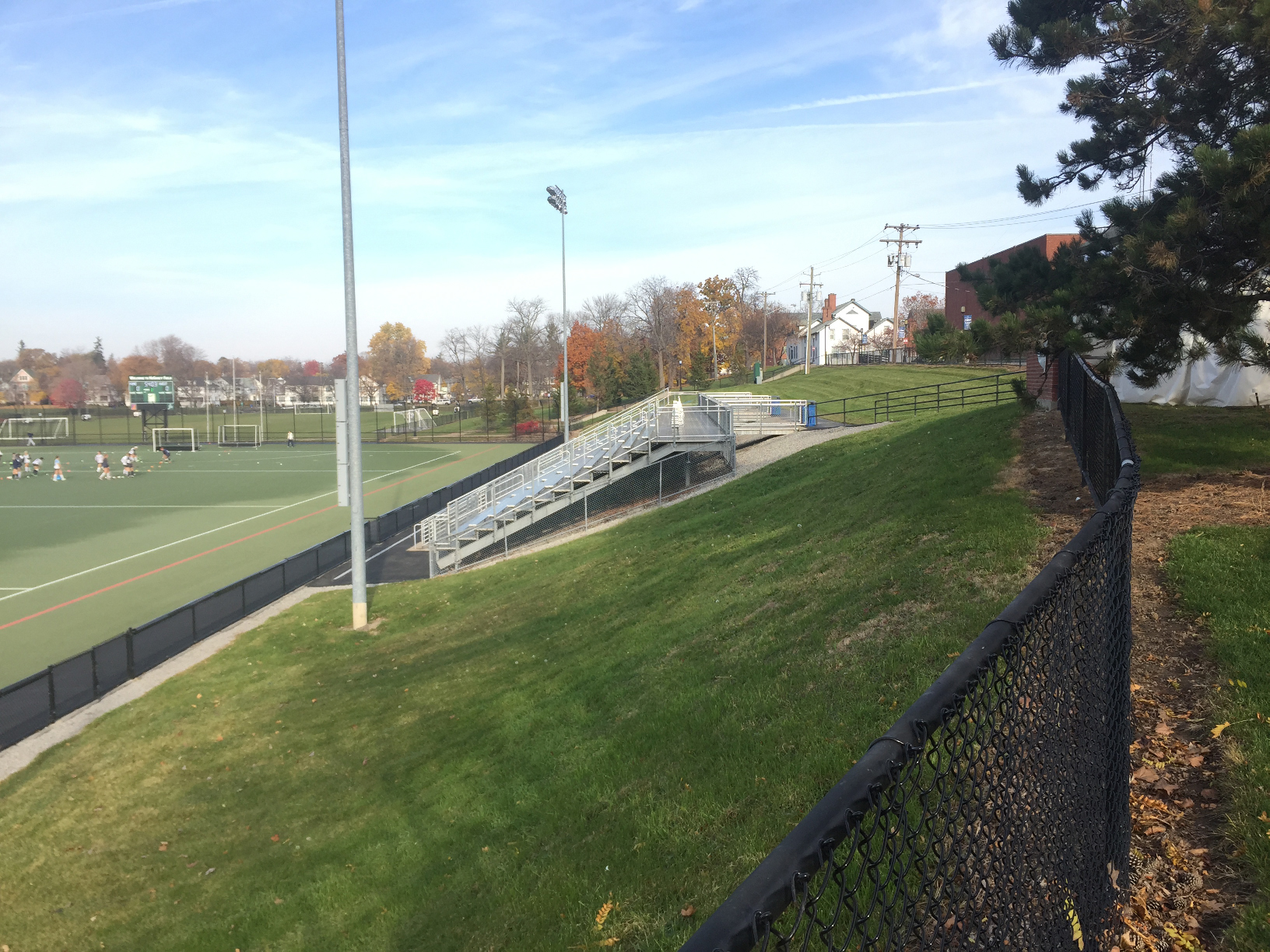
Comprehensive Site Planning: Managed all aspects of the 7-acre development including football field layout, parking solutions, advanced stormwater management systems, and athletic-grade lighting infrastructure
Seamless Project Integration: Provided complete field surveying, navigated municipal approval processes, and coordinated closely with project architects for unified design execution
The Result: A modernized multi-purpose athletic facility that elevates the student-athlete and spectator experience while efficiently managing site infrastructure and meeting all regulatory requirements for collegiate sports venues.
Indoor Turf Field Complex
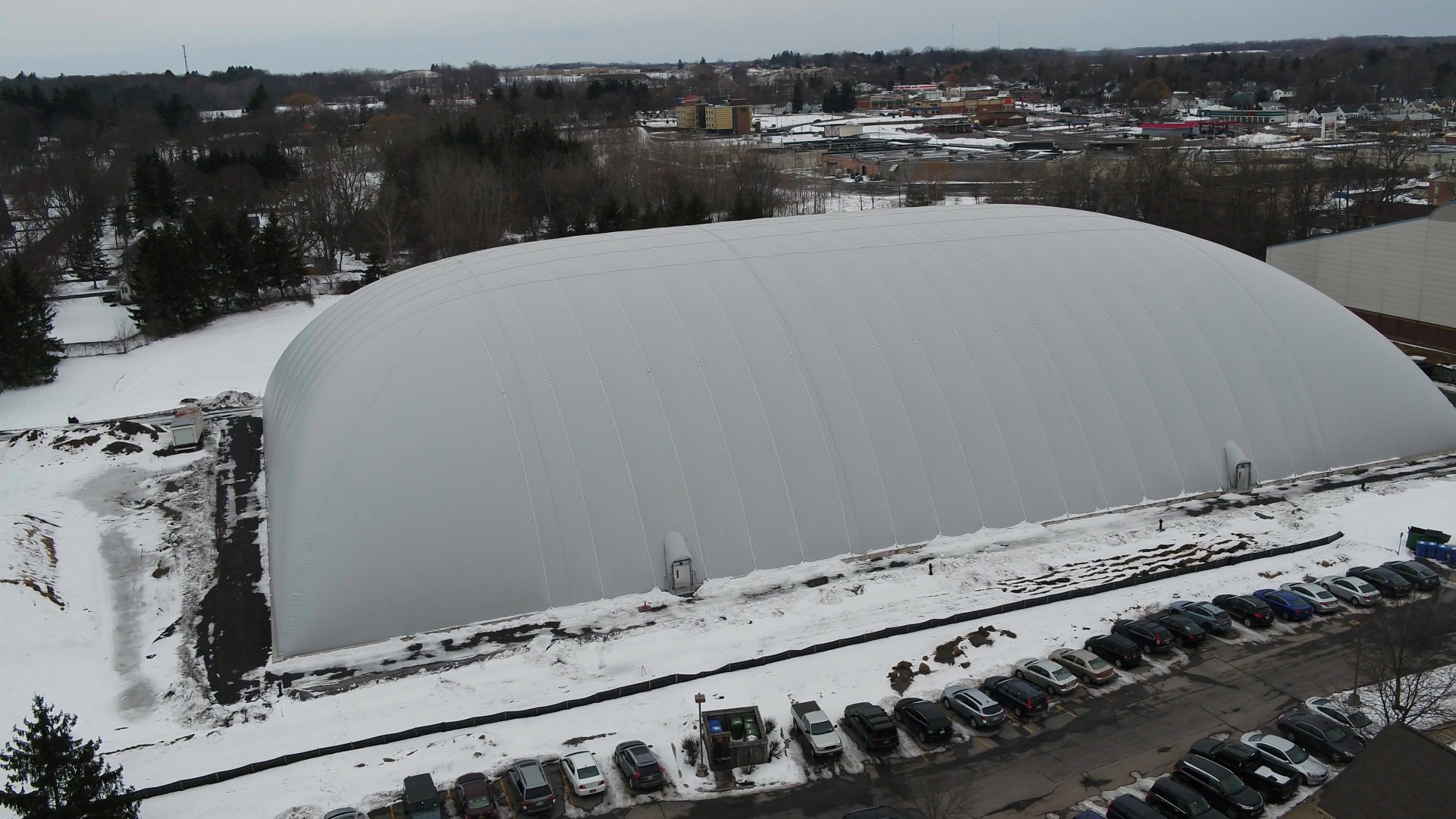
The Challenge: Create a $3.5 million year-round training facility that maximizes athletic programming while seamlessly integrating into the existing campus landscape and meeting comprehensive environmental regulations.
Our Strategic Solution:
Weather-Independent Training: Designed expansive indoor turf facility enabling consistent practice schedules during unpredictable northeastern winters
Campus-Wide Impact: Strategic facility placement frees existing venues for recreational activities and intramural sports, multiplying programming capacity across campus
Integrated Site Design: Comprehensive landscape integration including optimized parking solutions, intuitive pedestrian circulation patterns, and advanced stormwater management systems
Regulatory Excellence: Successfully navigated complex approval processes including NYS archaeological review, Long Form Environmental Assessment (Parts I and II), and secured all municipal approvals
The Result: A transformative athletic facility that not only provides elite training conditions year-round but strategically enhances recreational opportunities across the entire campus while meeting all environmental and regulatory standards.
Gearan Performing Arts Center
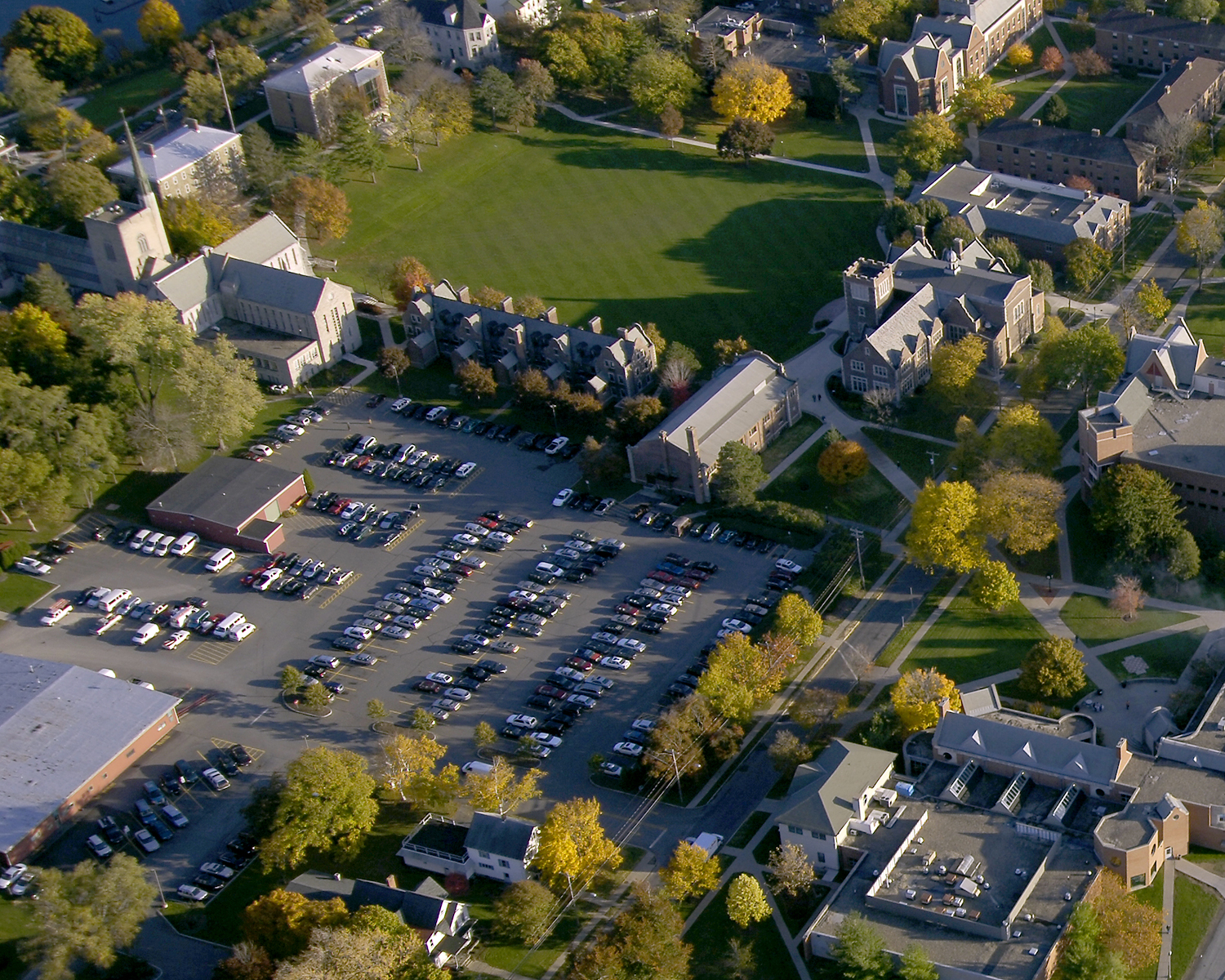
The Challenge: Create the architectural centerpiece for a $28 million capital improvement initiative, requiring a 50,000 SF performing arts facility that would define the college’s main entrance while establishing a transformative new Arts Quad.
Our Collaborative Design Process:
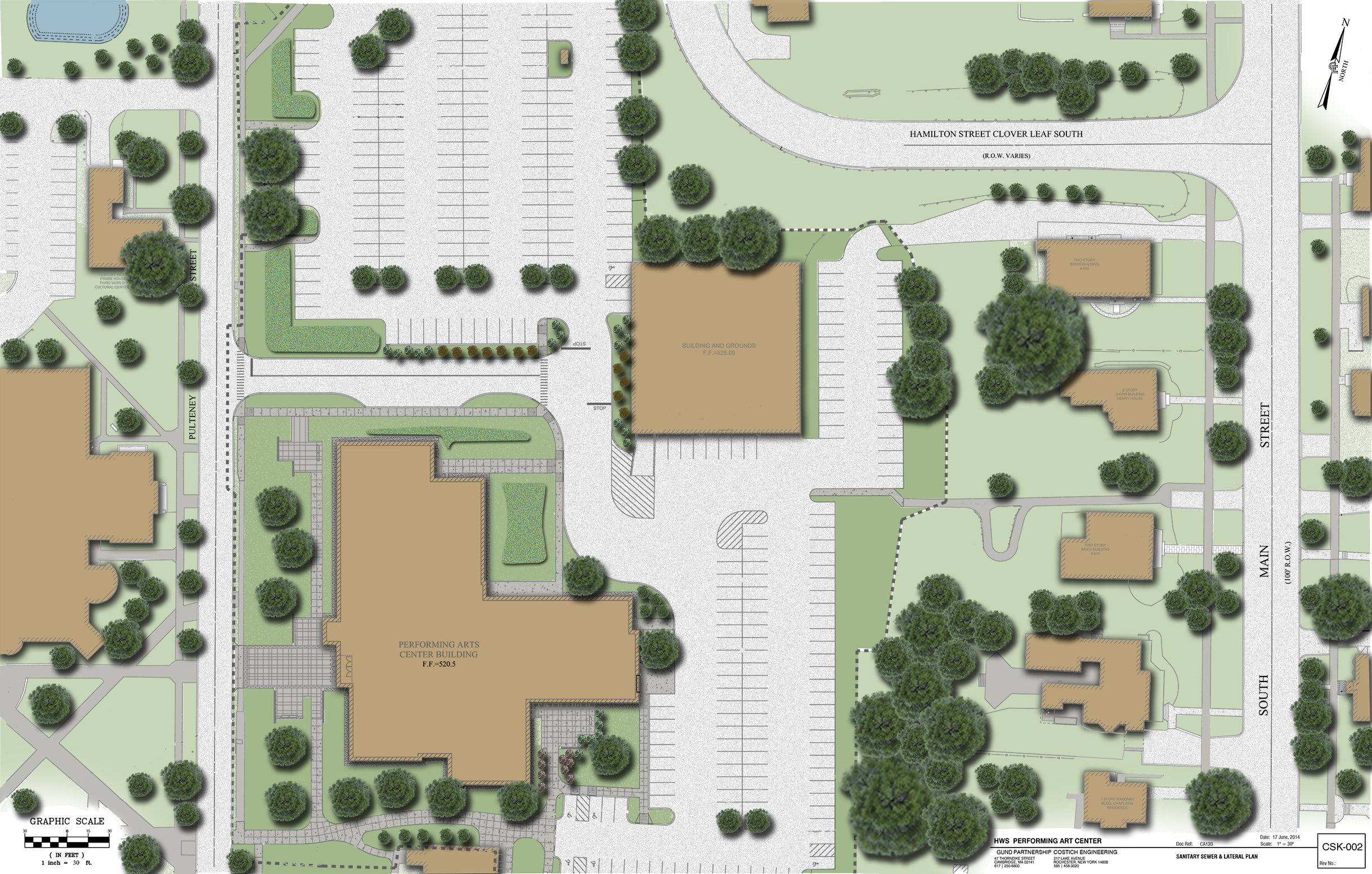
Strategic Master Planning: Partnered with The Gund Partnership to evaluate site constraints, existing infrastructure, and optimal facility placement for maximum campus impact
Comprehensive Site Analysis: Conducted thorough evaluation of civil engineering requirements, zoning compliance, pedestrian and vehicular circulation patterns, parking solutions, and utility infrastructure integration
Workshop-Driven Design: Facilitated collaborative design sessions presenting findings and developing conceptual solutions addressing all stakeholder concerns and technical requirements
Complete Design Development: Delivered comprehensive construction documentation including demolition sequencing, circulation optimization, precision grading plans, advanced stormwater management, and utility coordination
The Result: A stunning 50,000 SF facility dedicated to dance, music, and theater that serves as both the heart of the new Arts Quad and the defining architectural statement for the college’s main entrance, seamlessly integrating world-class performance spaces with campus circulation and infrastructure.
To initiate the project, our team met with the Gund Partnership to determine approximate limits, review available mapping and prepare an existing features plan. Staff evaluated the architect plans with respect to civil, zoning and site issues, pedestrian and vehicular circulation, parking and utilities. Findings were presented in a workshop setting and conceptual drawings were prepared to address any and all concerns. Further design development resulted in generating a complete plan set including demolition plans, circulation plans, as well as grading, stormwater and utility plans.
Tennis Courts Renovation
The Challenge: Complete reconstruction of the 1958-era HWS Tennis Center, transforming aging facilities into a modern competitive venue suitable for northeastern weather conditions.
Our Complete Design Solution:
Comprehensive Site Planning: Managed land surveying, schematic design, and detailed design development for the complete tennis facility reconstruction
Integrated Facility Design: Optimized tennis court layout with advanced lighting systems, observation building placement, future bleacher area planning, and seamless pedestrian circulation patterns
Infrastructure Excellence: Engineered precision grading and drainage systems alongside comprehensive utility design and coordination for reliable facility operations
Performance Surface Selection: Specified Action Pave Acrylic Color Systems—a durable, glare-free, non-peeling, non-fading coating engineered specifically for northeastern climate conditions
The Result: A completely modernized tennis facility that replaced nearly 60-year-old infrastructure with championship-quality courts featuring weather-resistant surfaces and integrated support facilities, enhancing both competitive play and spectator experience.
Additional Campus Partnership Highlights
Decades of Comprehensive Campus Development
Since opening our doors, Hobart and William Smith Colleges has remained one of Costich’s most valued partnerships. Our extensive collaboration spans virtually every corner of campus, demonstrating our deep understanding of the institution’s unique needs and long-term vision.
Major Campus Projects Include:
Residential Life Excellence: deCordova Hall and Caird Hall, Stern Hall, and Carriage House renovations
Academic Infrastructure: Geneva Hall Terrace development and McCormick Expansion projects
Campus Accessibility: Comprehensive ADA Compliance Evaluation & Planning initiatives
Recreational Enhancements: O’Dell Pond Area improvements and waterfront development
Infrastructure Optimization: Campus-wide parking configuration, circulation analysis, and culvert system evaluations
Connectivity Solutions: Pedestrian circulation planning and facility design integration
Ongoing Services: Primary campus land surveying for planning and development initiatives
The Partnership Advantage: This comprehensive project portfolio demonstrates Costich’s unique position as HWS’s trusted campus development partner, providing institutional knowledge and seamless service delivery across all aspects of campus planning, infrastructure, and facilities enhancement.
Client:McQuaid Jesuit High School Construction Completion:2017
Project Services: Land Survey, Landscape Architecture, Civil Engineering, Master Planning, Schematic Design, Design Development, Municipal Approvals, SEQR, Construction Documentation & Construction Observation
Project Background
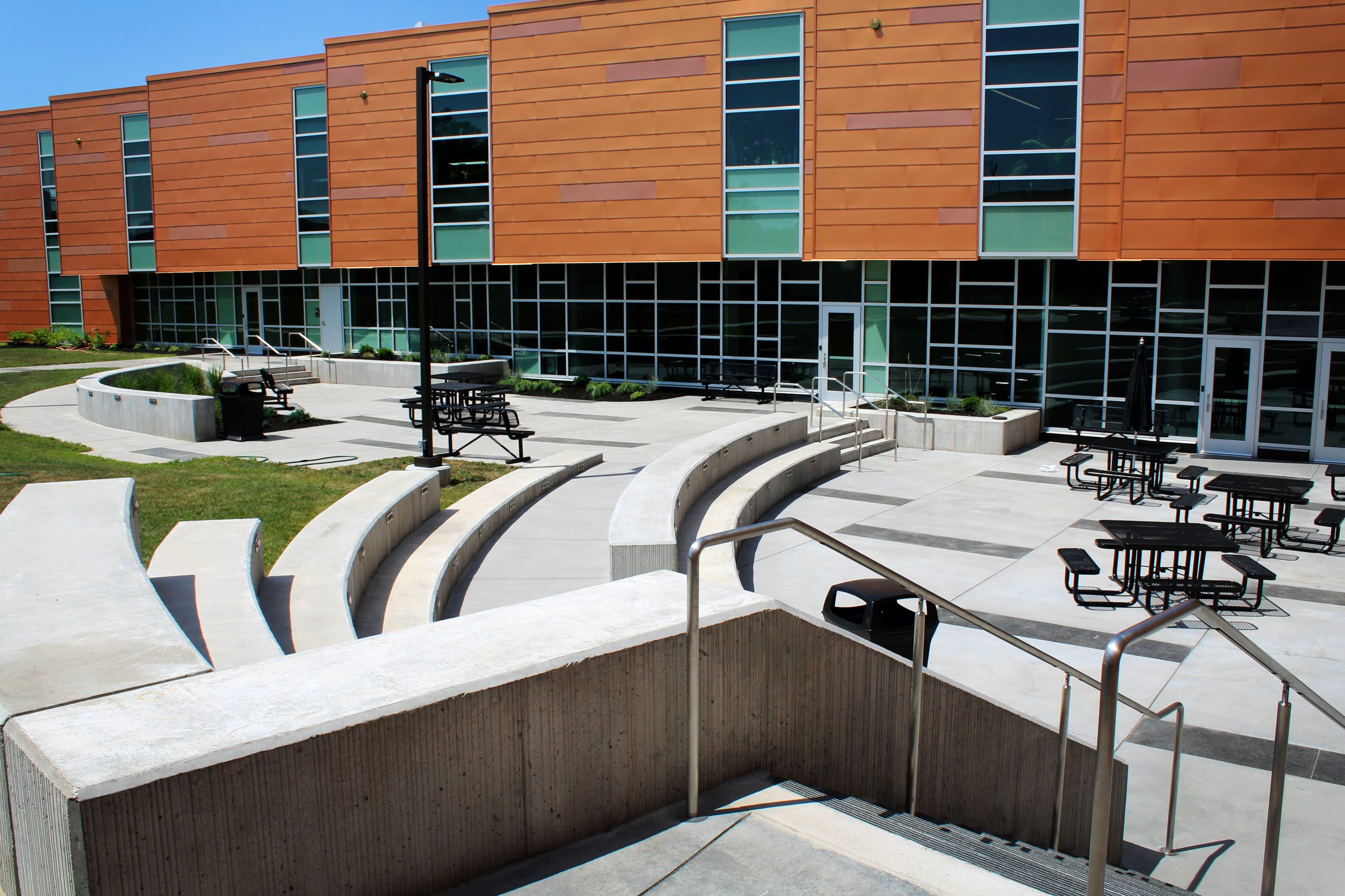
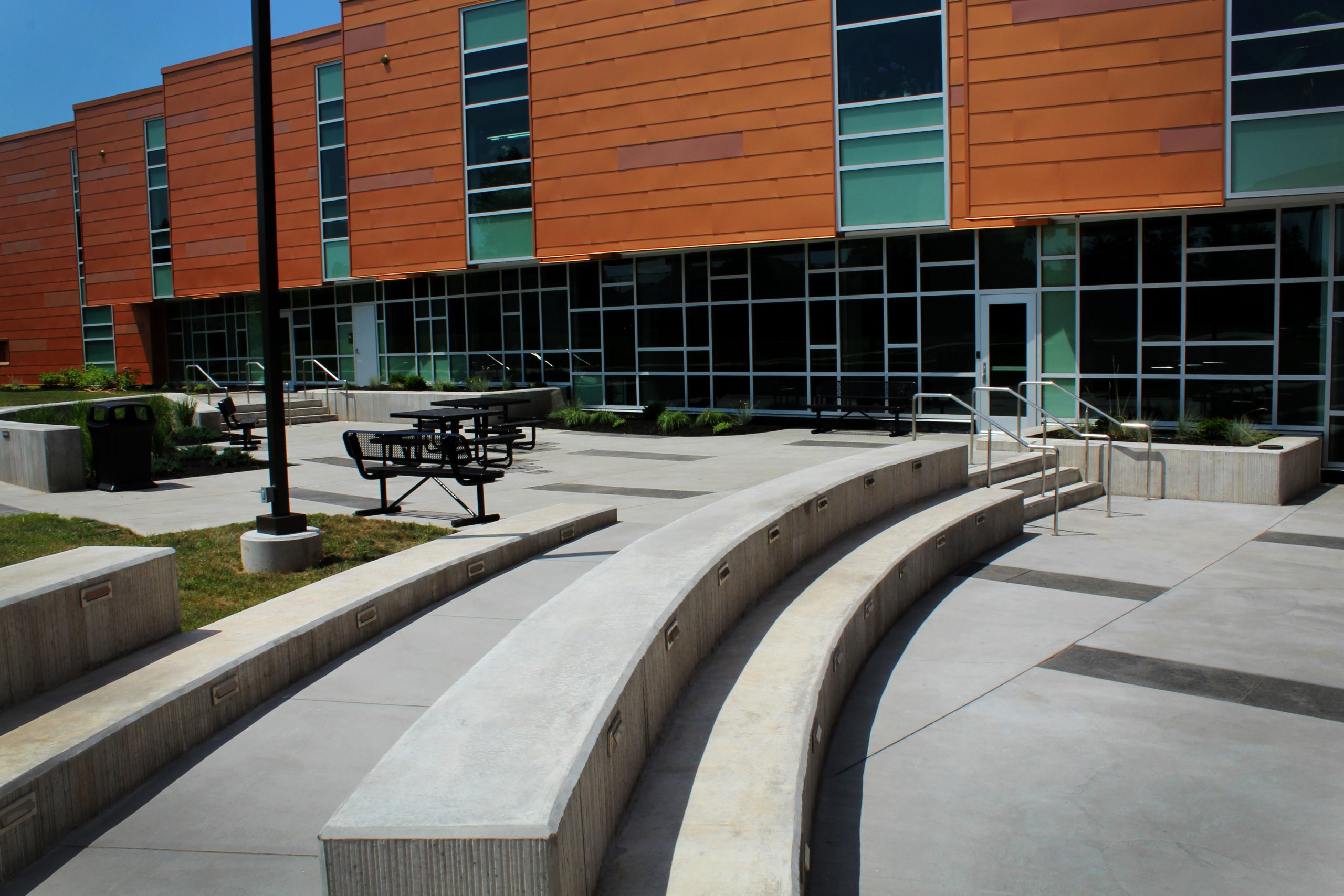
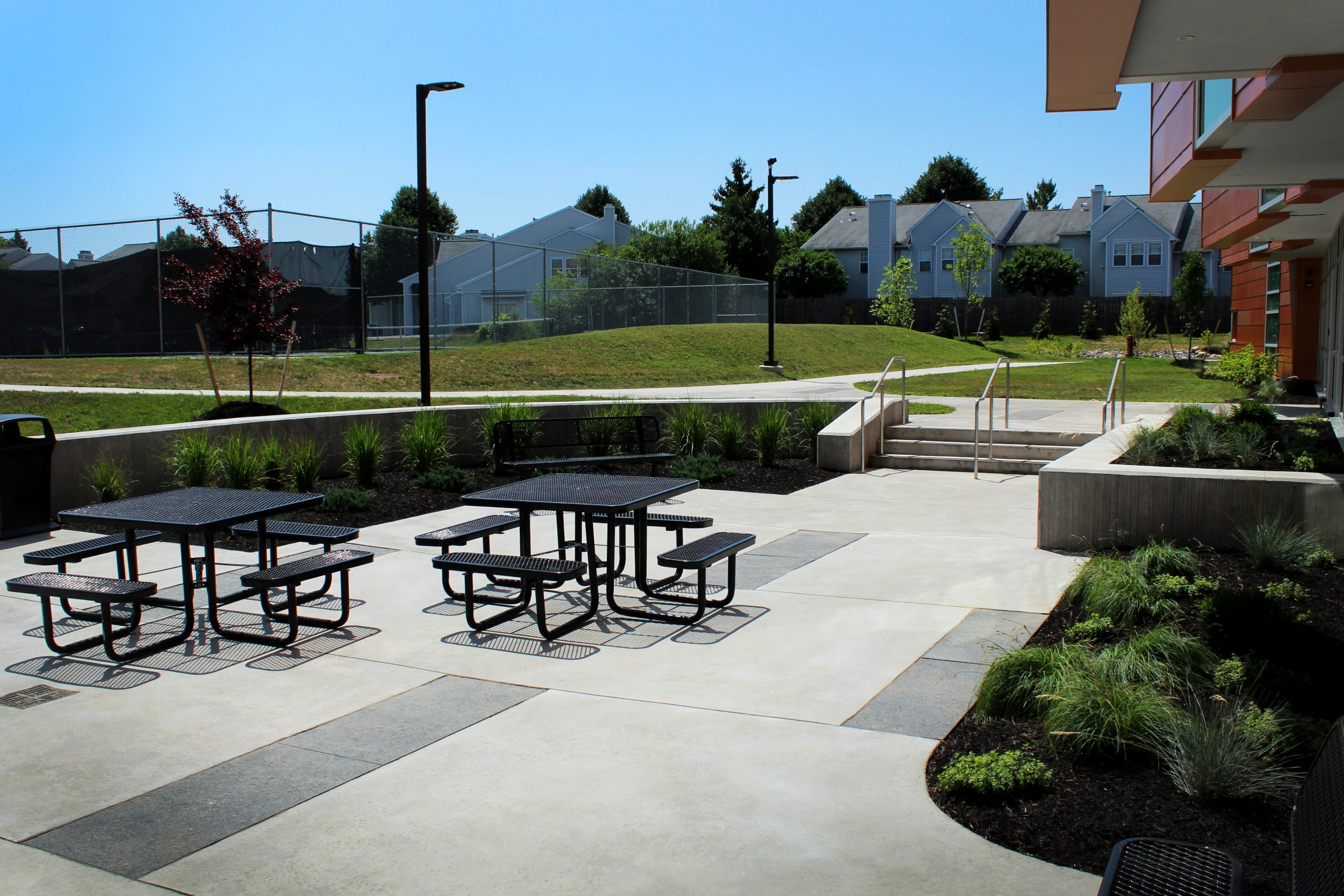
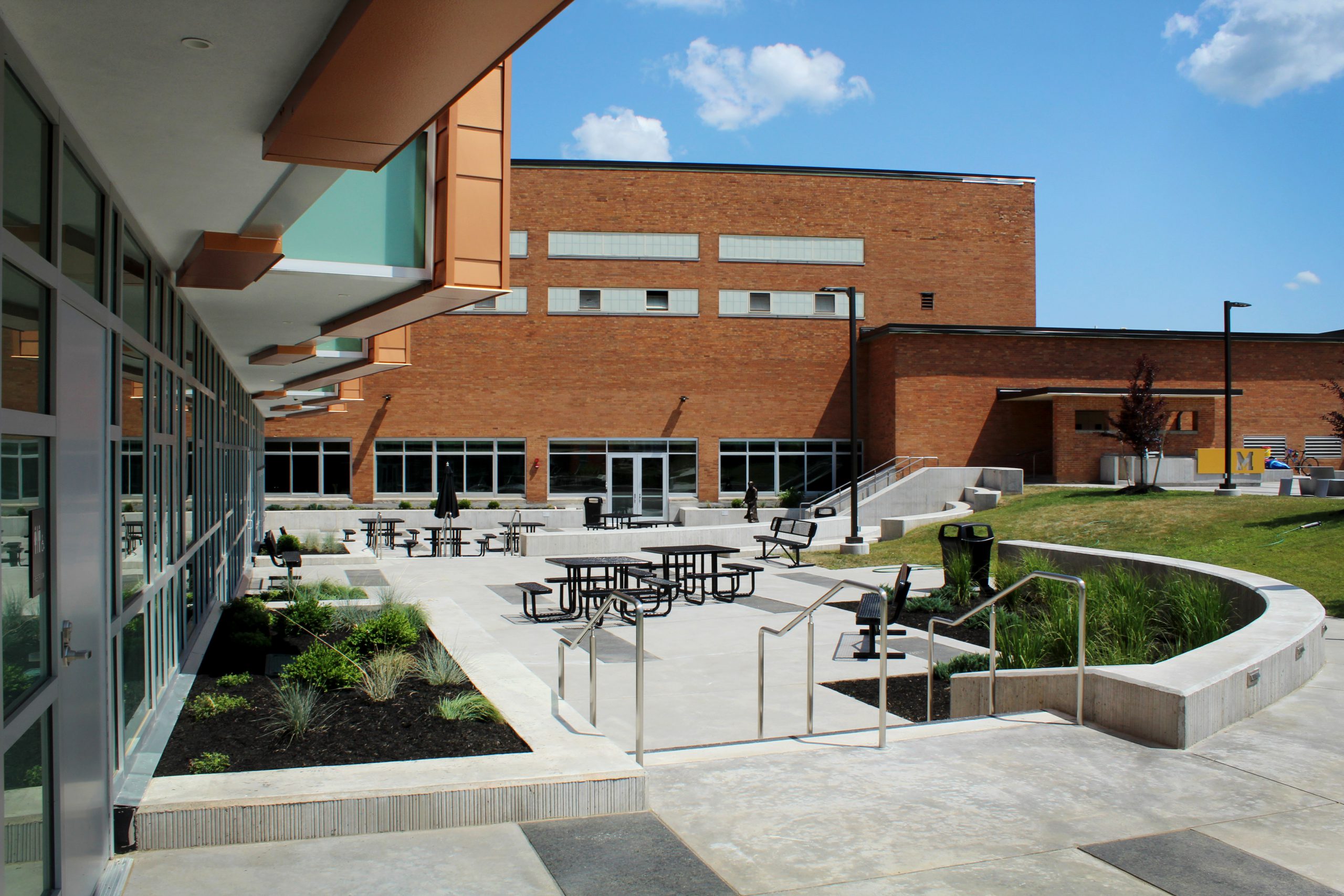
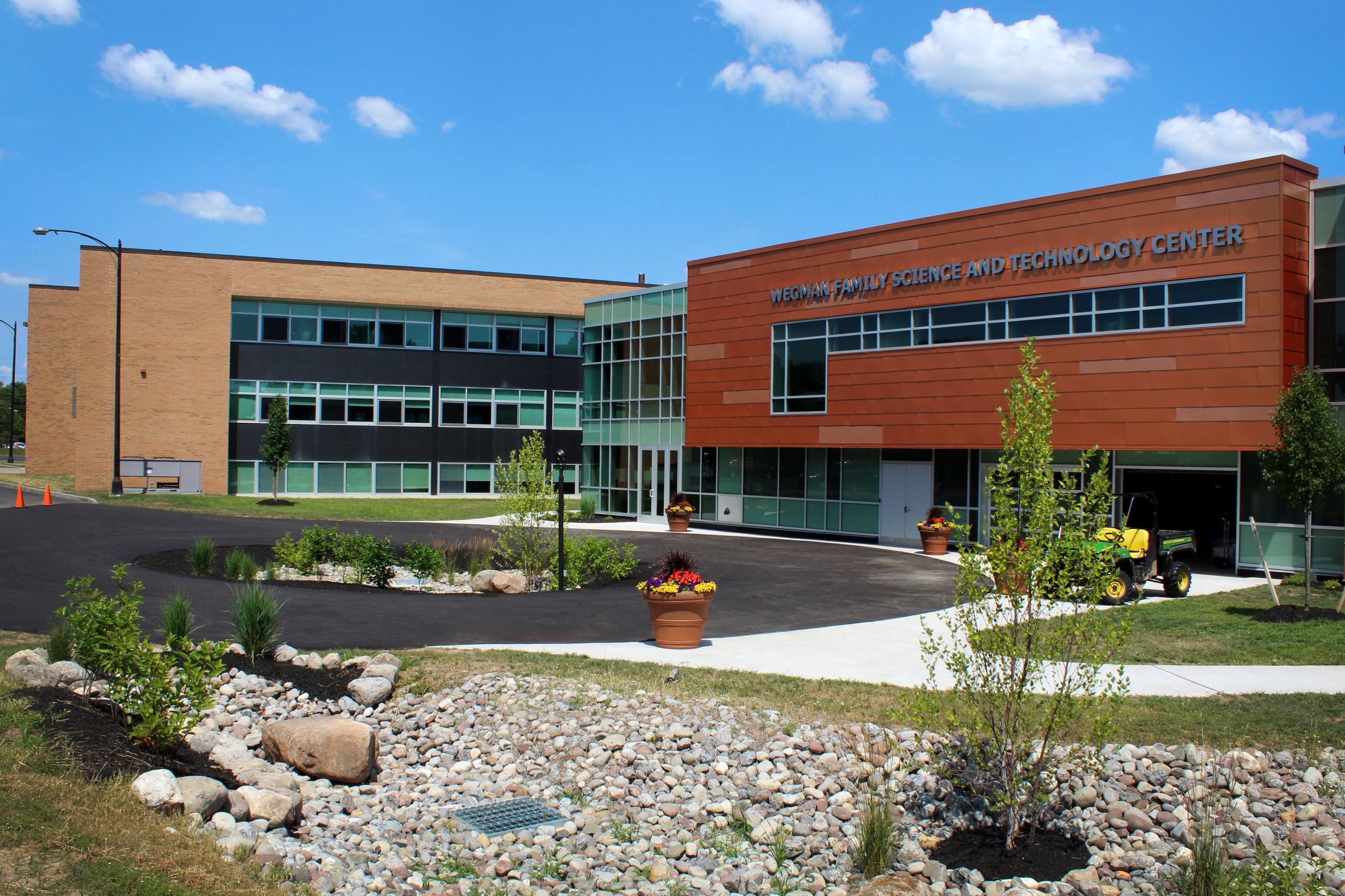
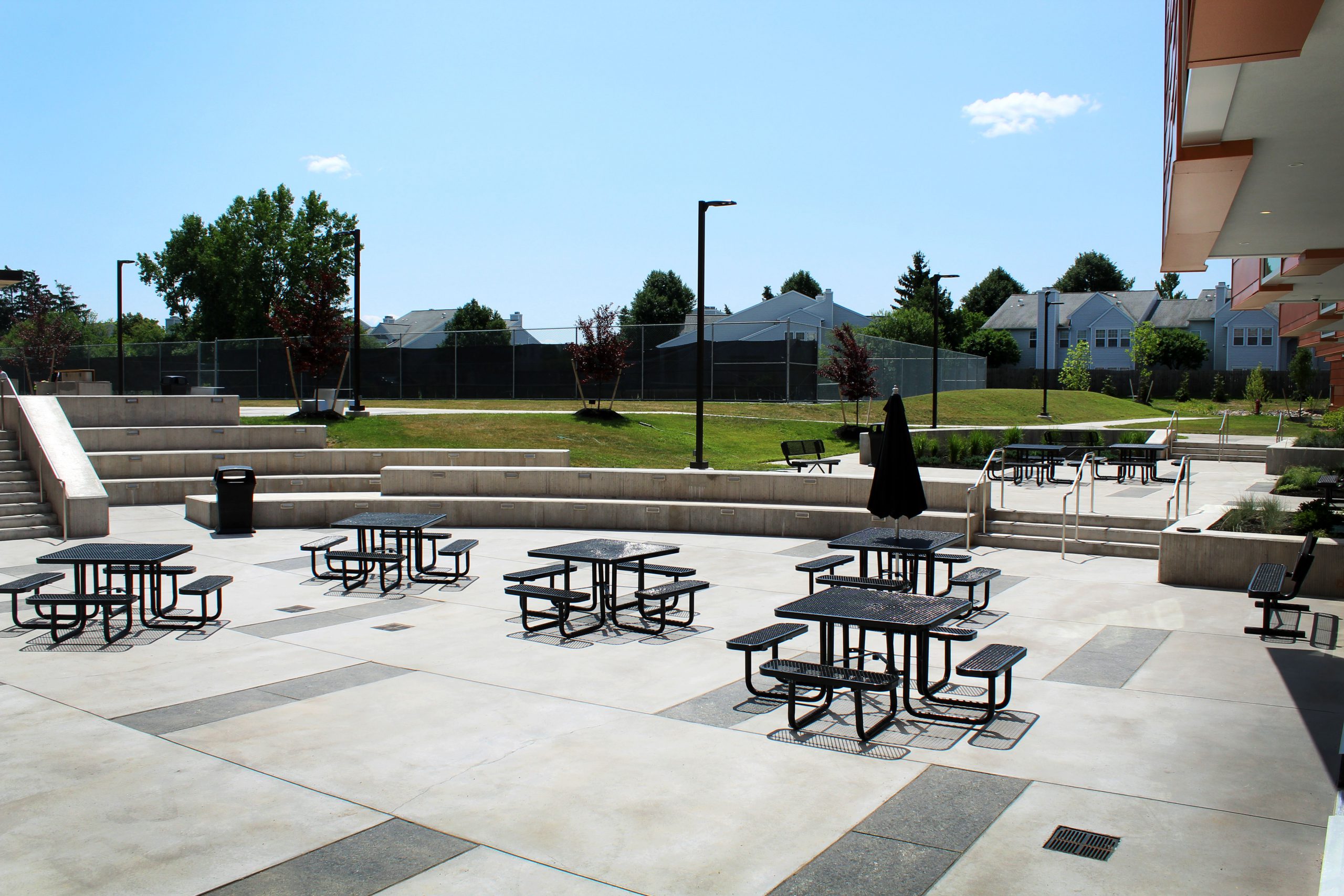
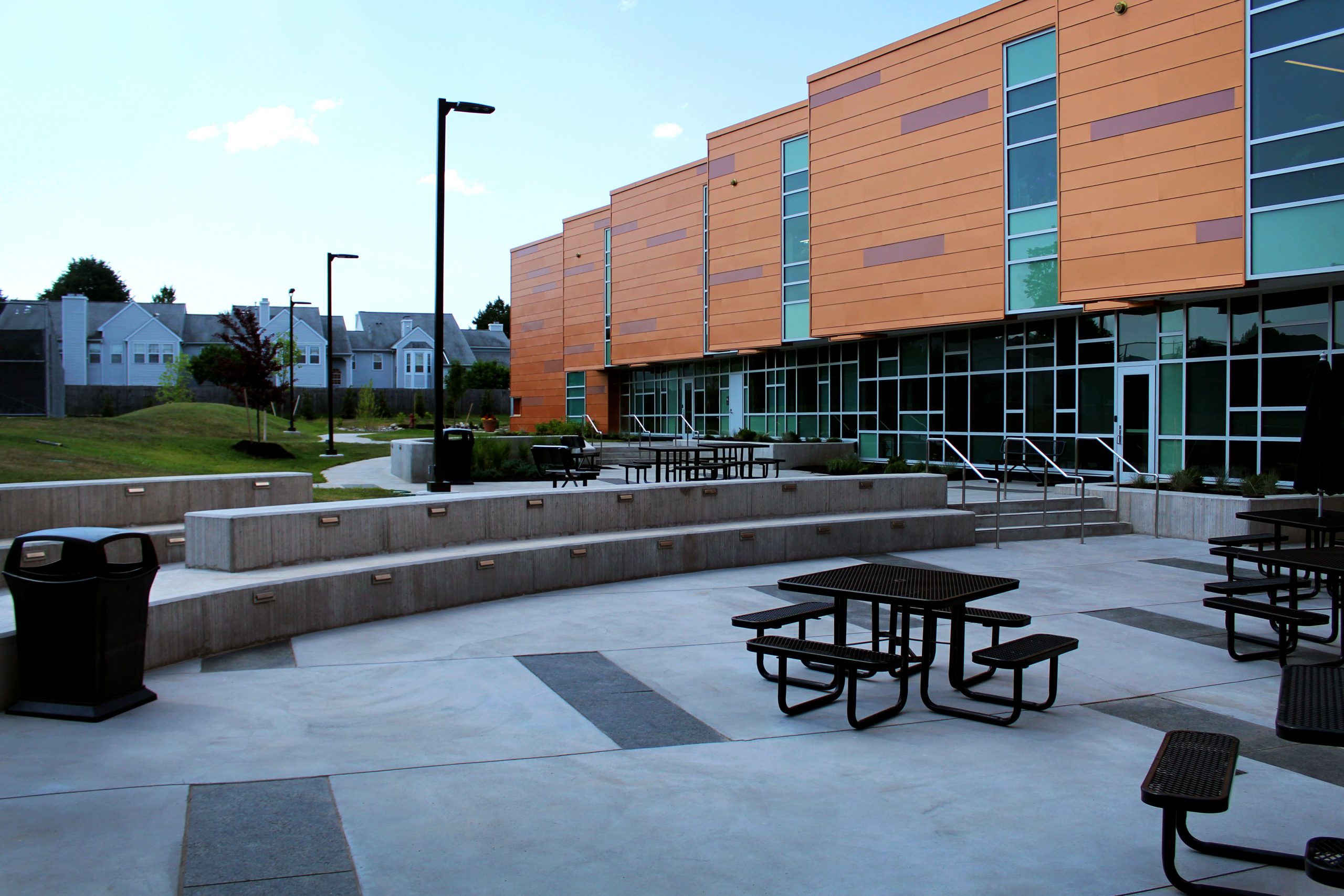
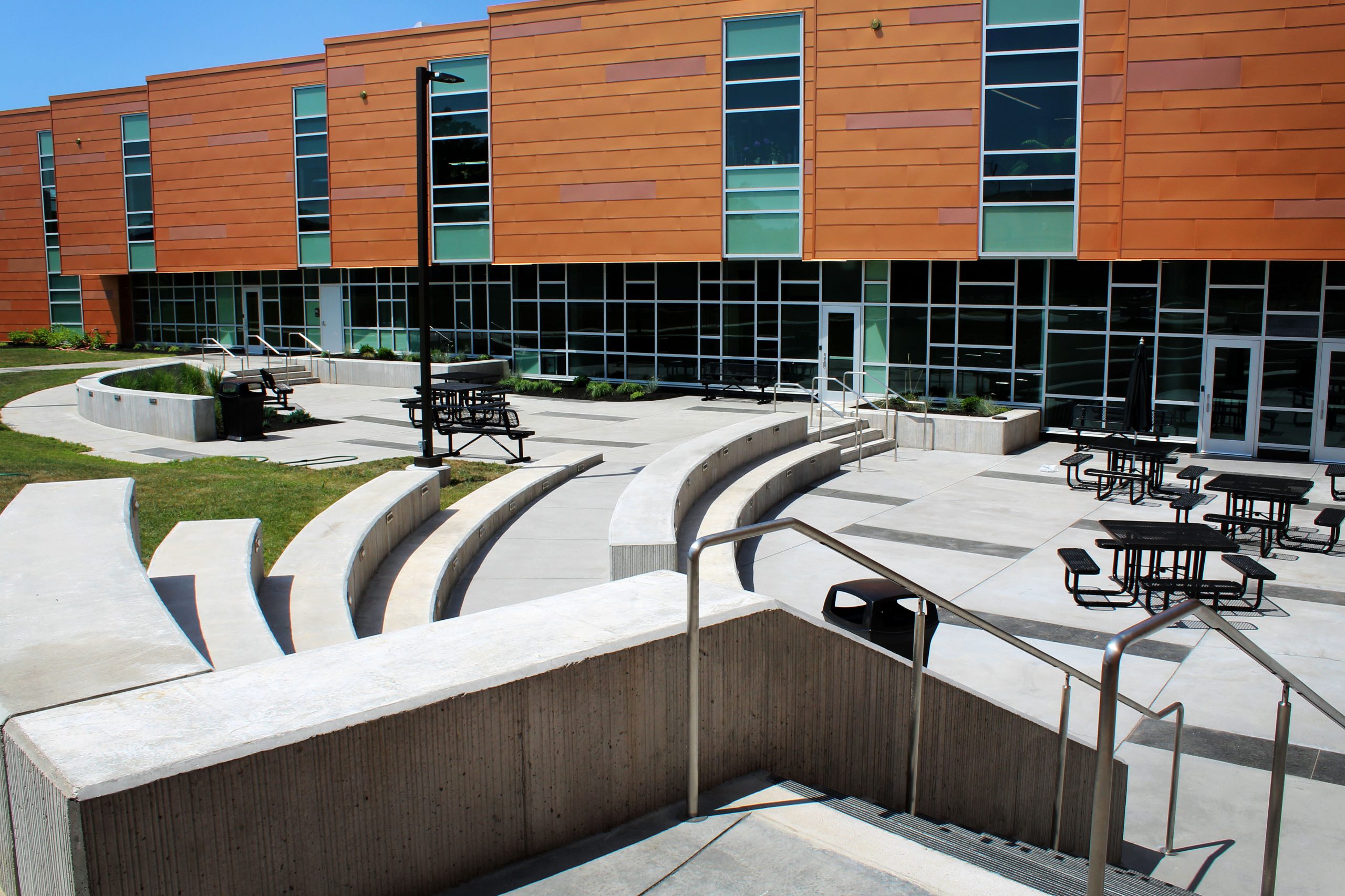
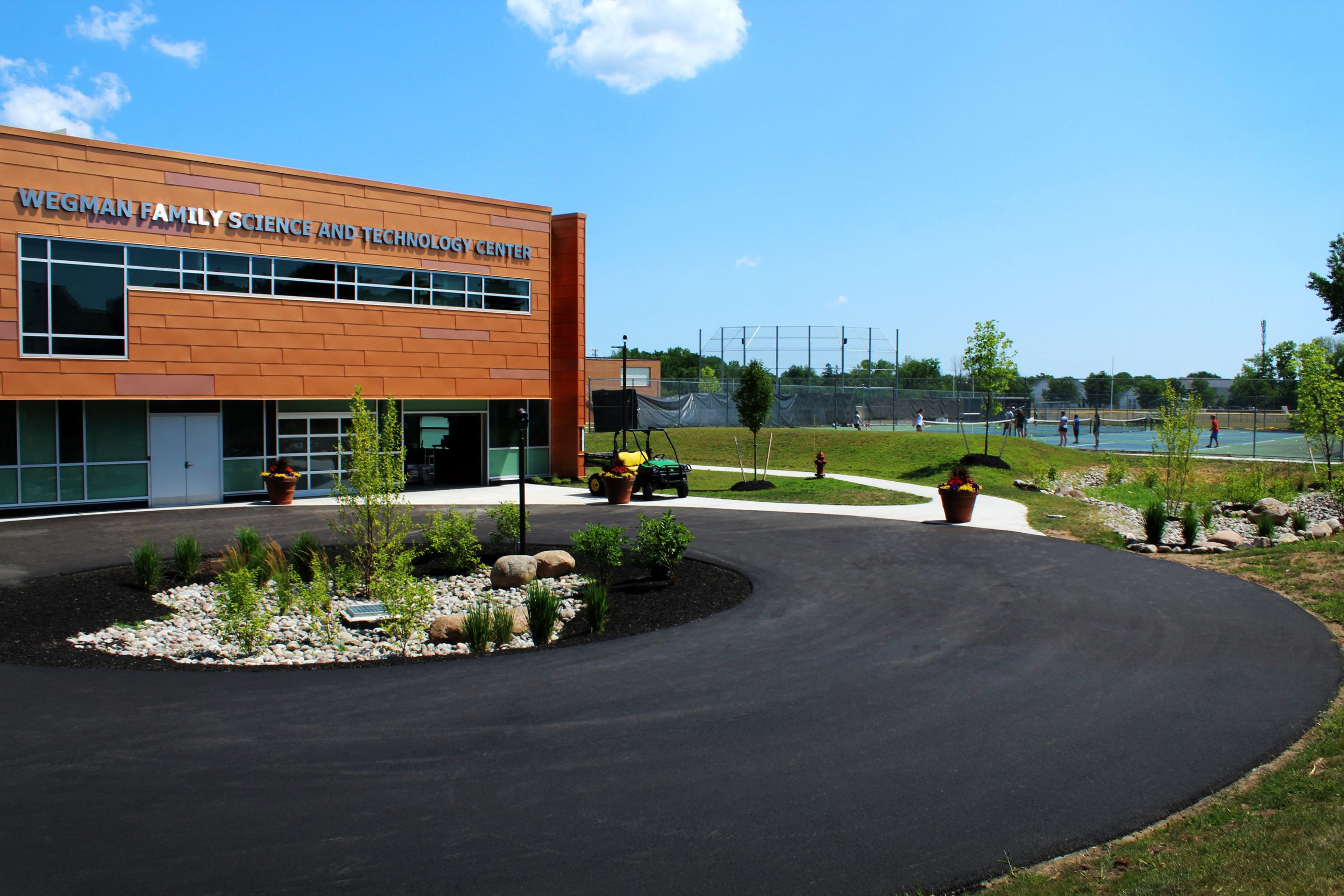
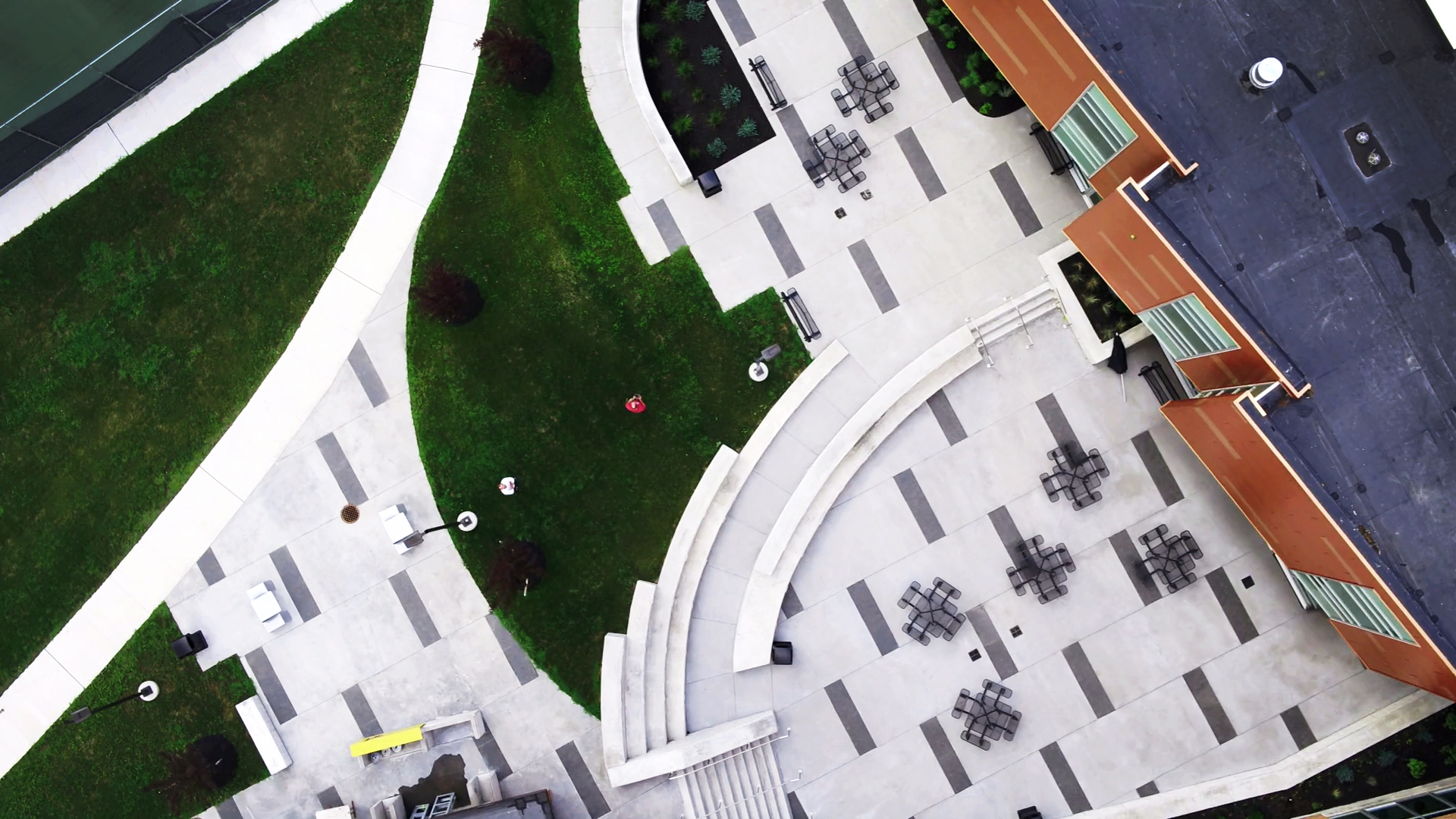
McQuaid Jesuit Outdoor Commons: Extending Learning Beyond the Classroom The McQuaid Jesuit High School Outdoor Commons transforms underutilized space into a dynamic plaza for learning, dining, and social interaction. Completed in 2017 as part of a larger campus master planning effort, the project mirrors the school’s indoor commons and cafeteria, extending their functions into a thoughtfully designed outdoor environment.
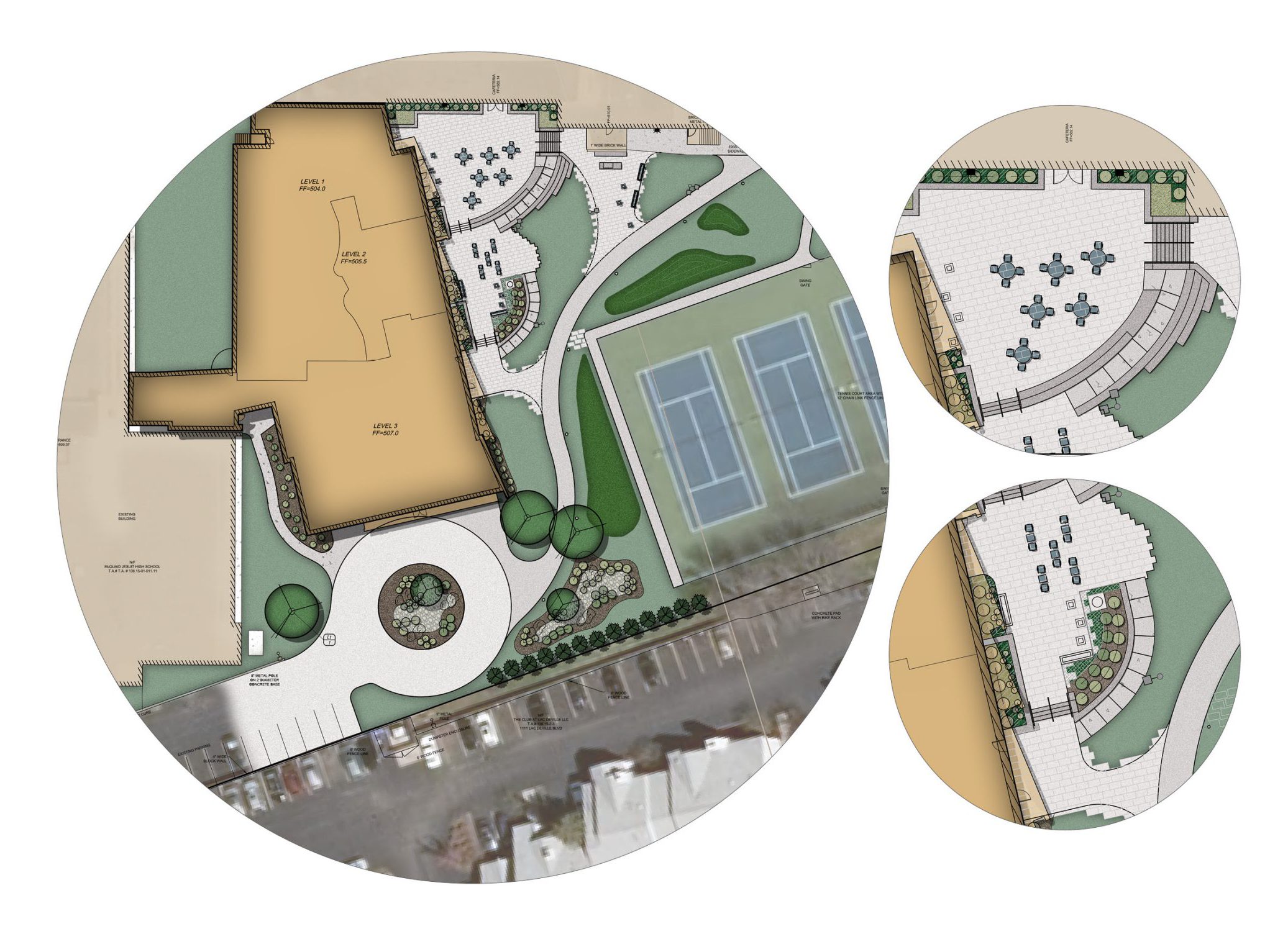
Survey, Civil Engineering, and Landscape Architecture Services Costich Engineering provided comprehensive services beginning with detailed land surveying to guide site planning. Civil engineering addressed grading, drainage, and circulation improvements, ensuring functionality across the sloped site. Landscape architecture shaped the commons into a student-focused gathering space with walkways, seating areas, and outdoor classrooms that connect seamlessly to adjacent indoor spaces and the athletic complex.
Responsive Campus Design The design reflects a responsive approach — aligning outdoor uses with the school’s existing architecture while solving practical site challenges. The result is a commons that not only enhances student life but also improves pedestrian circulation and strengthens connectivity across campus.
Key Features
Outdoor commons designed as an extension of indoor cafeteria and student areas
Comprehensive survey, civil engineering, and landscape architecture services
Enhanced pedestrian circulation linking academic buildings to athletic complex
Outdoor classrooms and dining spaces supporting flexible campus use
Part of broader master planning efforts for McQuaid Jesuit High School