Even with proper planning and installation, erosion and sediment controls can be overwhelmed or damaged during severe weather events. Rapid snowmelt combined with rain, ice dams that redirect flow, and equipment damage during snow removal can all compromise the effectiveness of controls. When this happens, quick action is required to minimize environmental impact and restore compliance.
Inspect immediately after the event. As soon as it’s safe to access the site, conduct a thorough inspection of all erosion and sediment control measures. Look for damaged silt fence, overtopped sediment barriers, clogged drainage structures, and any evidence of sediment leaving the site. Document conditions with photos and notes.
Address off-site sediment migration. If sediment has left the site and reached adjacent properties, roadways, or stormwater systems, it needs to be cleaned up as quickly as possible. Sediment on roadways should be swept or removed to prevent it from entering catch basins. Sediment that has reached wetlands, streams, or other sensitive areas may require coordination with DEC or the municipality to determine appropriate cleanup methods.
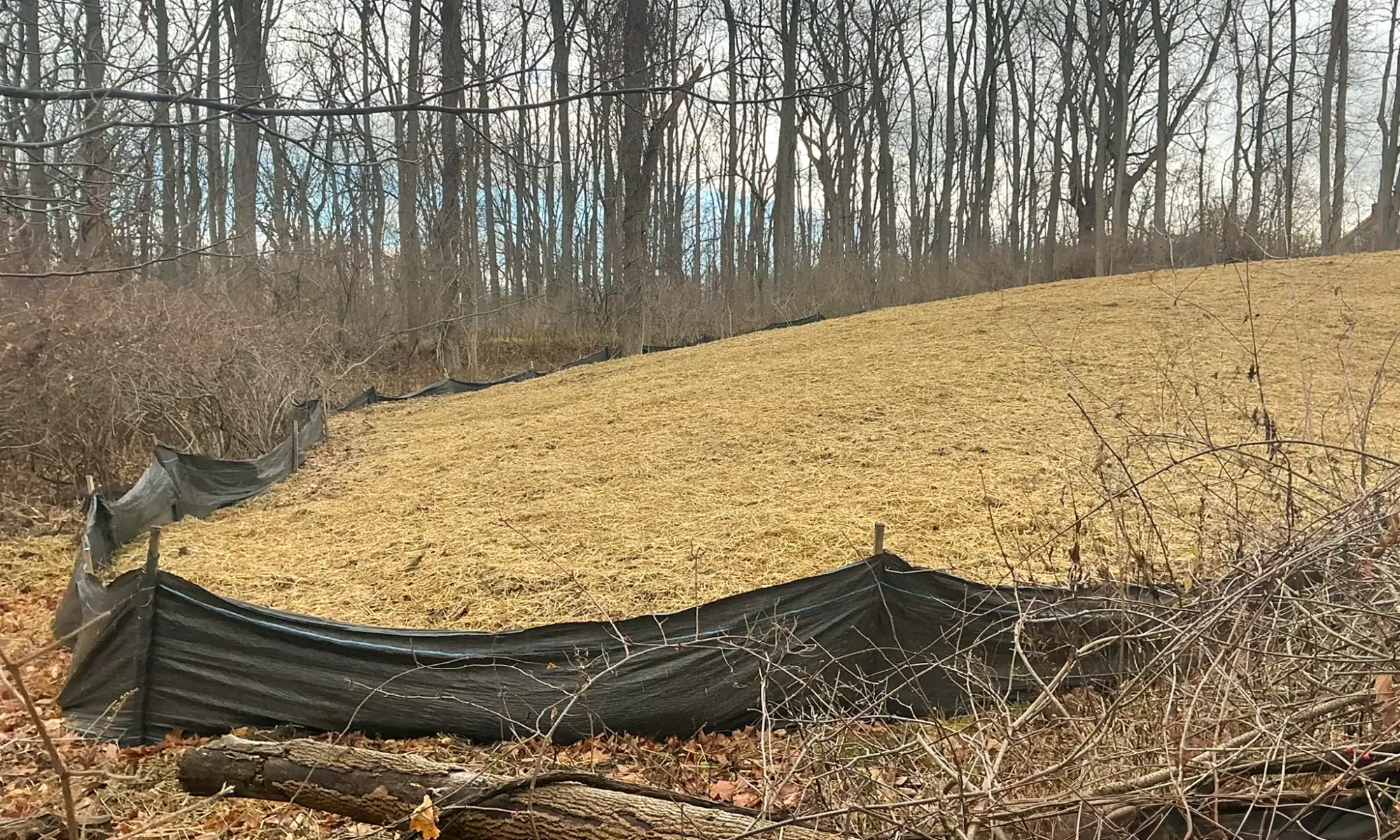
Repair or replace damaged controls. Silt fence that has been knocked down, buried, or torn needs to be repaired or replaced immediately. Sediment barriers that have been overtopped and are no longer functional should be cleaned out and restored to full capacity. If existing controls were insufficient to handle the event, additional measures may need to be installed to prevent future failures.
Clear drainage structures and remove ice dams. Check all catch basins, culverts, and swales to ensure they are open and flowing properly. Remove any ice dams or debris that is restricting flow. If drainage was redirected during the event, verify that it has returned to the intended flow path and that no new erosion issues have developed.
Stabilize any newly exposed soil. If the storm or melt event caused erosion that exposed additional soil, those areas need to be stabilized immediately. This may require additional mulch, erosion control blankets, or other temporary measures to prevent further sediment loss.
Document and report. All corrective actions should be documented in the site inspection records and included in the next compliance report. If the event resulted in a discharge that violated water quality standards or caused environmental harm, it may need to be reported to DEC or the municipality in accordance with the permit requirements.
Revise the SWPPP if necessary. If the failure revealed weaknesses in the erosion and sediment control plan, the SWPPP should be revised to address those deficiencies. This might include adding additional controls, increasing the capacity of existing measures, or changing snow management procedures to prevent similar problems in the future.
Winter weather is unpredictable, and even well-designed controls can fail under extreme conditions. The key is to respond quickly, document what happened, and make the changes necessary to prevent recurrence. Sites that demonstrate a commitment to rapid response and corrective action are far less likely to face enforcement actions even when problems occur.